Google is a U.S. search engine company that was established in 1998 by Sergey Brin and Larry Page. Since 2015, Google has been a subsidiary of the holding company Alphabet, Inc. More than 70% of global online search queries are made through Google, which makes it central to the experience of most Internet users. It is one of the world’s most valuable brands. The company’s headquarters are located in Mountain View, California.
Initially, Google was solely an online search company, but it now has over 50 Internet services and products that span from email and online document creation to software for mobile phones and tablet computers. In addition, the company’s acquisition of Motorola Mobility in 2012 has allowed it to enter the hardware market by selling mobile phones. Due to the vast range of products Google has and its size, it is one of the four most powerful tech companies alongside Apple, IBM, and Microsoft.
However, the original search tool, Backrub, is still at the center of Google’s triumphs. In 2023, Alphabet’s total revenue was $175 billion, out of which $99.75 billion came from advertising (57% of all Google revenues) based on users’ search requests.
The Journey Of Sergey Brin and Larry Page
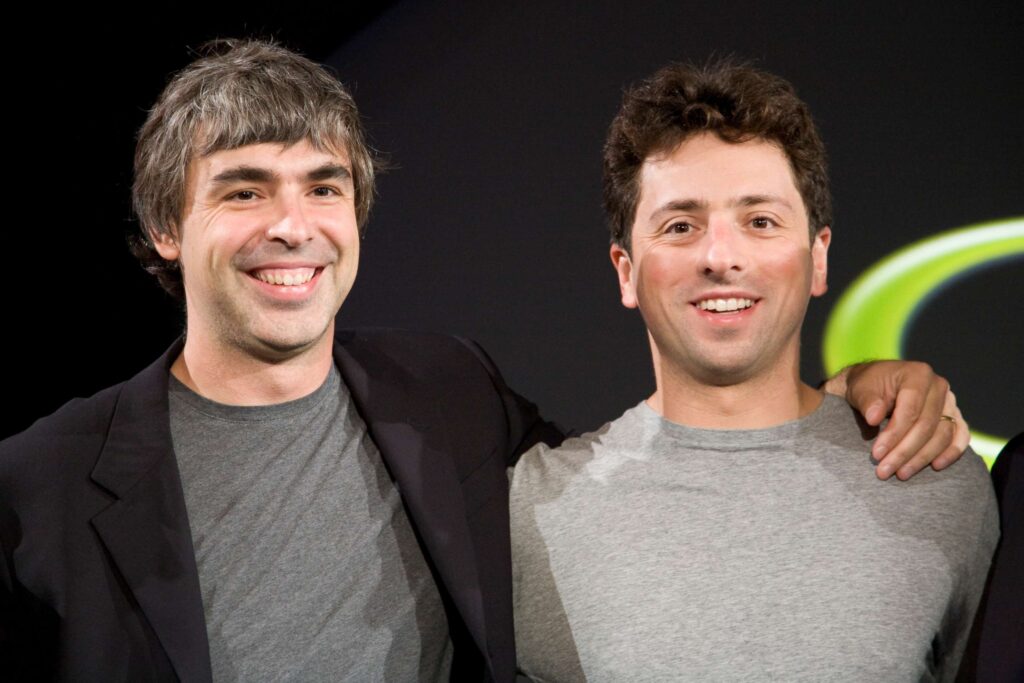
The Journey after the Google search engine inception is quite impressive. They met each other during their studies and went on their journey together. Even after the completion of their Computer Science courses, they continued to stay in touch. Brin is a math genius, and Page was deeply engrossed in figuring out how linking works on the internet, so the two students came up with an algorithm called PageRank.
This algorithm was named after Larry Page and delved into the area of ranking search results. They did the ranking primarily on the basis of linking behavior. These technologies merged, thus leading to the Google search engine launch date on September 4, 1998, which was dropped on Stanford’s private network in August 1996. Their paper, which was circling around Silicon Valley, got very popular and was open for reading under “ The Anatomy of a Large-Scale Hypertextual Web Search Engine.”
How Larry Page And Sergey Brin Came Up With The Name Google
Page and Brin were famous for their out-of-the-box ideas, and as a result, taking inspiration from the numerous links between web pages, they gave their company the new name Google. So, why was it called a googol? You may be wondering. “Googol” is a mathematical term that refers to the number 1 followed by 100 zeros.
The play on the math term “googol” (the number 1 followed by 100 zeros) was very fitting for the company, as it was highly compatible with the vision of Page and Brin. Their new company, which was later called Google, would go down in history as the company that mastered the art of making information from the world available on the web in an easy way.
The Early Years
During the late 1990s and early 2000s, the Google search engine was able to attract a vast number of internet users due to its simple, user-friendly interface and the accuracy of the search results it provided. The company was able to roll out several features that were original at that time, such as:
- Google operated with its PageRank algorithm (1998)
- AdWords advertising platform (2000) – presently known as Google Ads
- Google Toolbar browser extension (2000)
- Google Images search (2001)
- Google News (2002)
These initial inventions of Google turned out to be the stepping stones that led to Google’s future success and helped the company to be recognized as a leader in the tech industry.
Learning About Google’s Parent Company—Alphabet
Quite a few people do not know that the name of the company that owns Google is Alphabet. The holding company, Alphabet, allowed Google to extend its empire from being just a search engine to a tech conglomerate. The parent company of Google LLC, Alphabet, is located in Mountain View, California.
It is heavily engaged in various other businesses such as online advertising services, software, hardware, cloud computing, and applications for phones, desktops, and mobiles. Besides that, it is also a supplier to several industries, which we will enumerate below.
- Calico — was created to counter aging and age-related diseases.
- Google Ventures—grants support to startups with revolutionary ideas (like Google itself had)
- Google X — coming up with innovative ideas and breakthroughs
- Nest — provides customers with interesting, smart home products
- Google Capital — putting money into long-term technology trends
- Google — Ads, Google Maps, YouTube, Android, Google Search, Apps
Page disclosed in a memo that the change in the design of the new company, Alphabet, would make Google “cleaner and more accountable.” Moreover, Page points out that this organization will empower each business that Google owns to have more independence and be able to grow freely, which was everybody’s anticipation.
Its investors were lucky enough to embrace Alphabet’s new design structure. How can we be sure of this? The company saw its shares shoot up to 6% after the announcement.
How Google Has Evolved and Changed Over the Years
Google made its search engine more attractive by adding a number of services and buying related companies. What you see now is a result of the interaction of the services. The services let you share documents, save files, send e-mails, and do a lot more things.
Gmail
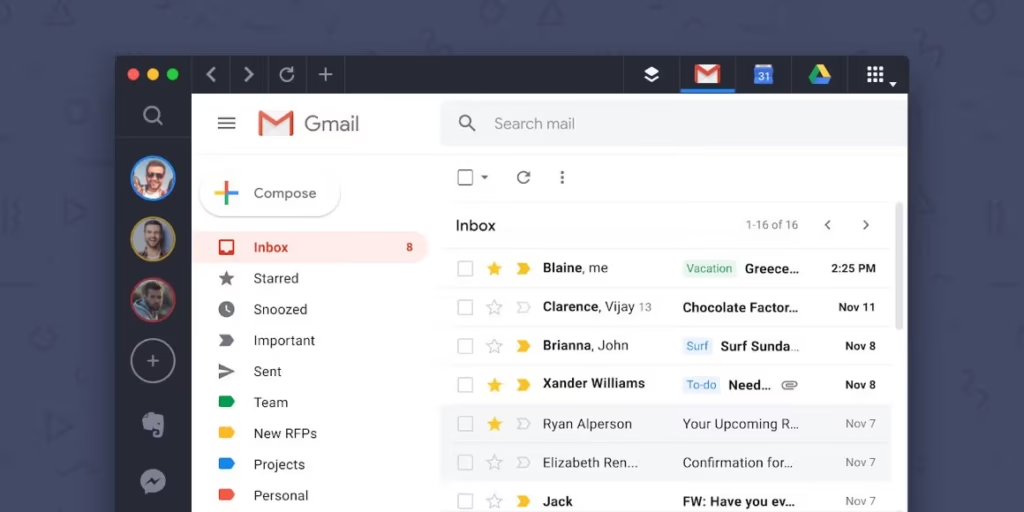
Google introduced Gmail in 2004 with 1GB of storage. Internal communication was the problem that the tool was initially intended to solve. However, after its release to the public, the existing competitors were left in a state of shock and trying to figure out their next step. Gmail was quicker and more efficient, as it was developed using the Ajax platform.
Maps
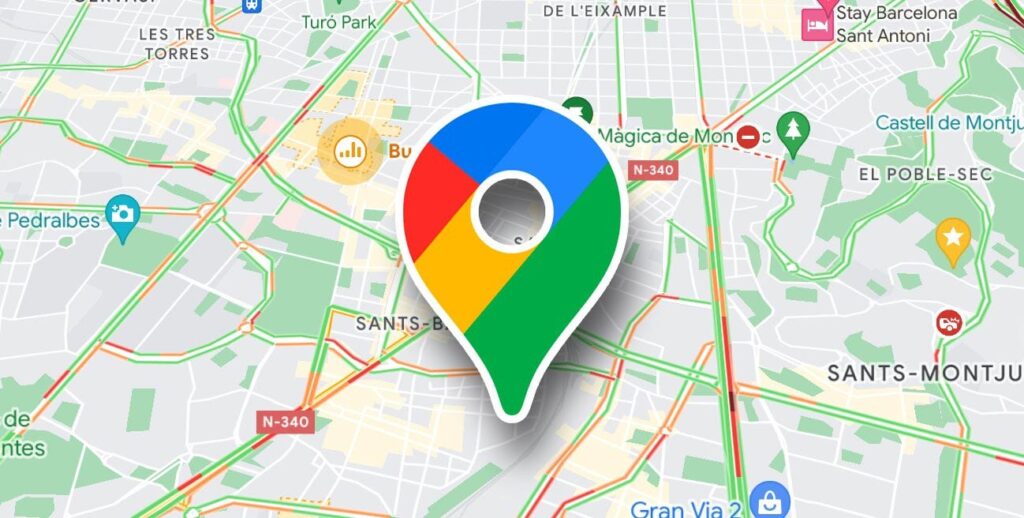
Google Maps was the service introduced in 2005 that allowed you to zoom and gave you directions step by step. Nonetheless, in 2009, they released their GPS navigation instrument, essentially turning any smartphone into a device with which one could track the roads. Certainly, GPS manufacturers such as Garmin and TomTom did not like it one bit.
YouTube
In 2009, Google bought YouTube for $1.65 billion. The move turned out to be one of the smartest decisions in tech history, as YouTube evolved into the world’s leading video-sharing platform and an everyday staple of modern culture. With a single acquisition, Google effectively secured its dominance in video traffic and digital media consumption.
Chrome
Google launched the Chrome browser in 2008 with the help of Mozilla Firefox developers. Consequently, it took them just 4 years to propel the browser past Internet Explorer and Firefox. Currently, Chrome Is used by 65% of people with Safari in 2nd place at 19%.
Android
The year 2008 brought the Android debut on the HTC Dream and the Mobile G1. The mobile operating system is a product that was bought in 2005 and is currently dominating the market with a share of around 73%. As of now, Android is fully integrated with Google, and it also happens to have excellent notification features out there.
Deepmind
The artistically inclined company Google started its AI journey with the acquisition of DeepMind, an AI research lab, on January 24th, 2014. The deal was also in Facebook’s hands, but Google closed it by promising to have the technology governed by an independent ethics board.
Google’s Market and Capital
The years of 1998 and 1999 saw the dominance of Yahoo! and Excite search engines that were the leading market players. One of the interesting facts in the Google story is that both companies at first refused to cooperate and learn about Google.
In 2001, Yahoo! turned down Google’s proposal of collaboration, and only a handful of investors were interested in Google at that time. A few Venture Capitalists were the money providers at the very start: the first funder was Andy Bechtolsheim, who gave Google $100,000 in 1998.
At present, the significant shareholders of Google are Larry Page, who has handed over his primary responsibilities to Sundar Pichai but is still holding more than 20 million shares; and Sergey Brin, who is the chairman of Alphabet with 19 million shares and, according to Bloomberg, has a fortune of more than $56 billion. Eric Schmidt has more than 50,000 shares, is always working in Silicon Valley as an entrepreneur, and is involved in several stand-alone projects as well as being a consultant. Schmidt’s assets are more than $14 billion. On the contrary, Sundar Pichai, the present CEO of Google, has ownership of different classes of shares totaling about 2,000.
Besides the management and founding figures, the majority of Alphabet’s shares, roughly 70%, are held by institutional investors. One such institution is the Vanguard Group, which owns 40 million shares of Google, which generates a value of $40 billion.
Conclusion
In brief, the transformation of Google from a simple search engine established in 1998 to a worldwide technology giant has changed the way humanity seeks information, communicates, and does business in a fundamental way. By its incessant commitment to innovation, very selective acquisitions, and brave investments, which have been made more powerful by the creation of Alphabet, Google has been able to spread its influence in the various industries not only of search but also of advertising, mobile tech, AI, and data-driven services.
Although these innovations have raised great concerns about privacy and control, it is undeniable that Google’s transformation and future have had a tremendous impact on the digital world and have created new means for people to interact with technology and the world.

Vijay Sood is a seasoned digital marketer with a passion for driving online growth and innovation. With a robust background in developing and executing comprehensive digital strategies, Vijay excels in leveraging SEO, content marketing, and social media to boost brand visibility and engagement. His expertise lies in transforming data-driven insights into actionable marketing campaigns, helping businesses achieve their digital objectives.