Your company has done well in your home market, with excellent site metrics and a respected brand. Going global by translating into Spanish, Arabic, or Chinese makes sense, but translation alone will not usually be the key to worldwide success. English is widely spoken, but native English speakers make up less than 20% of the world’s population.
What’s even more startling is that 40% of customer are not going to buy if a website isn’t in their native language. If you are ignoring international markets, you may be missing enormous opportunities for growth. It’s important to understand the key differences between translation and localization.
This article will discuss the Spanish SEO translation process and how to effectively implement it for multilingual Marketing success.
What Exactly is Multilingual SEO?
Multilingual SEO refers to the practice of adapting your SEO content into multiple languages. This enables people from diverse cultures and language groups, including the Hispanic community, to find your brand.
Multilingual SEO ensures that a Japanese speaker looking to buy Spanish products, can:
- Find your content
- Understand it
- Check out in its term
Another way that multilingual SEO is helpful is that it aids the search engine in indexing your content, so your content appears high in other language regions.
A proposed challenge could be designing a series of exercise garments for different audiences from different countries. For example, ensuring the illustration is warmer, has a different cut, or a particular color for a transition region.
It’s important to note this isn’t just a simple translation! Multilingual SEO is all about localization:
- That resembles the targets’ language and behavior.
- Using local idioms, jokes, and images.
- Adding points of cultural markers, value.
- Using the currency, units of measurement, format for date, etc.
Therefore, Multilingual SEO is not just about targeting international searchers. It’s about making every user feel like the content of your website was created specifically for them.
7 Ultimate Strategies for Your English + Spanish Site
To achieve the maximum benefit from an international SEO strategy, there are some key steps you must take so that your website is crawled, categorized, and user-friendly for a Spanish-speaking audience.
These seven multilingual SEO best practices are your guide to worldwide success.
1. Choose Your URL Structure

First, you must decide where your Spanish content will live. Google understands three main structures:
- Subdirectories (Recommended):
example.com/es/ - Subdomains:
es.example.com - Country-Code TLDs (ccTLDs):
example.es
Our Suggestion: Prefer the use of sub-directories (/es/); it is the cleanest and most powerful SEO solution. It gathers all backlinks and page authority on the parent domain, increasing the strength of your entire site.
2. Master the hreflang Tag

This is the most crucial technical part. The hreflang tag is a script you insert in your pages’ <head> that instructs Google: “This is the English version, and this is the corresponding Spanish version.”
Example for your homepage:
html
<link rel="alternate" hreflang="en" href="https://digiwebinsight.com/" />
<link rel="alternate" hreflang="es" href="https://digiwebinsight.com/es/" />
<link rel="alternate" hreflang="x-default" href="https://digiwebinsight.com/" />
hreflang="en"points to the English page.hreflang="es"points to the Spanish page.hreflang="x-default"specifies the URL to be displayed when the user does not have an acceptable language.
3. Localize Keywords, Don’t Just Translate
Don’t just translate your English keywords and think that’s enough. You need to research your keywords in Spanish too.
One familiar example: “computer” in English.
- The most common word in Spain in relation to the computer is “ordenador”.
- In most of Latin America, the main word is “computadora.”
Choosing the wrong one can send your visitors rushing straight past, especially if they are part of your target audience of Spanish speakers. This laser-accurate keyword research underpins all successful PPC advertising campaigns. It’s hard to overstate its importance for organic SEO, too.
4. Optimize On-Page SEO for Spanish

Every Spanish page you create needs its own full on-page SEO treatment, based on your new Spanish keyword research. This includes:
- Spanish
<title>tags - Spanish meta descriptions
- Spanish H1 and subheadings
- Spanish alt tags for any pictures you may have of your products
This communicates to Google that your Spanish page is a high-value, relevant Spanish resource, not a carbon copy.
5. Localize the Entire User Experience (UX)

A highly effective multilingual website just isn’t about content. Your packaging, your web design, and development team should look at the complete end-user experience.
- Currency: Do prices appear in the Euro (€) for users who are in Spain?
- Images: Are the images on this page representative of your Spanish audience?
- Standards: Is the date (DD/MM/YYYY) and telephone number format right for the country?
- Trust Signals: Is Spanish instruction on customer support information?
This helps to build trust with users and can help to improve conversion rates dramatically.
6. Use the Simple HTML lang Attribute
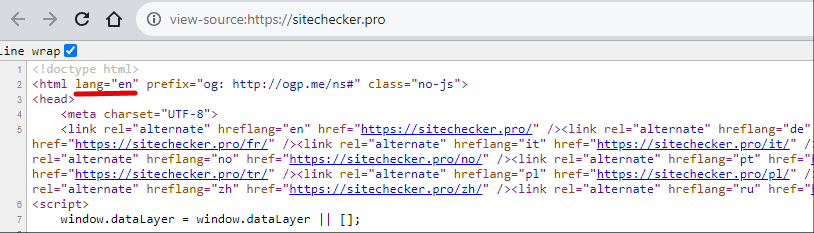
This is a much easier and less technical tag than hreflang. The HTML lang attribute lets browsers (and other software like screen readers) know the language in which that particular page is written.
- In your English pages:
<html lang='en'> - For Spanish pages use:
<html lang="es">
This is a very simple best practice for proper page rendering and accessibility.
7. Build Links to Your Spanish Content
If you want to generate authority for your new Spanish pages, you will need backlinks from Spanish-language sites to enhance your Spanish SEO services. The links to your English site may come from websites based in the US or the UK. But Google wants to verify that your Spanish content is authoritative on Spanish websites. Here, you will need Spanish blog pages, newspapers, and directories.
Effective international outreach like this can be complicated, so if you don’t already have the resources in-house, you’ll often find that many businesses either outsource to an affordable SEO agency in the USA or work with a service that has international link-building know-how.
Conclusion
Multilingual SEO is the single factor that will see your site gaining organic visibility in each target market—or invisibly enabling your local competitors to gain it. An effective multilingual SEO approach will see the right URL ranking for the right query in the right country, with the signals in place to instill search engines’ trust as to which page to provide in what place.
The right URL architecture preserves page authority, consistent hreflang tells Google which country version should answer to the search query, and local content combined with focused link building turns global chance into profit. Take one layer at a time, as if one layer goes wrong the others underperform. So, remain cautious!

Vijay Sood is a seasoned digital marketer with a passion for driving online growth and innovation. With a robust background in developing and executing comprehensive digital strategies, Vijay excels in leveraging SEO, content marketing, and social media to boost brand visibility and engagement. His expertise lies in transforming data-driven insights into actionable marketing campaigns, helping businesses achieve their digital objectives.