
Google Ads Rental-Enquiry Demand Generation for a Western Canadian Rental Portfolio
SwiftPropel was engaged as a white-label Google Ads partner to build and manage a paid demand-generation system for a Western Canadian rental portfolio.
The objective was to generate rental enquiries across multiple communities, unit types, and active promotional offers.
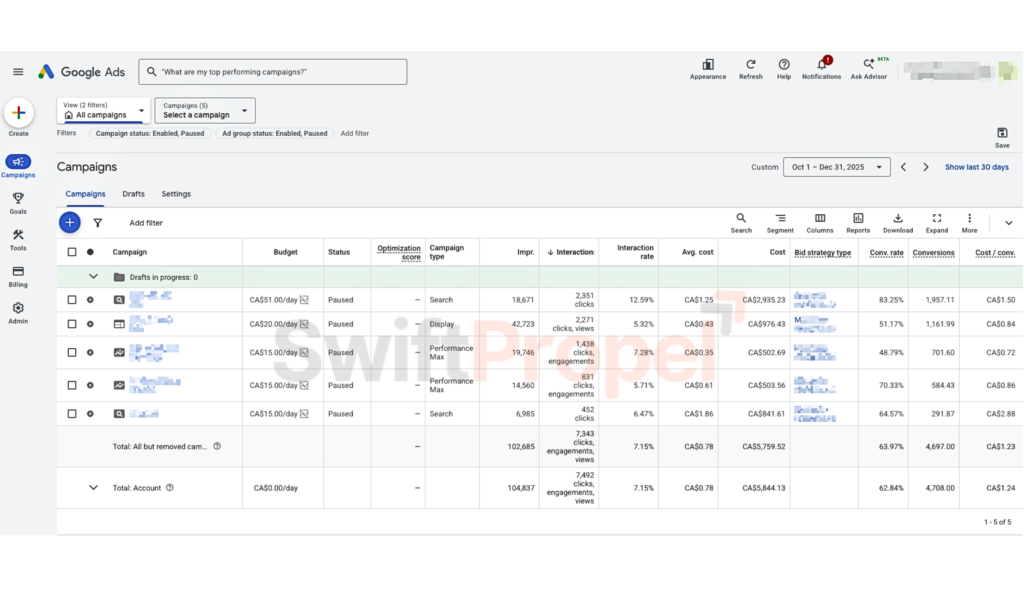
The Google Ads account was built from scratch.
Rather than relying on one generic apartment campaign, SwiftPropel built a campaign structure designed to capture different renter-intent paths: generic apartment searches, unit-type searches, location-based demand, promotional demand, returning website visitors, and phone-based enquiries.
The Challenge
Multifamily rental demand is not one audience.
A renter searching for a three-bedroom home, a prospect looking for a move-in promotion, someone comparing local rental options, and a returning visitor who has already viewed a specific listing all require different campaign treatment.
The account also operated under an attribution constraint.
SwiftPropel managed paid media as a white-label partner and did not have access to the website backend, CRM, leasing system, booked-tour data, applications, or signed leases.
Rental enquiries were tracked through a Google Tag Manager AJAX form-submission trigger. This enabled Google Ads to record form-submission conversion events, but downstream lead quality and leasing outcomes could not be independently verified.
The Objective
Build a Google Ads demand-capture system that could:
- Generate rental enquiry activity
- Capture high-intent apartment searches
- Support specific bedroom types and communities
- Promote time-sensitive rental offers
- Re-engage previous website visitors
- Create measurable form-submission and contact-intent actions
- Maintain efficient traffic acquisition while increasing campaign relevance
Campaign Architecture
SwiftPropel built and managed a multi-layer Google Ads account that included:
- High-intent Search campaigns
- Generic apartment and rental keyword campaigns
- Unit-type campaigns
- Community and location-focused campaigns
- Promotional-offer campaigns
- Display prospecting
- Remarketing campaigns
- Website-visitor audience campaigns
- Call ads
- Automated campaign formats for broader demand capture
The structure allowed budget, bids, ads, and landing pages to be matched more closely with renter intent.
Strategy
1. Capture renters by search intent
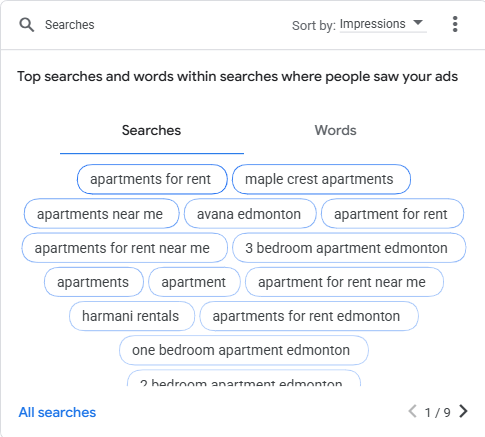
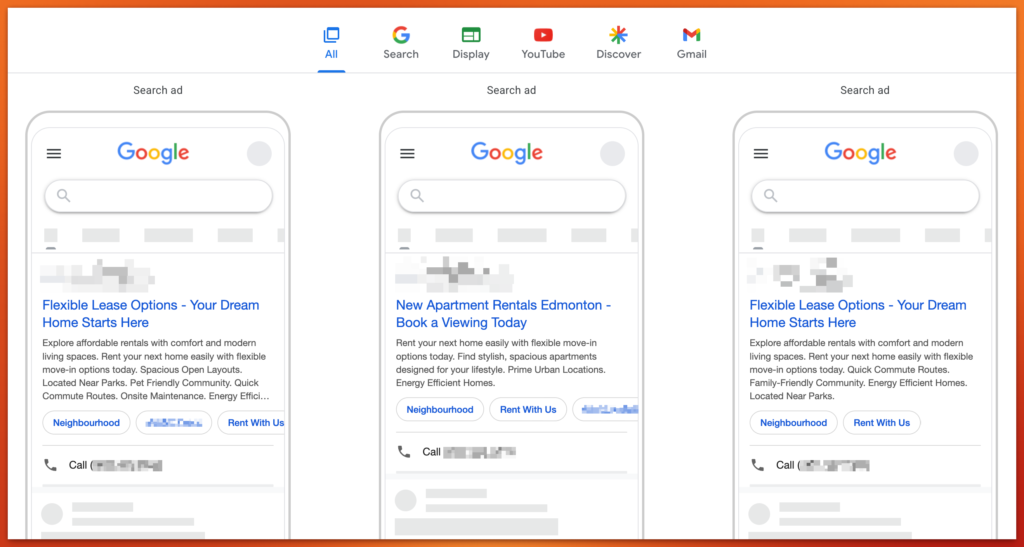
Search campaigns targeted rental-intent queries across multiple stages of the decision process.
This included generic apartment searches, rental apartment searches, one-bedroom demand, three-bedroom demand, and location-specific searches.
The goal was to avoid putting every renter into one generic campaign and instead create more control over relevance, bidding, and budget allocation.
2. Align paid traffic with the available rental offer
Campaign traffic was directed to relevant promotional, community, and unit-specific pages.
Instead of treating the website as one broad destination, paid traffic was matched to the most relevant renter path:
- Move-in promotions
- Community pages
- Specific bedroom types
- Listing and availability pages
- Rental enquiry paths
This created a more direct path between the search query, the property offer, and the enquiry form.
3. Build demand beyond Search
Search captured renters already looking for apartments.
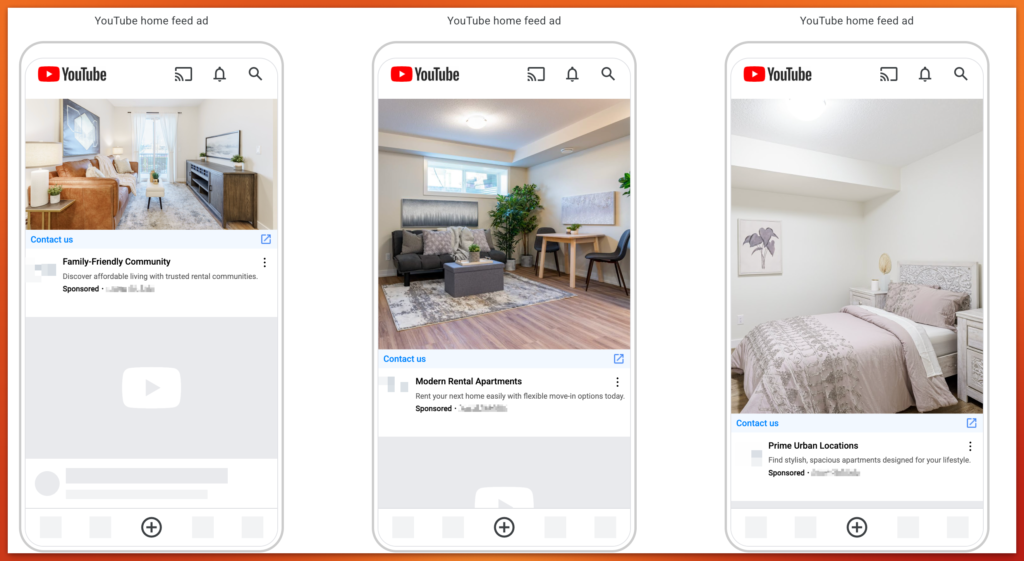
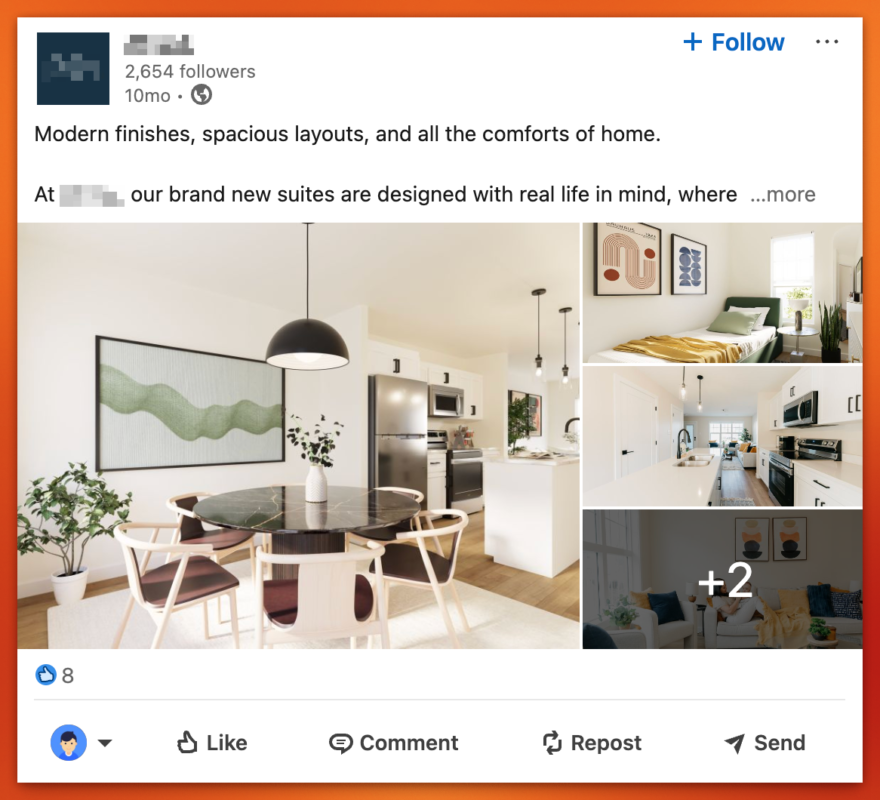
Display, website-visitor audiences, and remarketing were used to support prospects earlier in the consideration process and bring previous site visitors back to relevant rental offers.
Call ads provided a separate route for prospects who preferred to contact the leasing team directly.
4. Optimize continuously
SwiftPropel managed the account through ongoing optimization work, including:
- Search-term review
- Negative keyword refinement
- Keyword expansion
- Ad-copy testing
- Bid-strategy review
- Campaign and ad-group restructuring
- Audience and remarketing refinement
- Budget reallocation
- Device-performance review
- Time-of-day and day-of-week performance review
The objective was not simply to increase traffic volume. It was to improve the relevance of every interaction with the rental portfolio.
Results
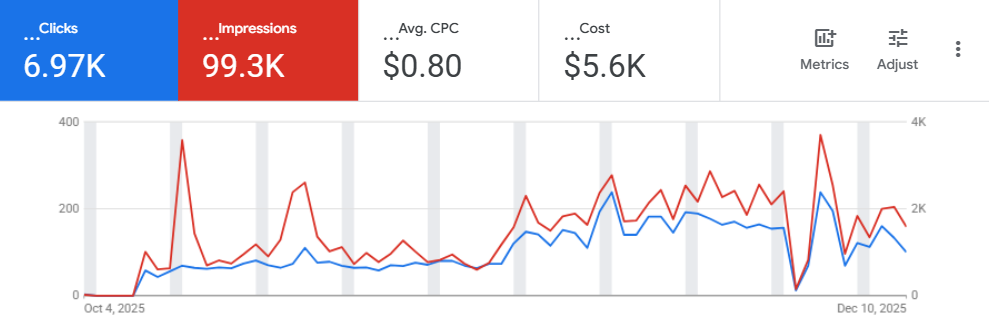
Campaign period: October 4 to December 1, 2025
| Metric | Result |
|---|---|
| Google Ads spend | CA$4.67K |
| Impressions | 82.5K |
| Clicks | 5.77K |
| Click-through rate | 7.00% |
| Average CPC | CA$0.81 |
| Paid Search sessions | 3,417 |
| Paid Search share of site sessions | 91.9% |
| Paid Search engagement rate | 58.0% |
| GTM-tracked AJAX form-submission conversion events | 1,147 |
| Book Tour click events | 84 |
| Inquire Now click events | 91 |
| Phone-link click events | 17 |
What the Results Mean
The campaign built a measurable rental-enquiry engine within a short operating window.
With CA$4.67K in media spend, the account generated:
- More than 82,000 impressions
- More than 5,700 clicks
- A 7.00% click-through rate
- 1,147 Google Ads-tracked AJAX form-submission conversion events
- Additional high-intent actions through booking, enquiry, and phone-contact paths
Paid Search was the dominant acquisition channel, generating 91.9% of all recorded site sessions during the reporting period.
The traffic was also concentrated on specific promotional and unit-focused rental pages, indicating that campaign demand was being directed toward active rental inventory rather than broad, low-intent website exploration.
Measurement Methodology
The 1,147 form-submission figure represents Google Ads conversion events tracked through a Google Tag Manager AJAX form-submission trigger.
These events are reported as tracked rental-enquiry form submissions, not CRM-verified qualified leads.
SwiftPropel did not have access to:
- CRM lead records
- Leasing-team contact outcomes
- Booked or completed tours
- Rental applications
- Approved applications
- Signed leases
- Revenue or occupancy data
For that reason, the case study does not claim a cost per qualified lead, cost per lease, booked-tour volume, application volume, or lease attribution.
Secondary engagement actions such as page views, community browsing, open-house clicks, and other website interactions are reported separately and are not presented as leads.
Key Lesson
Multifamily Google Ads performance improves when campaign structure reflects how renters actually search.
A renter looking for a three-bedroom home, a promotion-driven prospect, a returning visitor, and someone ready to call the leasing team should not be treated as one generic audience.
The performance advantage came from building campaigns around those decision paths:
- Search by unit type
- Search by location
- Search by promotion
- Compare available options
- Revisit listings
- Submit an enquiry
- Book a tour
- Call the leasing team
The objective was not simply to generate more clicks.
It was to create a more relevant path from rental intent to a measurable enquiry action.
Engagement Type
White-label Google Ads strategy, account buildout, Search, Display, remarketing, call ads, automated campaign management, conversion tracking, campaign optimization, keyword expansion, negative-keyword management, bid-strategy testing, and performance reporting.
Need a Google Ads system built around actual renter intent instead of generic apartment traffic?
SwiftPropel builds paid demand-generation systems that connect search behavior, offer relevance, landing-page intent, conversion tracking, and media optimization into one measurable acquisition engine.

Vijay Sood is a seasoned digital marketer with a passion for driving online growth and innovation. With a robust background in developing and executing comprehensive digital strategies, Vijay excels in leveraging SEO, content marketing, and social media to boost brand visibility and engagement. His expertise lies in transforming data-driven insights into actionable marketing campaigns, helping businesses achieve their digital objectives.