
SwiftPropel was engaged as a white-label Google Ads partner to manage Google Ads for a multi-community rental housing portfolio.
The business objective was to generate rental enquiries.
This was not a single-property campaign with one landing page and one leasing funnel. The website represented multiple rental communities, unit types, promotional offers, and location-based rental paths.
That changed the campaign strategy.
The account needed to capture broad rental demand, identify what type of rental path the user was likely looking for, and route prospects toward the most relevant community, promotion, suite type, or contact path.
The Challenge
Rental search behavior was broad and fragmented.

Prospects were searching for:
- Apartments for rent
- Rental apartments
- Townhomes for rent
- Three-bedroom rentals
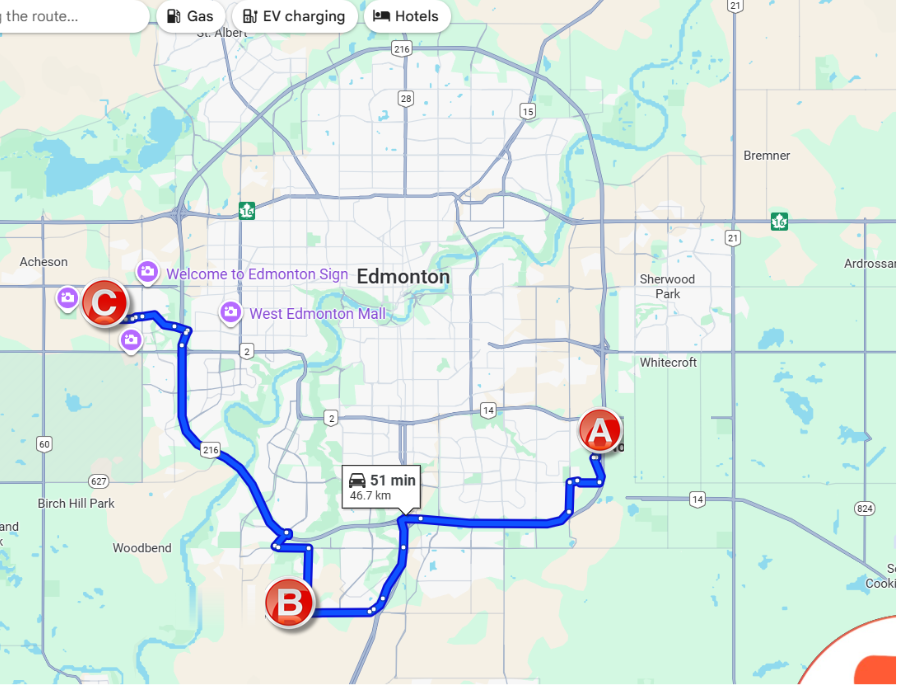
- Southwest Edmonton rental apartments
- Community-specific rental options
- Competitor properties
- Promotion-led rental offers
A generic “apartments for rent” campaign would not provide enough control over intent, message, landing-page direction, or budget allocation.
The core challenge was not just getting clicks.
The challenge was building a campaign structure that could turn broad rental demand into relevant community-level action.
The Strategic Premise
The account was built around one operating principle:
A multi-community rental brand should not send every renter into the same generic funnel.
A renter searching for a three-bedroom rental, a renter comparing competitors, a renter browsing communities, and a renter responding to a move-in promotion are not behaving the same way.
They need different campaign paths.
SwiftPropel structured the account to connect:
Search intent → campaign segment → relevant page path → enquiry or contact action
Campaign Architecture
SwiftPropel managed a layered Google Ads structure that included:
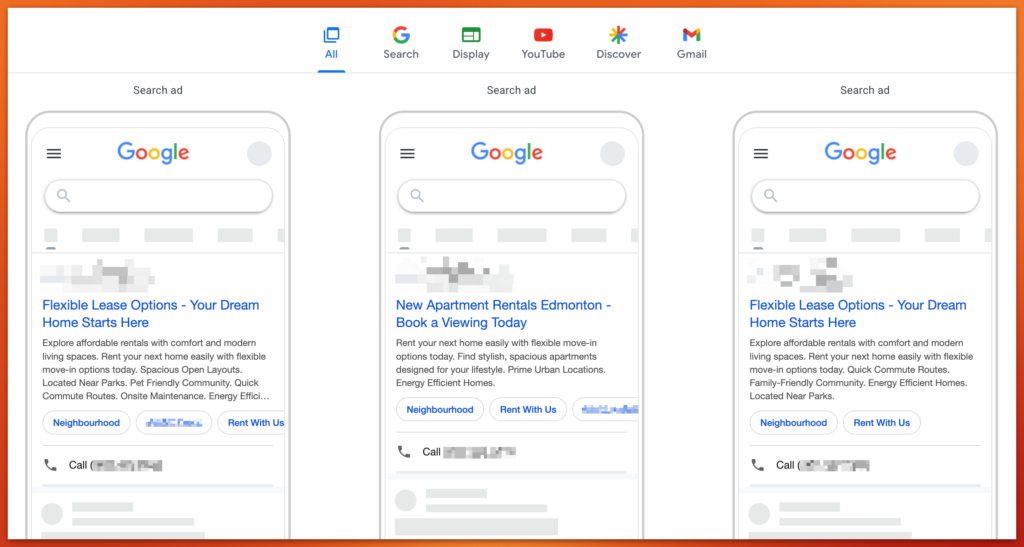
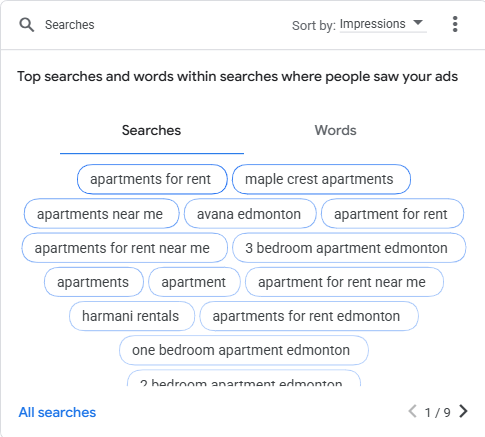
- Broad apartment and rental-intent Search campaigns
- One-bedroom, two-bedroom, and three-bedroom ad groups
- Community-specific campaign segments
- Competitor targeting
- Display prospecting
- Retargeting
- Performance Max campaigns
- Call ads
- Promotional landing-page support
- Rent-with-us and inquiry-path CTAs
Each campaign layer had a different job.
| Campaign Layer | Role |
|---|---|
| Broad Search | Capture general apartment and rental demand |
| Unit-type Search | Match renters to one-bedroom, two-bedroom, and three-bedroom needs |
| Community campaigns | Support community-specific demand and browsing behavior |
| Competitor targeting | Enter the comparison stage when renters evaluated alternatives |
| Display | Build reach and discovery across the rental market |
| Retargeting | Bring previous website visitors back into the enquiry path |
| Performance Max | Extend reach across Google inventory and reinforce high-intent paths |
| Call ads | Create a direct response path for renters who preferred phone contact |
Strategy
1. Capture broad rental demand without losing relevance
The account targeted broad rental terms such as apartment searches, rental-apartment searches, townhome searches, and three-bedroom rental demand.
But the campaigns were not treated as one undifferentiated bucket.
Search terms and ad groups were segmented so SwiftPropel could identify which rental needs were producing stronger engagement and conversion activity.
This allowed the account to support both general rental demand and more specific renter intent.
2. Route prospects toward community-specific pages
The website’s structure made community routing essential.
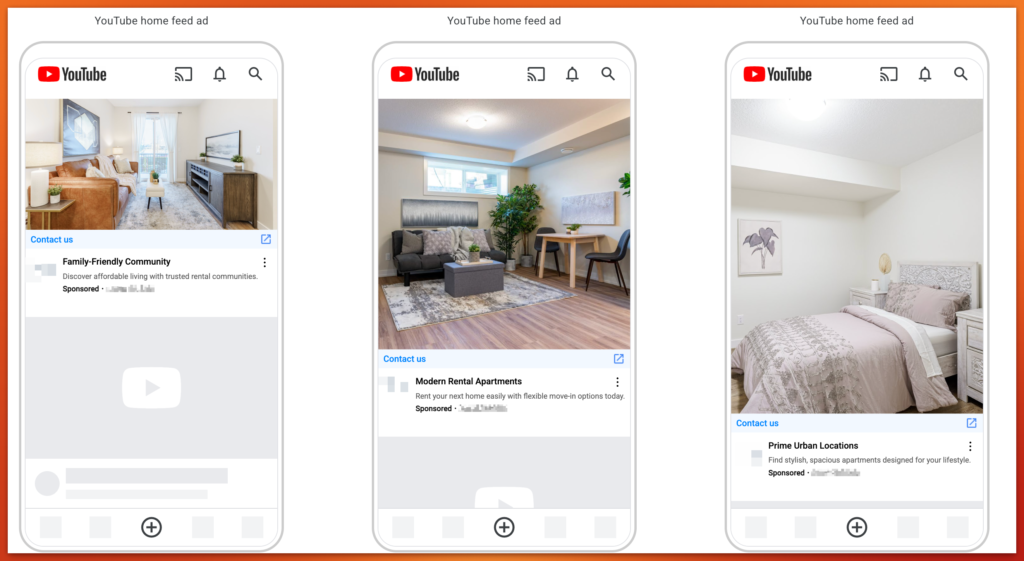
Prospects could explore:
- Rent-with-us pages
- Community listing pages
- Individual community pages
- Promotional offer pages
- Specific unit pages
- Inquiry paths
- Book-tour paths
- Phone-contact paths
SwiftPropel used campaign structure and landing-page alignment to move prospects toward pages that matched their search behavior.
The goal was to avoid wasting paid traffic on generic browsing when a more relevant community or offer path existed.
3. Use promotions as acquisition paths
Promotional pages played an important role in the renter journey.
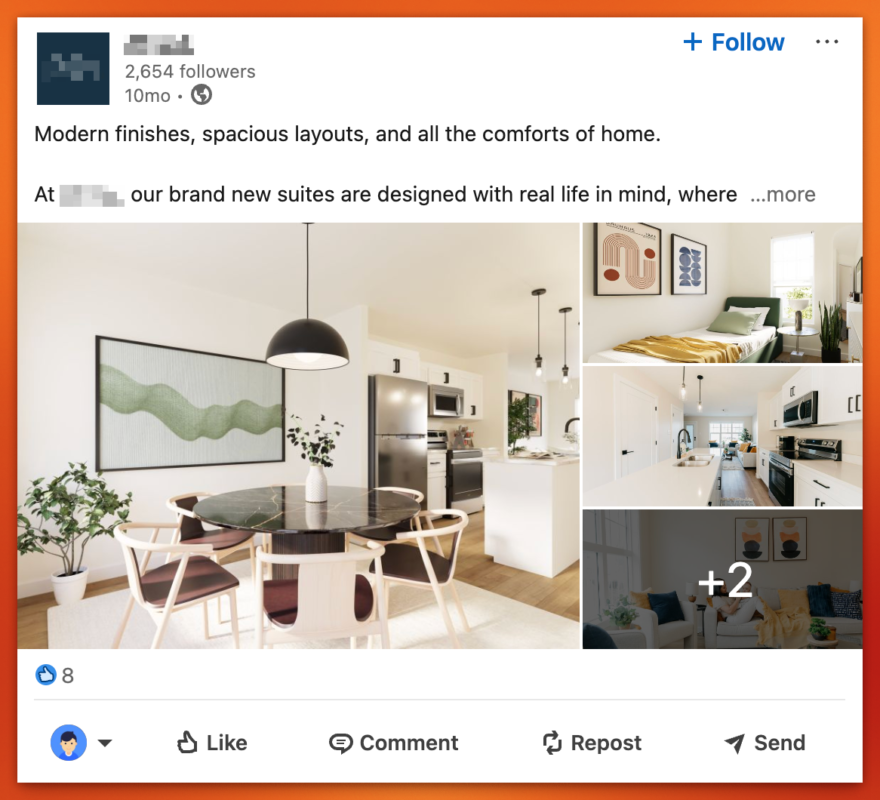
Instead of treating promotions as disconnected website content, SwiftPropel used them as demand-capture assets.
Promo-led paths supported renters who were more likely to respond to urgency, incentives, or move-in timing.
This created another route from search demand into enquiry activity.
4. Enter competitor comparison moments
Competitor ad groups produced meaningful campaign activity.
This mattered because renters frequently compare multiple communities, marketplaces, and property brands before contacting a leasing team.
SwiftPropel used competitor targeting to place the rental portfolio inside that comparison set.
The goal was not merely to defend brand demand. It was to intercept renters who were actively evaluating alternatives.
5. Separate enquiry actions from softer engagement
The campaign tracked multiple levels of renter intent.
Direct-response actions included:
- Submit Lead Form
- Click Inquire Now
- Click Book Tour
- Click Phone Number
- Rent With Us CTAs
Research and consideration actions included:
- Browse a Community
- Open House clicks
- Community page views
- Promo page views
- About This Suite clicks
- Contact page views
This distinction matters.
Not every tracked action is a lead. Some actions show enquiry intent. Others show research, comparison, or community exploration.
SwiftPropel separated those action types so the reporting did not inflate soft engagement into confirmed lead volume.
Results
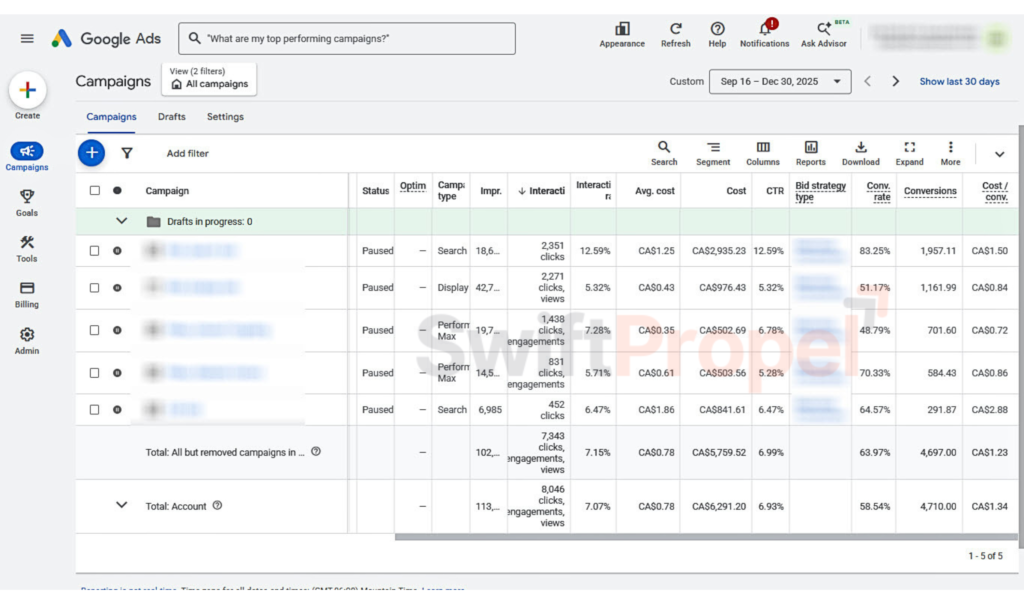
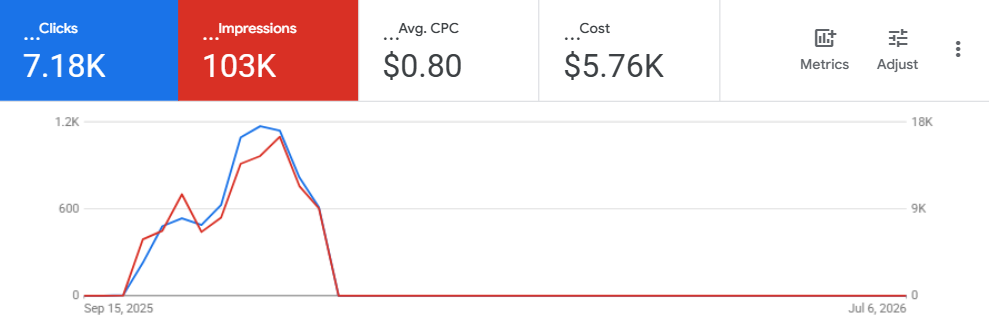
Reporting window: September–December 2025
| Metric | Result |
|---|---|
| Google Ads spend | CA$6.29K |
| Impressions | 113.84K |
| Clicks | 7.89K |
| Click-through rate | 6.93% |
| Average CPC | CA$0.80 |
| Total tracked Google Ads actions | 4.71K |
| Cost per tracked action | CA$1.34 |
| Submit Lead Form actions | ~1.15K |
| Open House click actions | ~1.20K |
| Browse a Community actions | 605 |
| Book Tour click actions | 119 |
| Inquire Now click actions | 135 |
| Phone-number click actions | 24 |
Campaign and Ad Group Performance
The account’s results were distributed across multiple renter-intent layers.
| Segment | Role | Result Signal |
|---|---|---|
| Search campaigns | High-intent rental demand capture | Strongest direct-response conversion volume |
| Display campaigns | Scaled awareness and discovery | High reach with low-cost traffic |
| Performance Max | Cross-network reinforcement | Supported community and retargeting paths |
| Competitor ad group | Comparison-stage demand | Strong volume from renters evaluating alternatives |
| Unit-type ad groups | One-, two-, and three-bedroom intent | Supported specific rental needs |
| Retargeting | Return-visitor demand | Re-engaged renters after initial property research |
The strongest lesson from the data is that the account was not dependent on one campaign type.
Search, Display, Performance Max, competitor targeting, and retargeting each played a separate role inside the rental decision journey.
Website Engagement Context
GA4 showed strong renter engagement across key website paths during the same reporting window.
Important page paths included:
| Page Path | Strategic Role |
|---|---|
/rent-with-us/ | Main enquiry and rental-intent path |
/ | General brand and property discovery |
/communities/ | Portfolio browsing and community comparison |
| Promotion pages | Incentive-led rental consideration |
| Individual community pages | Community-specific evaluation |
| Suite pages | Unit-level decision support |
This supports the strategic view that users were not only clicking ads. They were moving into the website areas required to compare communities, evaluate rental options, and take enquiry-related actions.
Paid Search Context
Paid Search was the largest acquisition channel in GA4 during the reporting window.
It generated the highest session volume among acquisition channels and maintained a strong engagement rate.
That supports the role of Google Ads as a meaningful driver of rental-market traffic and community-level exploration.
The account did not only create visibility. It brought renters into the website at scale and directed them toward paths where they could review communities, promotions, and enquiry options.
Competitive Visibility Context
The competitive visibility screenshot showed the client’s domain appearing inside a crowded rental advertising market alongside rental marketplaces and other property competitors.
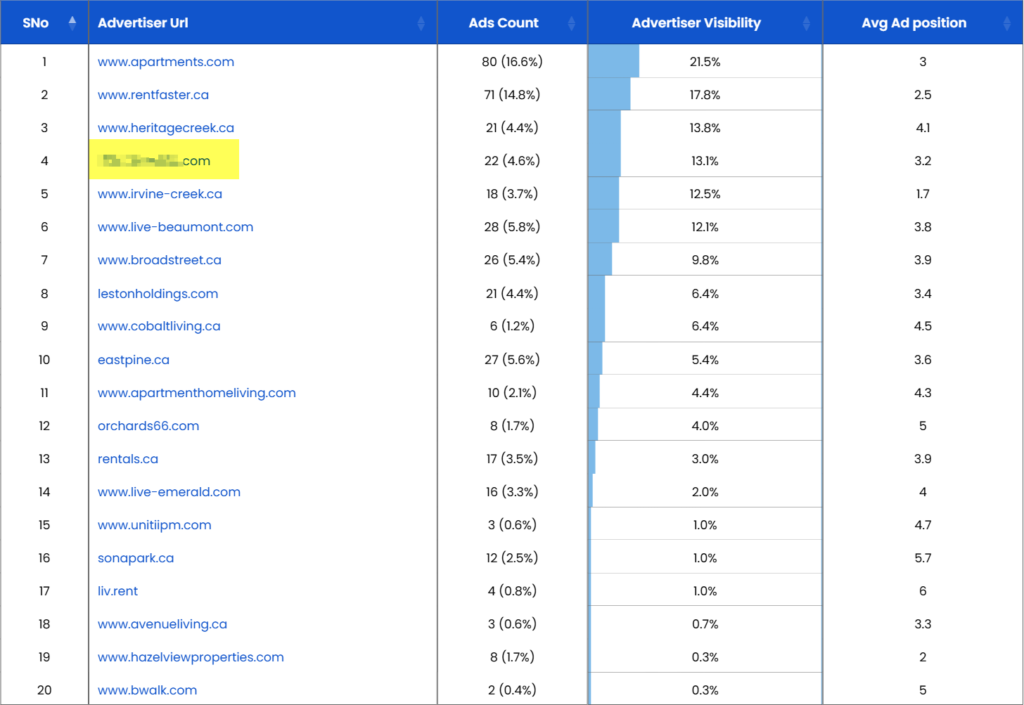
This matters because the portfolio was not competing in isolation.
It was competing against:
- Apartment marketplaces
- Local rental listing platforms
- Nearby rental communities
- Property management brands
- Other rental portfolios
SwiftPropel’s campaign structure helped the brand appear within that competitive set while still routing users toward owned website assets rather than only relying on third-party listing platforms.
What the Results Mean
With CA$6.29K in media spend, SwiftPropel generated:
- 113.84K impressions
- 7.89K clicks
- 6.93% CTR
- CA$0.80 average CPC
- Approximately 1.15K tracked Submit Lead Form actions
- Approximately 1.20K Open House click actions
- 605 Browse a Community actions
- 119 Book Tour click actions
- 135 Inquire Now click actions
- 24 phone-number click actions
- Strong traffic movement into rent-with-us, communities, promo, and individual community paths
The account did more than drive traffic.
It created a routing system that helped renters move from broad apartment search into more specific rental paths.
Measurement Note
Google Ads recorded 4.71K total tracked actions during the reporting window.
That number is not presented as 4.71K qualified leads.
The total included a mix of:
- Submit Lead Form actions
- Open House clicks
- Browse a Community clicks
- Rent With Us CTA clicks
- Inquire Now clicks
- Book Tour clicks
- Phone-number clicks
- Community page-view actions
- Suite information clicks
- Contact page views
For reporting accuracy:
| Measurement Stage | Reported Outcome |
|---|---|
| Tracked form-submit actions | ~1.15K |
| Open House intent | ~1.20K clicks |
| Community browsing intent | 605 actions |
| Book Tour intent | 119 clicks |
| Inquire Now intent | 135 clicks |
| Phone intent | 24 clicks |
SwiftPropel did not have CRM, leasing-platform, or final lead-status access.
Therefore, this case study does not claim:
- Qualified leads
- Completed tours
- Applications
- Approved applications
- Signed leases
- Occupancy gains
- Revenue attribution
Key Lesson
For a multi-community rental portfolio, Google Ads should not be built like a single-property campaign.
The paid media system needs to help renters answer a more complex question:
Which community, offer, unit type, or contact path is most relevant to me?
That requires more than generic rental keywords.
It requires:
- Broad rental search coverage
- Unit-type segmentation
- Competitor targeting
- Community-level routing
- Promotional landing-page support
- Retargeting
- Separate tracking for enquiry intent and research intent
The strategic advantage was not simply getting low-cost clicks.
It was turning broad rental-market demand into community-specific discovery, comparison, and enquiry activity.
Engagement Type
White-label Google Ads strategy, campaign restructuring, Search campaigns, Display campaigns, Performance Max, competitor targeting, retargeting, unit-type ad groups, community-specific campaign support, call ads, conversion tracking, search-term analysis, negative-keyword refinement, bid-strategy review, ad-copy refinement, audience segmentation, landing-page alignment, and performance reporting.
Need Google Ads that does more than send renters to one generic apartment page?
SwiftPropel builds paid acquisition systems that connect search demand, community routing, promotional offers, retargeting, and measurable rental-enquiry actions into one structured growth engine.

Vijay Sood is a seasoned digital marketer with a passion for driving online growth and innovation. With a robust background in developing and executing comprehensive digital strategies, Vijay excels in leveraging SEO, content marketing, and social media to boost brand visibility and engagement. His expertise lies in transforming data-driven insights into actionable marketing campaigns, helping businesses achieve their digital objectives.