
Schema markup can enhance how search engines understand website content and serve rich results, but creating and maintaining structured data manually can be complex, time-consuming and prone to errors. However, the automation of schema markup generation by AI is changing this process, allowing businesses to implement it more quickly and accurately on larger sites.
By integrating content audits, smart data extraction, AI-generated JSON-LD, and automated validation, businesses can scale their deployment of structured data while increasing efficiency. AI-driven workflows today are fully capable of integrating with CMS, product catalogs, and APIs to ensure the schema always matches the content. This increases not only the overall productivity but also the chance of gaining valuable rich results that can increase search visibility and click-through rates.
Read on to discover the ins and outs of AI schema markup automation, along with a step-by-step process of automating implementation successfully.
Understanding Schema Markup
Schema markup can be defined as the descriptive information for the content of the pages. Humans can understand that “$49.99” next to “Add to Cart” represents the product price, but search engines need to be clearly instructed. The vocabulary used for this instruction is controlled by Schema.org, a joint effort of Google, Bing, Yahoo! And Yandex.
Three markup formats can be used for implementation: JSON-LD (JavaScript Object Notation for Linked Data), Microdata and RDFa. JSON-LD is becoming the standard format in 2026, with its benefits strongly recommended by Google. And it is exactly what most of the default AI solutions produce. Unlike Microdata, JSON-LD is a JavaScript snippet in a separate file inserted within the HTML code of your page. It is easier to maintain and debug because the code is not mixed with the other layout content.
Step-by-Step: Automate Your Schema Markup Implementation
The automation of schema markup implementation takes an otherwise technical and demanding task to an efficient, user-friendly experience. Follow these steps:
Step 1: Identify and Implement Appropriate Automated Schema Markup Tools
An approach to use automated schema markup tools would be necessary as it will help implement the structure of data for several pages in a relatively simpler and faster manner. The selected tool should not add any excessive manual effort for the addition of structured data and also to prevent any error.
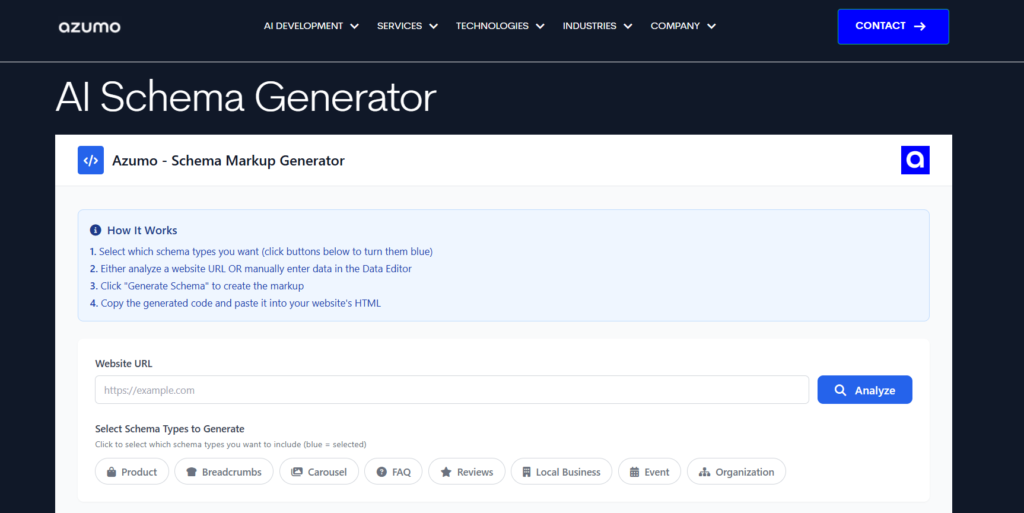
Choose tool that will be able to recognize your content and automatically add the correct schema types to your pages based on smart AI. Because there is such a multitude of content types all over the internet, it ensures that you will be applying the correct description for each page. A tool that analyses elements of a page and suggests schemas would be a good example.
Another point you shall want to look into is whether the schema markup tool can seamlessly work with your existing CMSs. As long as it can, you wouldn’t be a pain to use your SEO work to create your schema markup rather than struggling through workaround integrations.
Step 2: Analyze Content for Schema Opportunities

Create a basic audit of the pages on your website to identify where you’ll want to use structured data. Look at each page to see what information is there and the types of schema markup needed. For example, a page listing the services you provide would be categorized as a local business page. A page with an article with a list of ingredients and directions could use the Recipe schema which pulls out the cooking time, ingredients, etc into a search result.
Employ AI-enabled analysis utilities that will effectively crawl your pages and decode schema types that will spotlight them if used on those pages. Since the AI tools are designed to understand various constructs of content, they can automatically recommend usage of schemas that are the best suited for the format and intent of the search, thereby providing the right type of markup for each page.
Use schema markup on your most important pages to get the most out of them. Your key pages that you feel will most likely to get traffic, or the pages with content that best suits your direction, will be the most effective.
Step 3: Generate and Deploy Schema Markup
First you need to generate the appropriate schema types for each of the pages on your website. To do so you need to use an intelligent schema generator which can generate the markup quickly and precisely giving you the contextually relevant markup for your pages.
An elevated AI powered tool can scan your content and make more accurate appropriate recommendations to what markup needs to be used.
Automate the insertion process of your structured data in your web page/html to save time and avoid mistakes is very important. In particular in order to avoid implementation mistakes on large websites. To do this, make sure that implementation approach is adapted to your schema’s needs.
Verify that the automatically generated schema markup conforms with search engine’s rules in order to avoid attempts at penalizing them and get the maximum benefit of schemas, i.e. More visibility and greater conversion rate.
Step 4: Validate and Test Your Schema Markup
Validate after schema markup has been added. You should use a schema validation tool to see how search engines interpret your schema and feedback on any errors or suggestions for improvements.
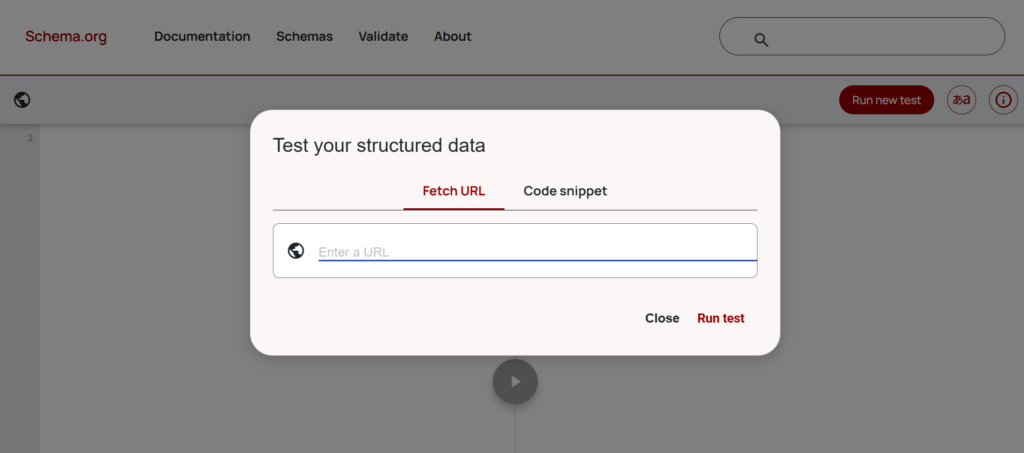
Always re-check and verify your schema markup on a regular basis and make sure it adheres to current algorithms and rules set by the search engine. By doing so, your schema markup will reach its full potential and continue to bring you the benefits of improving CTR.
Reassess your validation results to improve your technique. For example, you might discover that a certain schema markup error occurs more often. This can help you to improve your strategy of applying schema markup and to identify patterns of common errors.
Step 5: Monitor Performance and Optimize
After implementing the schema markup on your website, wait for some time and check out how the markup affects your SEO data. Monitor some like changes in the organic searches, user engagement, page rank using analytical tools and keep a close eye on this.
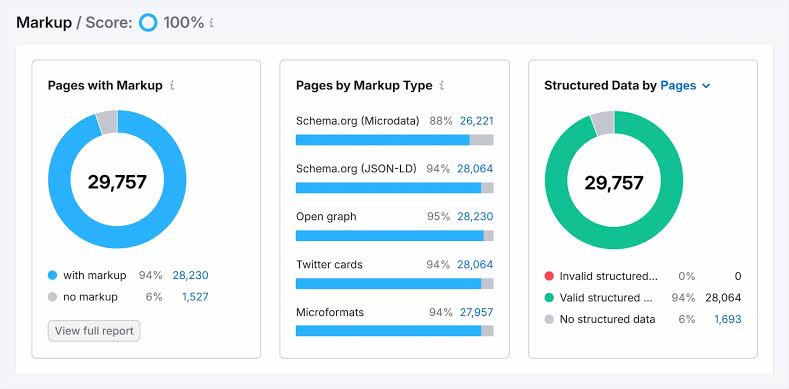
Modify and enhance your schema strategy following the evaluations. Based on your conclusions, implement only those types of schemas that make positive influence on your SEO objectives. For example, if one page structure is so effective and helpful as well to bring interest, use it on other pages.
Regularly review and refine your schema approach so that it remains aligned with your wider SEO strategy, search-engine guidelines and changes in user behaviour. Businesses that lack the internal resources to manage ongoing technical SEO can consult SwiftPropel for broader search-marketing support. Keep abreast of new trends and alterations in user search patterns to adjust your usage of structured data accordingly. This ever-evolving process will help to maintain your website’s edge.
Conclusion
AI has altered how schema markup is implemented. Access to formats that previously needed a developer, and took hours to read through documentation, can now be done in minutes with ChatGPT or Claude. More sites can now add structured data to their sites, and competitors will be increasing the bar for rich result visibility. Organizations that use AI to generate schema like this, along with additional validation and planning, have enormous advantages in search visibility.
Begin with your pages receiving the most traffic and focus on the schema types that will be most useful to that content: Article for blogs, product for e-commerce, and local business for physical locations. Check every bit of AI generated schema to make sure it’s the schema you want before go-live. Check Google Search Console’s enhancements report every week to troubleshoot before losing rankings. Schema markup is not a once-and-gone task. Keep up with changes and perform maintenance accordingly.

Vijay Sood is a seasoned digital marketer with a passion for driving online growth and innovation. With a robust background in developing and executing comprehensive digital strategies, Vijay excels in leveraging SEO, content marketing, and social media to boost brand visibility and engagement. His expertise lies in transforming data-driven insights into actionable marketing campaigns, helping businesses achieve their digital objectives.