Moving into new international markets is very exciting for any business, big or small. Regardless of company size, the challenge of bringing marketing materials to the new market may be only the beginning. To succeed, companies must adapt individualized messaging to fit cultural expectations and market conditions, all while keeping to the company’s brand.
The normal state-of-the-art technology for translation of content was built solely by humans, and that usually takes time, cost, and scaling it across dozens of languages can be a matter of a few technicalities in the process. Now, the game is changing dramatically with enterprise-level artificial intelligence. Read on to master how modern enterprises leverage sophisticated AI systems to break down language barriers, streamline localization workflows, and capture global markets at scale.
The Importance of Cultural Nuance and Authenticity
Language translation isn’t just about converting words. It involves understanding many different idiomatic expressions and subtle cultural nuances. Simply translating words ‘flat’ into a certain time or place doesn’t catch the emotion that good marketing plays on, meaning the brand might seem disconnected, insensitive, or altogether ignorant of the local culture.
The combination of state-of-the-art generative AI and neural networks allows for the generation of contextual nuances, reducing errors traditionally seen in translation significantly. By feeding the emerging tools with hyperlocal data sources, the technology respects local culture norms, timelines, and creative touch points. Using advanced machine translation algorithms to handle the bulk of the heavy lifting, your internal linguists and subject matter experts can focus on the fun part: perfecting the nuances of the language that generate the desired emotional response across regions.
How AI Supports Faster Translations and Local Insights
Historically, companies have depended on vast, inconsistent networks of freelance translators to handle multilingual content. While this has allowed a learning human touch, it often results in time-consuming approval and a long time to market. Enterprise AI solutions speed up the entire publishing lifecycle by creating first-pass glossaries in minutes in almost every time zone around the world, resulting in millions of high-value documents within hours.
Advanced AI translation engines have access to extensive linguistic databases and analyze patterns in usage and vocabulary from thousands of translations completed previously. Used in an automated flow, they are highly competitive as:
- Faster speed to market: Companies can launch or update relevant content across many markets immediately, superior to local competitors.
- Significant Cost Reduction: The automation of the heavy lifting enables the localization teams to reallocate the budget and human resources from repetitive typing tasks.
- Actionable Local Insights: Advanced AI systems can analyze local online trends to identify particular trending terms or language that users in your local markets are searching for within your category.
A Step-by-Step Process for Global Scaling
Use this structural execution approach for creating an enterprise-quality, automated pipeline that efficiently translates and flexes your materials without sacrificing your brand.
1. Establish Your Brand Glossary and Cultural Guidelines
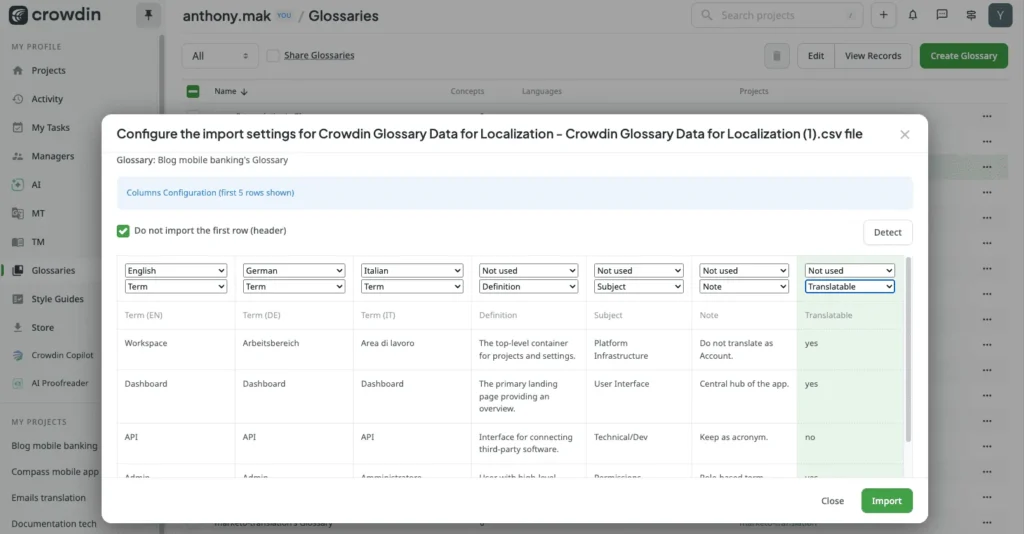
Before anyone writes a single piece of automated content, create a centralized localization glossary that serves as an approved repository for your corporate dictionaries, product names, and certain keywords optimized for local web users. Explicitly define your tone boundaries, such as indicating where a casual style should switch to formal business communication, so your models have a clear linguistic reference point.
2. Integrate Purpose-Built Translation API Infrastructure

Integrate your CMS with specific LLMs and neural NMT engines through a powerful API front-end. Ditch the overly generic public text areas and harness enterprise developer interfaces to pass your specific glossary and system prompts through to the translation layer.
3. Automate High-Volume Content Ingestion and Routing

Set up automated triggers to go live when you produce content in your main language. Raw text data from your staging site is automatically pulled, coordinated to the correct regional profiles, and sent to the correct AI pipelines for dozens of languages to be perfectly written as drafts at scale.
4. Deploy a Tiered Human-in-the-Loop Quality Review

Create a rigorous quality assurance process structure depending upon the risk factor inherent in your content types. For instance, send simple informational copy through automated filters while using local linguists and matching subject matter expertise for large-scale customer-facing or sales-driven campaigns to fully capture cultural kerning.
5. Retrain Your Machine Learning Models Continuously
Create a feedback loop that records all manual adjustments made by your regional review teams-then bring those edits back into your localization database to re-train your translation engines. This will enable your AI to continue learning, drive down the incidence of errors, and significantly speed up downstream revision cycles.
Quality Assurance for Localized Content
No matter how advanced your enterprise AI platform is, you will still need some form of quality assurance mechanism in place, particularly when a brand rolls out a blockbuster marketing program or faces the challenge of complex regulatory compliance. To guarantee flawless worldwide rollout, your toolkit must revolve around these five key validation tiers:
1. Multi-Level Editorial Review
Always use an AI-supported working process to have native-speaking linguists and subject matter experts read through translations. This process allows for the elimination of text that mismatches regional standards and company style, as well as variations in layout, structuring, or a lack of precision within the text.
2. Continuous Machine Learning Optimization
The real strength of present-day AI localization is retraining and learning. Each time a human editor goes over or approves a translation block, this particular input can be used for retraining the algorithm. As a result, the internal reference glossary is improved, with repetitive mistakes gradually eliminated and the flow of content processing increasing in speed.
3. Automated Compliance and Policy Enforcement
Send the content for review by a regional reviewer through an automated policy engine – sets with regulatory requirements of the source country and region. The automatic process quickly determines the risk of non-conformance, legal detail, censor words and topics in those industries in the target country. It also provides significant reduction of risk for your clients’ legal exposure in highly regulated markets.
4. Direct Testing in Regional Target Markets
Validate your high-impact message by launching through small, focused pilots in your home markets. The collection of local user-engagement telemetry and feedback allows your team to quickly and cheaply determine if your translated content resonates with real audiences prior to a global rollout.
5. Algorithmic Translation Quality Scoring
Implement automated quality metrics, like BLEU or COMET scoring tools, to check your translations on the fly. Defining a hard baseline quality score prompts your localization crew to address weak translations before the review cycle, so you get a heads-up on the translation score.
Conclusion
AI is evolving in content worldwide distribution at an unprecedented rate. New neural network architectures are likely to come equipped with capable Emotional Intelligence features, where messaging styles will adapt automatically at the content platform to changing market culture sensitivities and sentiment.
In addition, as predictive analysis tools become more advanced, businesses can even anticipate local market trends, adjusting their content before they’re ready to do so. As computational linguistics continues to mature, the everyday implementation of automated workflows will grow from being a simple translation provider to a powerful tool for global expansion, enabling brands to truly lead in each language and culture.

Vijay Sood is a seasoned digital marketer with a passion for driving online growth and innovation. With a robust background in developing and executing comprehensive digital strategies, Vijay excels in leveraging SEO, content marketing, and social media to boost brand visibility and engagement. His expertise lies in transforming data-driven insights into actionable marketing campaigns, helping businesses achieve their digital objectives.