
Data from SEO tools company Ahrefs shows that there are 3,000 searches a month for “law firm near me.” There are also 2,800 searches a month for “personal injury law firms near me.” It is likely that potential clients check out and examine the first few websites that come up in the search results. This is why SEO helps your website appear in the first search results.
In this article, we will discuss the basics of search engine optimization for lawyers. You can use this information to build an SEO strategy for your law firm that will bring prospective clients to your law firm’s website. So, let’s begin!
Why Lawyers Need SEO?
Attorneys require SEO in order to improve their online presence and gain more qualified clients. SEO for attorneys helps your practice come out on top of the results pages of search engines such as Google, for example, when a potential customer is actually searching for your service, and this results in an increase in conversions. SEO marketing is an essential strategy for law practices that are interested in growing.
A law firm also looks more credible and trustworthy to users. Local SEO for law firms helps to ensure that a law firm shows up in “near me” searches. The following are some of the reasons a law firm needs SEO:
- Visibility and Clicks: In general, most of the population uses search engines to look for legal assistance, so being on top of the search results is essential to get noticed by the potential client. The first organic search result receives significantly more clicks compared to other results.
- Competitive Advantage: An effective SEO plan would allow a law practice to come above its rivals, putting it on top of the search engine results page.
- Targeted Local Traffic: “Local SEO strategies, such as optimizing for local searches and Google Business Profile management, are a must for law practices to show up in searches for personal injury lawyers near your location,” says one expert.
- Reputation and Trust: The highest possible rank on a search engine is the best way to get potential customers, since it shows a reputable site for the company. This is why SEO for lawyers and attorneys is considered the best SEO investment.
10 Simple SEO Strategies for Lawyers to Attract More Clients
In the current competitive legal environment, it has become imperative for law firms to be visible on the internet. The fact is that the prospective client is increasingly using search engines for legal advice. The following is a complete guide on how law firms can use 10 easy yet effective SEO strategies to help law firms gain more qualified leads.
1. Keyword Research
The initial process in lawyer search engine optimization is figuring out which keywords are worth targeting. Keywords are search terms that people enter into search engines in order to find legal services on the internet. Examples include “personal injury law firm near me” or “family law estate lawyers in Escondido.”
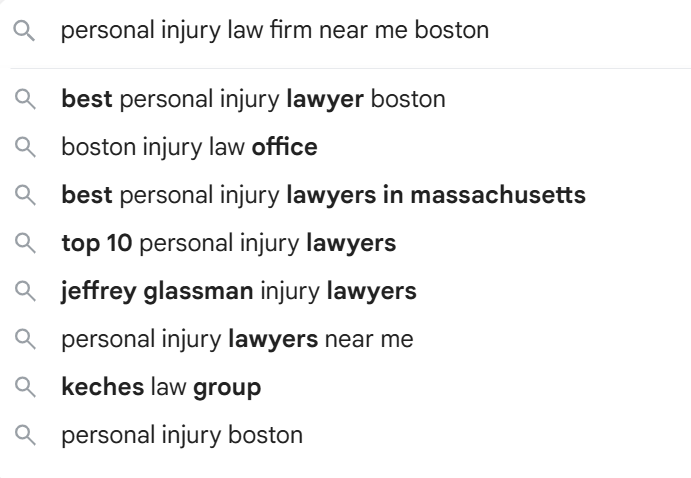
The key to a successful legal SEO campaign lies with keywords. To begin, it is necessary to find key phrases that searching clients would be using to find solutions to their legal issues. Keywords that will be most applicable to your legal SEO campaign will include descriptions of your firm’s legal practice, specializations such as personal injury, and locations.
2. Quality content creation
The search engine will favor a law firm’s website if it provides comprehensive answers to search engine questions. The key to achieving success in search engine optimization is to create content for the website that is valuable, informative, and engaging. This starts with a content marketing strategy based on your list of targeted keywords. It is important to address common legal queries and offer valuable insights. Law firm marketing is based on educating your audience. You should know that Google Search has stricter standards for “Your Money or Your Life” topics.

Law websites firms that handle personal injury cases and DUIs are held to this higher standard. Therefore, this is imperative for SEO lawyer marketing. Additionally, you can utilize tools such as ChatGPT for lawyers to help you come up with ideas. However, you should ensure that your personal injury lawyer or attorney reviews your website for accuracy.
3. Add High-Quality Backlinks
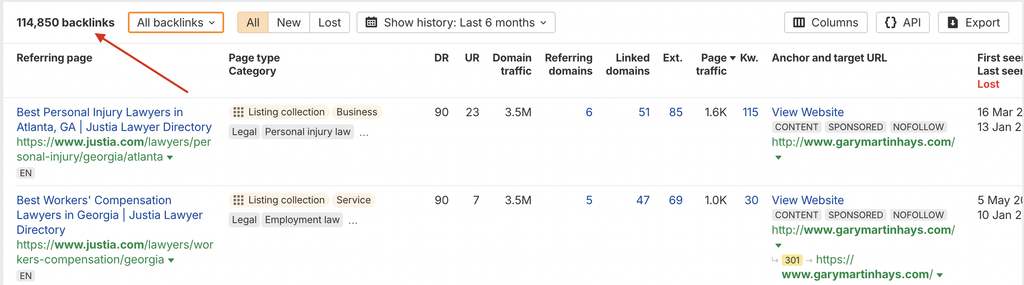
You may have excellent content, but how can Google realize that it’s incredible? This can be achieved by link building for lawyers. A backlink occurs when a user accesses a site that contains a link to your site’s content. Google considers backlinks to be “a vote of confidence.” The more high-quality backlinks your law firm’s website receives, the more trustworthy your content will look to Google. A backlink is high-quality if:
- It will reside in the content, not in a sidebar or footer.
- It is from a site that has a high domain authority.
- The number of outgoing links from the linking web page is small.
- The anchor text used to link to your site is relevant to the content.
If your website has fewer or poor-quality backlinks, your law firm website’s SEO credibility may be perceived as low by Google.
4. Leverage Google My Business for Local Search Engine Optimization
One of the most effective tools, just like Ahrefs, for local SEO success is Google My Business, or GMB. An optimized Google My Business listing will give you a better chance of being featured on Google’s Local Pack.
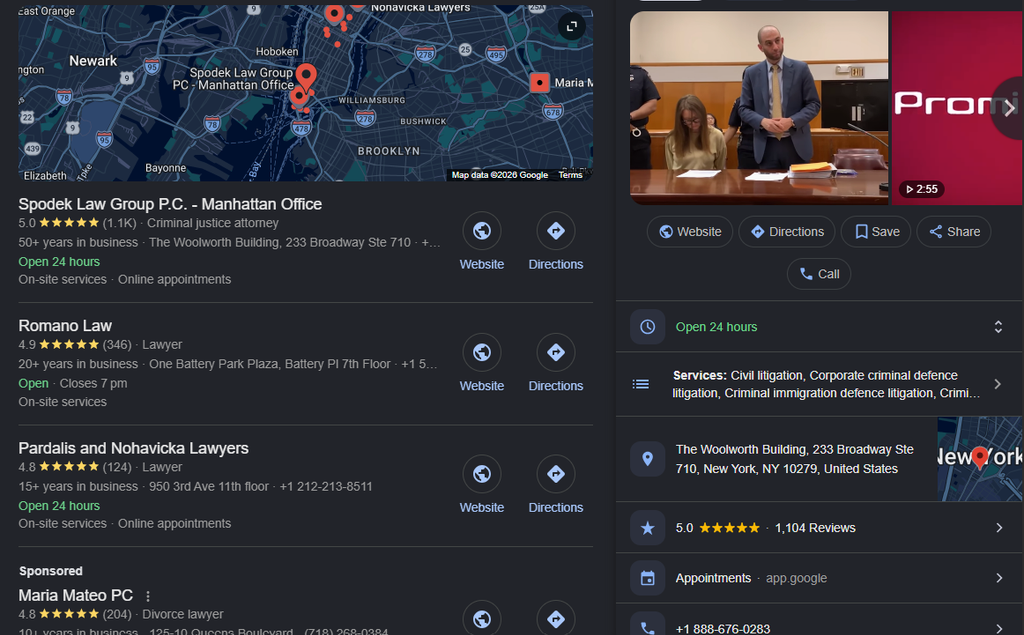
To maximize your GMB listing:
- Ensure accurate business information: Make sure to include your law firm’s name, address, and phone number.
- Select the appropriate business categories for your law firm website.
- Upload high-quality images: Images of your office and staff can help build credibility.
- Encourage Client Reviews: Client reviews have a very strong impact on enhancing the position of any firm on the web. Positive reviews will not only increase the rankings.
- Post on Google: To attract a potential client, make use of Google Posts as part of your digital marketing strategy.
5. Put Focus on Mobile Optimization

Over half of all web traffic comes from mobile, and because of this, optimizing a law firm’s site for mobile has become a critical task. This is because Google favors sites that can be viewed easily on mobile, and thus, you may lose a prospective client if your site is not optimized.
To optimize for mobile:
- It must have a quick loading time, and this means that it should not take long for the site.
- Make sure your website is responsive, which means it should adjust to all screen sizes.
- Make navigation simple, as well-organized menus result in a positive user experience.
- Optimized for Voice Search, as many people search for a lawyer using Siri or Google Assistant.
Mobile optimization will, therefore, help to increase the search engine rankings of your company.
6. Establish Trust with E-E-A-T Factors
The E-E-A-T model is a decisive factor in SEO. Google favors pages that demonstrate their expertise in a particular field. This is especially important in law firms since incorrect information may cause harm to your credibility and SEO efforts.
Optimize for EEAT by highlighting your credibility:
- Including the bios and qualifications of the attorneys.
- Citing credible sources and maintaining updated content on websites.
- Using reviews and case studies as social proof.
- Having a licensed attorney review all content for accuracy.
Everything above sends a message to the search engines that you are a trustworthy source for legal information and SEO efforts.
7. Encourage Past and Current Clients to Write Reviews
Make as many client reviews as possible to create a positive online image. Each time you finish a case, email a link to your Google review page to your clients and ask them for a review to support your SEO services. You can also follow up on emails requesting that they review your law firm.
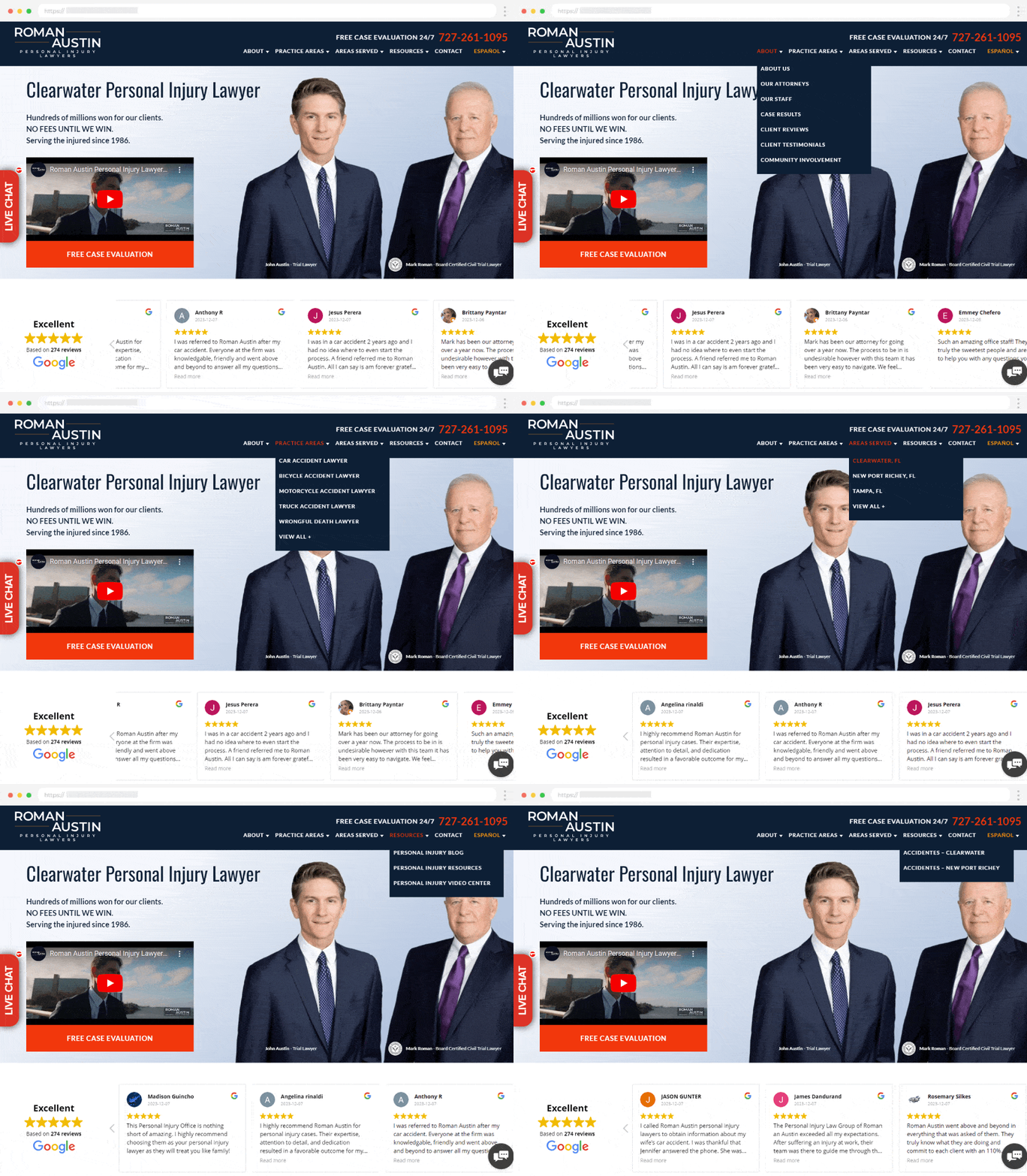
Use the Semrush tool “Review Management” to better manage reviews. Once you are registered, you will be alerted to any reviews that you get from review sites. Be prompt in responding to reviews. And always thank people for their kind reviews to enhance your attorney SEO strategy. Use all reviews to make your brand look the best it can. Yes, even the bad ones.
Reviews that challenge your business are actually opportunities to build a positive brand. Be professional in responding to the review and do the best you can to resolve the issue. Your professionalism will make a positive impact at your law firm. This will also entice potential customers to enquire about your services.
8. Enhance Visibility and Citation in Large Language Models (LLMs)
The search engines have recently resorted to artificial intelligence and large language models to answer search queries in a summarized form. This implies that in addition to your search rankings, you need to pay close attention to the results produced by artificial intelligence. This is because such outcomes usually derive from authoritative and organized content.

To boost your prospects, ensure that your content remains accurate and detailed. This will include keeping your content updated and as complete as possible. The SEO work that you are already doing will also prove to be helpful in this regard. Backlinks, technical SEO, and quality content are all useful in improving the chances of being discovered by AI/LLM.
9. Technical SEO: Site Speed & Schema Markup
While content attracts visitors to your site, Technical SEO optimizes search engines to crawl your site, so that visitors are not driven away in frustration.
- Implement Schema Markup: You can implement either “LawBusiness” or “LegalService” schema markup. This is a coding that you place on your site to help Google understand your site in a specific way. This can add “rich snippets” to your site, including your stars, your hours of business, and even your FAQs.
- Core Web Vitals: Google has certain requirements for what it considers a “page experience.” If your website takes longer than 3 seconds to load and “jumps around” while it is loading, it will affect your search engine results.
- Repair Broken Links: It is a good practice to look for 404 errors on your site periodically. A positive technical experience on your site informs the Google algorithm that your company is a well-managed and professional one.
10. Conversion Rate Optimization using Video Content
SEO brings visitors to your site, while conversion rate optimization brings those visitors actually to call you. Video is a potent tool to close the gap in the legal profession.
- Practice Area Videos: Create a video for every practice area page that is 60 to 90 seconds long. It is important to remember that seeing and hearing the attorney helps to immediately establish trust and empathy, and trust and empathy are essential in the legal arena.
- Video FAQs: Rather than writing a blog posting on a subject, create a video answering a frequently asked question (for example, “What do I do following a car accident?”).
- YouTube SEO: The fact that you can host these videos on YouTube (the second-largest search engine in the world) and embed them on your site means you get a two-fold benefit: it improves “time on page” (a positive indicator of SEO), and it’s another method you can use to rank in Google’s video search results.
Conclusion
SEO is not an indulgence for law practices; it’s an effective long-term strategy that affects visibility, credibility, and new business. Starting with keyword optimization and quality content, and extending to local SEO, technical SEO, and trust-building factors such as reviews and EEAT, each step contributes to ensuring your law practice appears at a place where your prospective clients actually search.
With this simple yet effective SEO strategy, law practices not only improve their visibility on search engines but also turn web visitors into new clients. In a highly competitive legal landscape, an effective SEO strategy will ensure that your law practice not only appears but also leads.

Vijay Sood is a seasoned digital marketer with a passion for driving online growth and innovation. With a robust background in developing and executing comprehensive digital strategies, Vijay excels in leveraging SEO, content marketing, and social media to boost brand visibility and engagement. His expertise lies in transforming data-driven insights into actionable marketing campaigns, helping businesses achieve their digital objectives.