
Building a Google Ads Rental-Enquiry System for an Urban Multifamily Property in Edmonton AB
SwiftPropel was engaged as a white-label Google Ads partner to build and manage a rental-enquiry demand-generation system for an urban multifamily apartment property.
The business objective was to generate measurable rental-enquiry activity from prospective residents searching for apartments, comparing nearby rental options, reviewing availability, and evaluating whether to book a showing or apply.
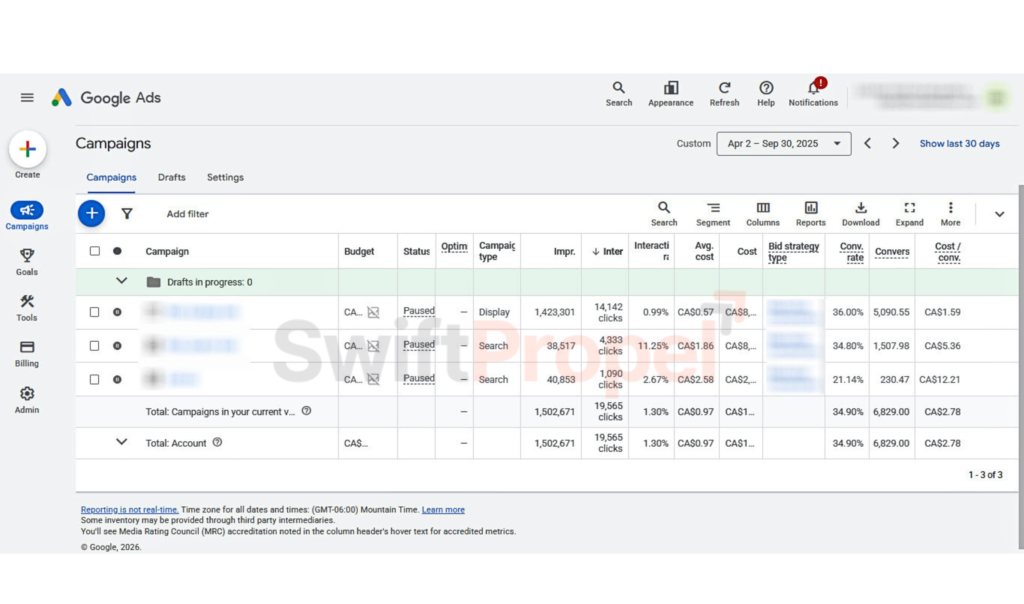
The Google Ads account was built from scratch.
SwiftPropel managed the account from April 2 to September 30, 2025, including Search, Display, remarketing, competitor targeting, call ads, audience campaigns, conversion tracking, and ongoing media optimization.
The Challenge
The property needed a paid-media system capable of capturing renters at different stages of the decision process.
Some prospects were actively searching for apartments in the local market. Others were comparing competing buildings, reviewing one-bedroom and two-bedroom availability, exploring the neighbourhood, or returning to the website before contacting the leasing team.
A single generic “apartments for rent” campaign would not provide enough control over relevance, messaging, budget allocation, or measurement.

There was also an attribution constraint.
SwiftPropel tracked form-submission activity through a Google Tag Manager AJAX form-submission trigger. However, SwiftPropel did not have access to the client’s CRM, leasing platform, lead-status data, scheduled-showing outcomes, applications, signed leases, or revenue records.
For that reason, the case study reports verified platform actions and tracked form events. It does not claim qualified leads, completed showings, applications submitted, leases signed, or occupancy growth.
The Objective
Build a Google Ads demand-capture system that could:
- Generate rental-enquiry activity
- Capture apartment-search demand
- Support one-bedroom and two-bedroom rental intent
- Reach renters comparing competitor properties
- Re-engage previous website visitors
- Create measurable form, phone, booking, and application-intent actions
- Improve campaign relevance through continuous search and audience optimization
- Maintain control over spend across Search, Display, remarketing, and call campaigns
Campaign Architecture
SwiftPropel built and managed a multi-layer Google Ads account that included:
- High-intent apartment Search campaigns
- Generic rental and apartment-search campaigns
- One-bedroom and two-bedroom campaign segments
- Competitor-targeting campaigns
- Display prospecting
- Interest-based audience targeting
- Website-visitor remarketing
- Neighbourhood-focused campaigns
- Call ads
- Brand-demand campaigns
This structure created separate demand paths for renters with different levels of intent.
A renter searching for a one-bedroom apartment did not need the same ad message, bid strategy, or landing-page path as a prospect comparing buildings, reviewing a larger unit, or returning to the website after an earlier visit.
Strategy
1. Capture high-intent apartment searches
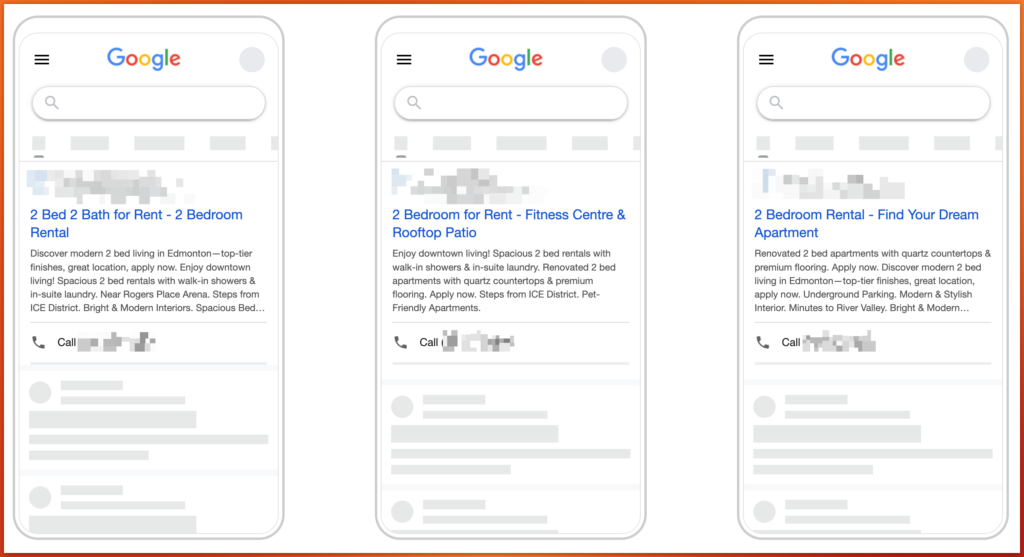
Search campaigns were structured around apartment and rental-intent queries, including generic rental searches, downtown apartment demand, one-bedroom searches, two-bedroom searches, and brand searches.
This created stronger alignment between the search query, the ad message, and the property information presented after the click.
2. Segment campaigns by renter intent
The account was not treated as one broad audience.
Campaign and ad-group structure separated:
- Generic rental demand
- One-bedroom demand
- Two-bedroom demand
- Competitor comparison searches
- Neighbourhood interest
- Brand demand
- Returning website visitors
- Interest-based audience segments
This gave SwiftPropel more control over budget allocation, keyword relevance, search-term quality, and bidding decisions.
3. Build demand beyond Search
Search campaigns captured renters actively looking for apartments.
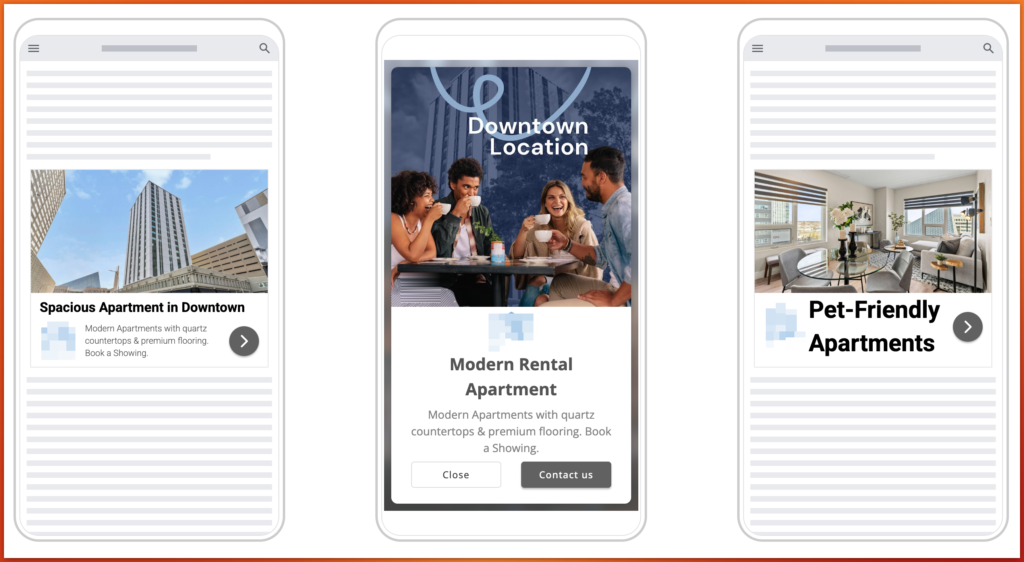
Display and interest-based campaigns expanded reach among renters who were still researching options. Competitor campaigns supported prospects in the comparison stage. Remarketing campaigns re-engaged previous site visitors after they had viewed the property or explored other rental content.
Call ads created a separate path for renters who preferred direct phone contact.
4. Track enquiry actions through GTM
Because the website used AJAX form behavior, SwiftPropel implemented Google Tag Manager tracking for form-submission events.
This allowed the account to record tracked form-submission actions when users submitted the relevant enquiry form.
Additional renter-intent actions were also measured, including:
- Book-a-showing clicks
- Apply-now clicks
- Phone-number clicks
- Calls from ads
- Contact actions
- Inquire-now actions
These actions were separated in reporting rather than presented as one inflated lead total.
5. Optimize continuously
Ongoing optimization included:
- Search-term analysis
- Negative keyword refinement
- Keyword expansion
- Bid-strategy review
- Competitor analysis
- Campaign restructuring
- Ad-copy refinement
- Audience refinement
- Remarketing optimization
- Device-performance review
- Dayparting analysis
- Budget reallocation
- Ad-group structure refinement
The objective was not simply to increase traffic volume.
It was to improve relevance across the renter journey and create more measurable enquiry paths.
Results
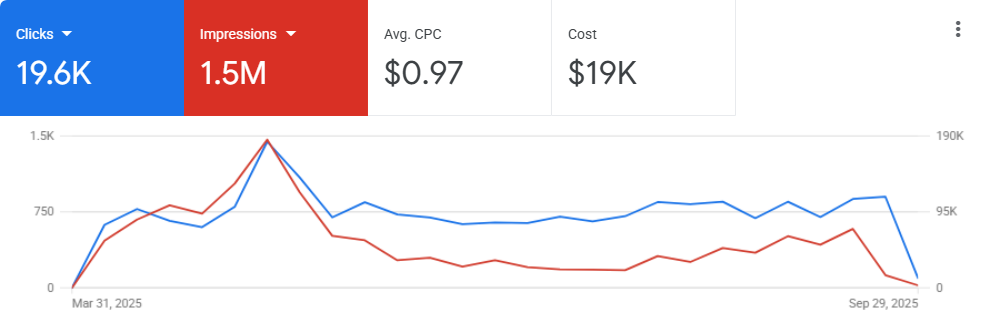
Campaign period: April 2 to September 30, 2025
| Metric | Result |
|---|---|
| Google Ads spend | CA$18.98K |
| Impressions | 1.50M |
| Clicks | 19.57K |
| Click-through rate | 1.30% |
| Average CPC | CA$0.97 |
| GTM-tracked lead-form submission events | 137 |
| Calls from ads | 35 |
| Book-a-showing click actions | 1,266 |
| Apply-now click actions | 1,894 |
| Inquire-now click actions | 626 |
| Contact click actions | 476 |
| Contact Us actions | 107 |
| Phone-number click actions | 1,145 |
Paid Traffic and Website Engagement Context
Google Analytics recorded 23,757 sessions during the same reporting period.
Paid Search was the largest acquisition channel, generating:
- 16,100 sessions
- 67.77% of all sessions
- 6,203 engaged sessions
- 38.53% engagement rate
The primary property landing page accounted for 32,487 views and 23,757 sessions in the broader site analytics during the same period.
This shows that paid media was not simply generating ad interactions. It was directing renters toward the property page where they could review rental information and move into a contact, booking, phone, or application path.
What the Results Mean
With CA$18.98K in media spend, SwiftPropel generated:
- More than 1.5 million impressions
- More than 19,500 clicks
- CA$0.97 average CPC
- 137 GTM-tracked lead-form submission events
- 35 calls directly from ads
- 1,266 book-a-showing click actions
- 1,894 apply-now click actions
- 1,145 phone-number click actions
- Additional contact and enquiry-path activity
The campaign created measurable renter interest across the property’s primary action paths.
Measurement Note
Google Ads recorded 6,835 total conversion actions during the campaign period.
That figure is not presented as 6,835 leads.
The total included a mix of form submissions, application-intent clicks, booking clicks, phone actions, contact actions, property-sharing actions, and other website interactions.
For reporting accuracy, SwiftPropel separates the funnel into:
- Tracked form-submission events: 137
- Calls directly from ads: 35
- Booking-intent actions: 1,266
- Application-intent actions: 1,894
- Phone-number click actions: 1,145
- Other contact and engagement actions: reported separately
Without CRM access, the following outcomes could not be validated or attributed to Google Ads:
- Qualified leads
- Completed showings
- Applications submitted
- Applications approved
- Signed leases
- Occupancy outcomes
- Revenue
Key Lesson
Multifamily Google Ads performance improves when the campaign structure reflects how renters actually make decisions.
Some renters search broadly for apartments. Others search by bedroom count, compare competitors, explore neighbourhood options, call directly, book a showing, or begin an application before contacting the leasing team.
The account performed because it was structured around those different demand paths rather than relying on one generic apartment campaign.
The strategic advantage was not simply buying more traffic.
It was building a more relevant route from rental intent to measurable enquiry activity.
Engagement Type
White-label Google Ads strategy, account buildout, Search campaigns, Display campaigns, competitor targeting, remarketing, call ads, conversion tracking, keyword expansion, negative-keyword management, bid-strategy testing, audience optimization, campaign restructuring, and ongoing performance reporting.
Need a Google Ads system that matches how renters actually search, compare, and enquire?
SwiftPropel builds paid demand-capture systems that connect search intent, audience targeting, campaign structure, conversion tracking, and measurable enquiry actions.

Vijay Sood is a seasoned digital marketer with a passion for driving online growth and innovation. With a robust background in developing and executing comprehensive digital strategies, Vijay excels in leveraging SEO, content marketing, and social media to boost brand visibility and engagement. His expertise lies in transforming data-driven insights into actionable marketing campaigns, helping businesses achieve their digital objectives.