Do you know that an average small business is said to waste 25% or more of its total paid search spend? Putting money into something and not getting the results that you expect is definitely annoying for all the people concerned. That is the main reason why it is essential to have your Google Ads campaigns optimized in case you want to bid smartly, effectively structure each ad campaign, and drive higher conversion numbers by simply using the correct bidding strategies. By doing a good job with your optimization, you actually empower Google to decide how to display your ads in the most relevant search result based on the signals of the search term, search query, and search intent.
But which Google Ads optimizations are worth your time and deliver the highest return on investment (ROI)? From refining your audience targeting to increasing sales, we’ll share some highly effective ways for optimizing Google Ads that will help you avoid wasting your ad budget and increase the impact of your campaigns. These insights align with best practices essential for any beginner working on their first Google Ads campaign, whether they’re using search ads, shopping campaigns, banner ads, or even the broader Google Ads platform.
What are Google Ads?
Google Ads is Google’s online advertising platform that allows businesses to promote their products and services across Google Search, websites, YouTube, and more. It functions on a pay-per-click basis, i.e., you only pay for a click, or, in other words, you pay for a click in the case when a user interacts with your ad. Having accurate targeting options, you can find potential customers based on keywords, location, interests, and online behavior. Besides that, you can also build well-structured ad groups and write your ad copy as per the groups.
The most common advertisements are Google Search Ads, but additionally, you can utilize responsive search formats, shopping ads, and ads on the search network. This openness means your ads appear when users enter a particular search term that has an adequate amount of searches, thereby making it possible to reach customers who are putting their products or services to the test and are looking for the best option.
If it is implemented in the right way, it can be of great help to any business in increasing its traffic, leads, and sales. Besides that, it works wonders if you use Google Analytics together with Google Ads. This makes it possible for you to track performance, measure the cost per click, keep an eye on Google Ads benchmarks, and adjust your daily budget wisely.
Top 7 Tips and Tricks for Success in Google Ads
The following list contains the top 7 Google Ads tips and tricks that can quickly improve your strategy and increase the results of your campaign. You could use this as a brief guide that shows you the necessary steps required for setting up your first Google Ads account in a hassle-free way.
1. Define your Google Ads Goals and KPIs to Track
First and foremost, ponder over the questions: “With Google Ads, what do we want to achieve? And why does it matter?” The goals that you set up are the ones that determine your campaign structure, how the ads are selected, the layout of the ad groups, invocations, and also the approach to the target audience. These options determine the indicators that best reflect your progress and thus help in making sure that your Google Ads budget is utilized efficiently.
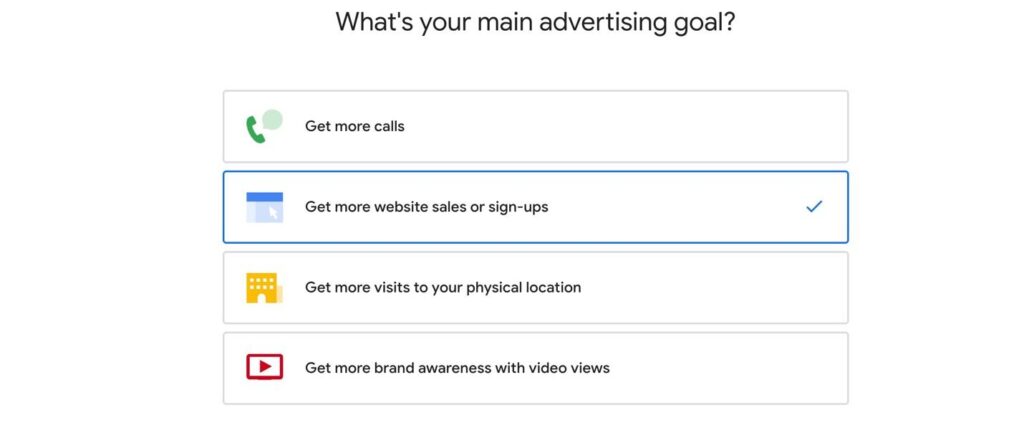
The goals for a Google Ad campaign can be divided into the following categories:
- Sales and lead generation: Increase sales and online conversions of the products or services of the company through practices aimed directly at new customers ready to take action.
- Increase website traffic: Drive more visitors to your website through paid search on Google and grow both paid and organic search visibility.
- Awareness and consideration: Let potential customers recognize your brand when comparing products or services and browsing on their smartphones.
Think about the ways you would like to voice your thoughts on this goal. Use the SMART goal method, which helps in transforming abstract ideas like “get more customers” into specific goals and performance metrics.
2. Conduct Comprehensive Keyword Research
There is no doubt that keywords are the core of any Google Ads campaign, and they remain indispensable even when you conduct your first campaign. Employ resources like Google Keyword Planner or SEMrush to discover suitable and high-performing keywords. These facilitate your ads being visible to the users whose queries correspond to the right keywords and help your ads be displayed in the competitive search engine marketing.
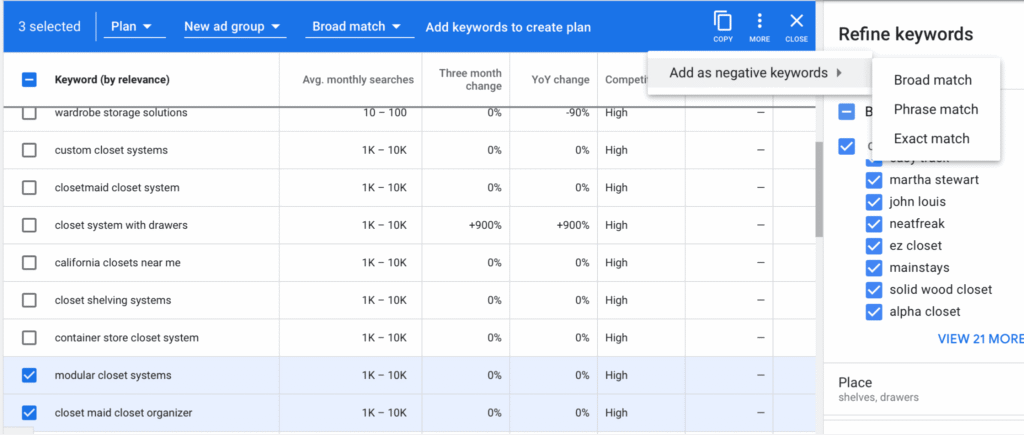
Work on a combination of broad, phrase, and exact match keywords to cover the user’s intent circle fully. Also, remember to insert negative keywords in your campaign so that you don’t waste your budget on irrelevant searches. This is the most fundamental step in unleashing the full potential of your Google Ads account.
3. Focus on Long-Tail Keywords
Once you have figured out the keywords that you want to exclude, have a turnaround and think of the ones that you can use Google Ads to target effectively. When you start a Google Ads campaign, you should be extraordinarily prudent with the keywords that you select. In addition to short keywords, which are the primary focus while optimizing your Google Ads, you should also consider long-tail keywords (keywords of 3–5 words) to help Google improve your search volume.
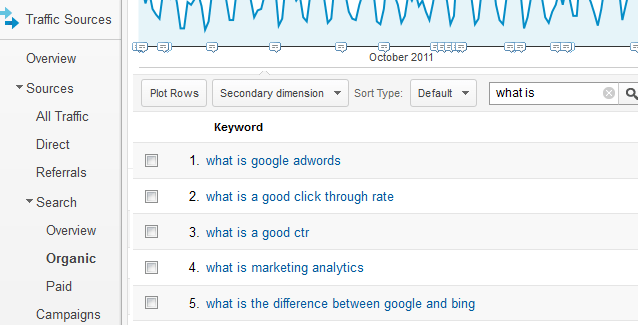
Primarily, it is a good idea to concentrate on long-tail keywords with definite intent. These would entail words like “buy,” “purchase,” and “quote.” Your KPIs are the ones that benefit from the optimization of long-tail campaigns. This is because they are driven by intent, more detailed, and less challenging in terms of competition.
- Greater specificity: Generally, longer keywords tend to have more specific meanings as they have more words. This, in turn, allows you to target a less broad audience with a more specific intent, just like exact match keywords do.
- Less competition: The greater specificity of long-tail keywords means that usually fewer people will be searching for them, and also, fewer businesses will be targeting them, which could help Google focus your ads better. The lower the competition you benefit from, the more you are likely to rank at a lower cost per acquisition.
The search terms report is one of the best places where you can kick off your long-tail keyword research. You will get to know which search queries have volume and which get clicks. Also, you could use Google’s Keyword Planner to get research for keywords, volumes, and insights that will be of great help in targeting the most appropriate audience for your ads.
4. Dive into Google Analytics and In-Market Segments
If your Google Ads account is not connected to your Google Analytics account, do it now (and then come back and finish this blog). Google Analytics is a great tool that must be linked with your Google Ads account. Together, they offer a lot of insights and go beyond the standard metrics, such as bounce rate. Therefore, this linkage is a must for precise conversion tracking, smoothly running ad campaigns, and gradually improved Google Ads performance.
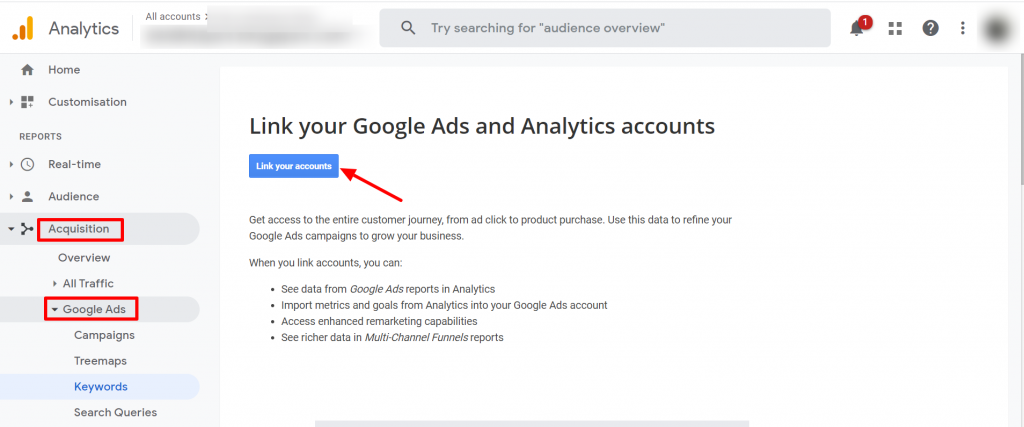
What are the ways of utilizing Google Analytics for starting the process of Google Ads optimization? Sign in to your Analytics account, and then click on the “Audience” tab. After that, navigate to “In-Market Segments.” This is where you will find the valuable pieces of information that will be of great assistance in elevating the efficiency of your advertising campaigns.
According to this, Google divides your site’s visitors depending on what they are looking for. By studying these segments, you understand where your target market is coming from and, thus, you can take the bidding strategies a step further.
5. Leverage Assets
Assets, which were previously known as ad extensions, are a feature that most PPC professionals use to give their campaigns additional power. If you are not acquainted with them or have been reluctant to use them, it is undoubtedly the time to try them out.
Just a few Google Ads have a title and a description. On the other hand, there are some that show additional information like site links or phone numbers. These extra pieces, which are called extensions, can facilitate the functioning of Google Ads, make them more visible, and also lead to a higher quality score.
6. Adjust Bidding Strategies
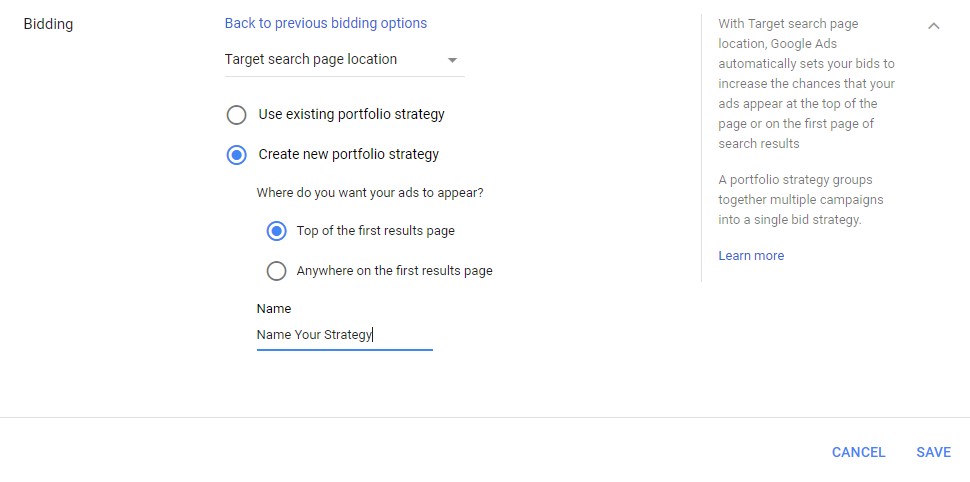
Google provides diverse bidding strategies, such as:
- Manual CPC: You can manually manage bids for every keyword.
- Maximize Conversions: It is an automated bidding that focuses on achieving the highest number of conversions within the defined budget.
- Target ROAS: Optimize for a specific return on ad spend.
If you have a campaign, then picking up a bidding strategy that suits your goals and budget is right. Your plan for a Google Ads campaign, either new or existing, should be in accordance with performance data, Google Ads benchmarks, and, if relevant, the insights from your Google partner.
7. Focus on Targeted Traffic
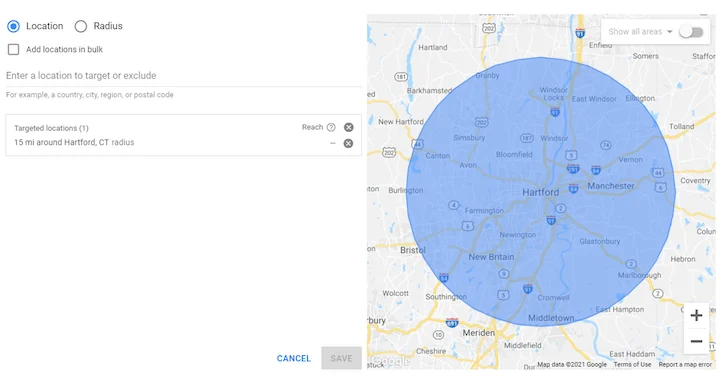
About targeting, getting, and capturing the correct type of traffic, the proper setup of conversion tracking and accounts is equally important with the right keywords and ads, if not more. As for conversion tracking, you can track different actions as far as you want, so you have the necessary information and understanding of the users’ behavior to tell Google how to optimize your ads.
However, do not forget that the main thing is to put more effort into those pass-through conversion actions that indicate the completion of a sale, form, or any other conversion by the users. Google’s most advanced and complex bidding strategies, such as max conversions or max conversions with target CPA, can be defined as highly demanding, data-driven bidding strategies that are looking for your guidance and feedback to figure out which they should prioritize.
This indicates that your ads get better results as you accumulate more data on user behavior across mobile devices, shopping ads, and other parts of the Google Ads platform.
Conclusion
Running a successful Google Ads campaign entails careful planning, accurate execution, and continuous tweaking. Knowing your audience, refining your keywords, and optimizing your landing pages are some of the significant steps that lead to the accomplishment of your goals.
Additionally, it is equally necessary to have all these elements under control, keep an eye on the performance of your advertising campaigns, abide by industry standards, and take notes from the analytics for later use. It will serve you with a more targeted campaign that will yield better results in return. Google Ads was just a tool and has now transformed into the ultimate necessity for businesses that want to be successful in the current highly competitive digital world.

Vijay Sood is a seasoned digital marketer with a passion for driving online growth and innovation. With a robust background in developing and executing comprehensive digital strategies, Vijay excels in leveraging SEO, content marketing, and social media to boost brand visibility and engagement. His expertise lies in transforming data-driven insights into actionable marketing campaigns, helping businesses achieve their digital objectives.