Over 90% of pages don’t get any organic traffic from Google. All your hard work and effort are done in vain; you get zero visitors. But there is a method to bypass this problem, which is almost like a guarantee that relevant people will discover your content. Keyword research.
These are the basics of SEO. In case you put up a page about a subject that no one is searching for, your content won’t get any traffic from Google (or other search engines), regardless of how much effort you put in. This article will explain to you the fundamental stages of keyword research using Google Ads so that you can come up with intelligent and more efficient ad campaigns. So, let’s begin!
What is Keyword Research?
Keyword research is a process of identifying the terms that people use to look for information on a certain topic and also the frequency of those keywords in search engines like Google and Bing. It is the best way to uncover new, relevant keywords for both your paid and organic marketing campaigns in the search field.
There are multiple ways to do keyword research, which we will talk about further later, but the primary objective is to select the most suitable search terms that not only match the content and offerings of your business but also have a fair amount of search volume.
What Makes a Keyword “Good” in Google Ads?
It is vital to grasp what makes a word a productive one before knowing how to get a list of keywords. The truth is that not all words are equal, especially in Google Ads, where every click costs money.
The right Google Ads keyword is the one that manages to reconcile four aspects: relevance, intent, volume, and competition. In an ideal case, you would require keywords that are closely related to what you offer, exhibit commercial intent, and have sufficient search traffic, but at the same time not be so competitive that they eat up your budget.
When assessing your keyword list, you should consider the following:
- High Relevance: The keyword must be the one that can be easily tied to your product or service. Therefore, if a user clicks your ad, the landing page should be the one that exactly meets what they searched for.
- Strong Intent to Buy: Emphasize words that indicate the user is about to take the next step, for example, “buy,” “hire,” or “get a quote.”
- Manageable Competition: Try to find words with a good number of searches but not a very high level of competition, particularly if you don’t have a big budget.
- Conversion Potential: There are some keywords that generate traffic but do not result in conversions. A “good” keyword is one that helps you achieve your goals, not just increase the number of clicks.
While looking for appropriate keywords for AdWords (now Google Ads), you should refer to these four points for every decision you make.
Step-by-Step: How To Find Keywords for Google Ads
Finding the right keywords for your Google Ads campaigns requires having a certain sequence of things. This includes:
Step 1: Open the Google Ads Keyword Planner
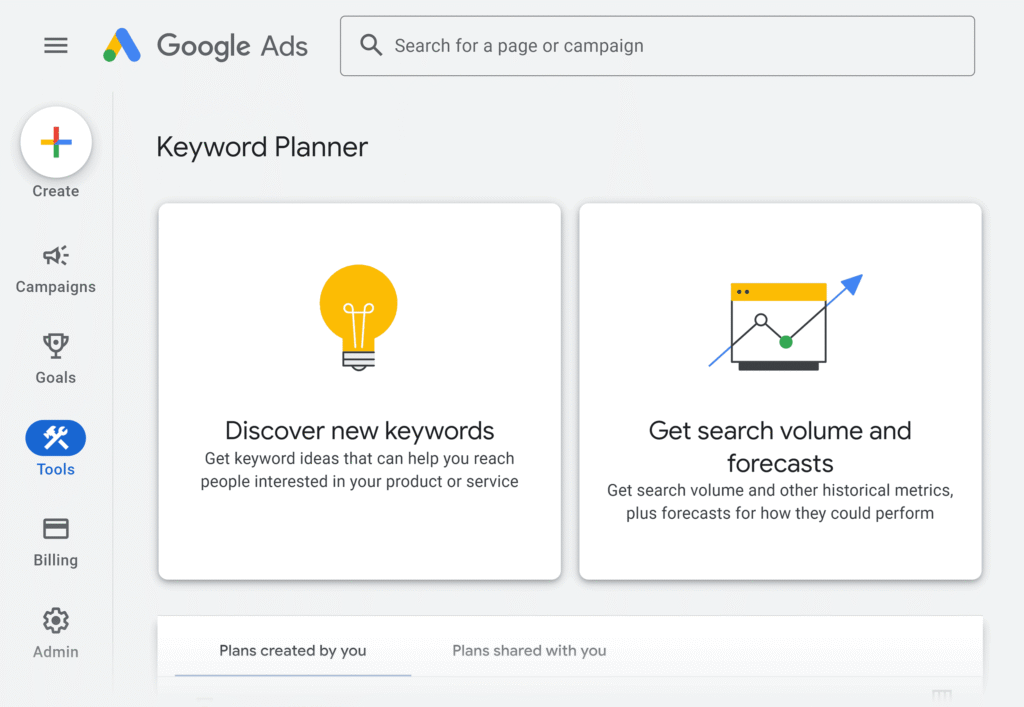
Access your Google Ads account, and on the upper right, click the wrench icon. Under the “Planning” section, choose Keyword Planner. This is where you will initiate your investigation.
Step 2: Use “Discover New Keywords”
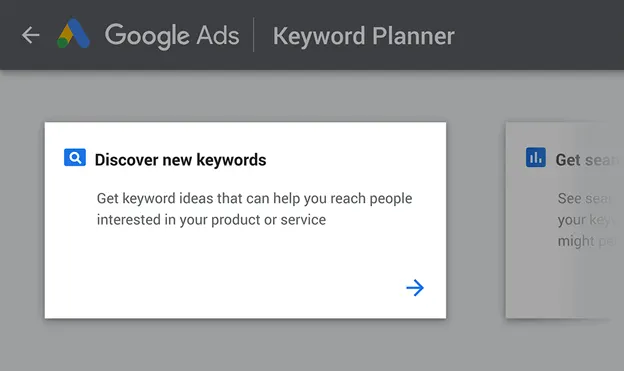
This tool allows you to enter seed terms (words or phrases that characterize your business), and based on the actual queries, Google will provide keyword suggestions.
Tip: Extract a maximum of 5-10 main keywords from your products, services, or customer challenges and proceed from there. Employ both branded and non-branded terms.
Step 3: Review Search Volume and Competition
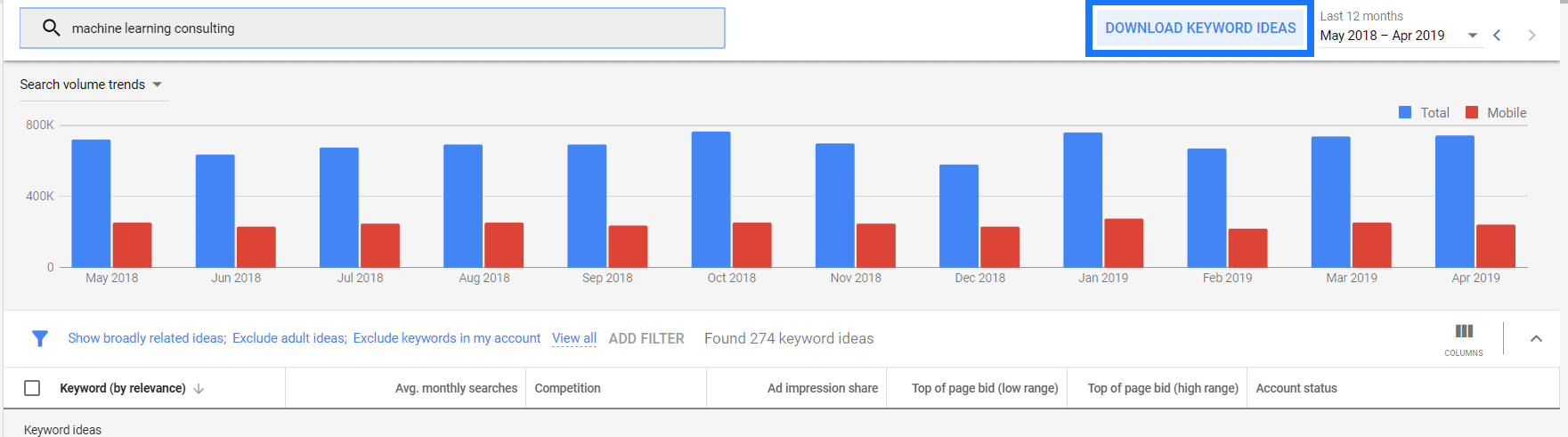 Besides the keywords you input, Google will also give you a list of related keywords, together with suggestions from its keyword research tool. These are:
- Average monthly searches
- Competition level
- Top of page bid range
Choose your keywords from those that have a moderate to high search volume, low to medium competition, and reasonable CPC estimates according to your budget.
Step 4: Prioritize Buying Intent
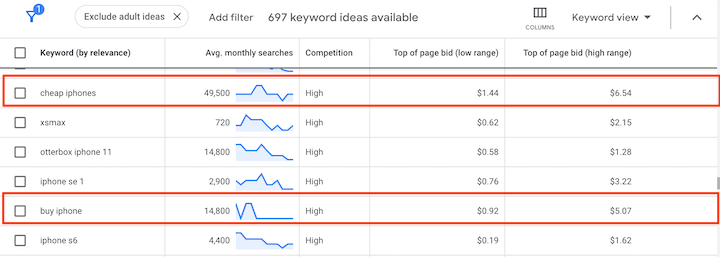
You can use commercial intent to limit the keyword suggestions. For example, phrases like:
- “Buy [product] online”
- “Best [service] near me”
- “Affordable [service]”
It is likely that keywords such as “how to” and “ideas for” would be better as content-related campaigns rather than ads with a high buying intent.
Step 5: Build Keyword Themes
Your next step after finding promising keywords is to sort them into keyword themes, which are essentially groups of closely related words for each of which you will have a separate ad group. This will increase your ad relevance and hence Quality Score.
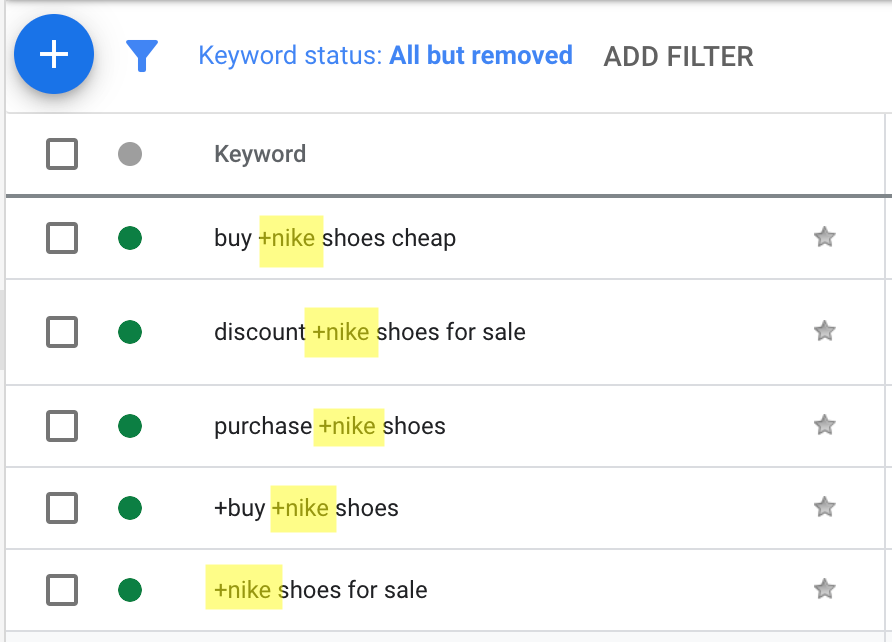
For instance, using a keyword research tool can reveal high-potential keywords for your next ad campaign.
It may be better to take 20 unrelated keywords of one ad group and divide them into three different focused ad groups, such as long-tail keyword ideas.
- “emergency plumbing services”
- “local plumber near me”
- “affordable plumbing repair”
Step 6: Add Keywords to Your Plan
Choose the keywords for which you want to advertise by ticking off their checkboxes and then add them to your campaign plan. Later, you will use these to flesh out your ad groups and write more targeted ads.
How to Choose Keywords That Will Actually Convert
It is not difficult to come up with keywords that have search volume by using a keyword research tool. The problem of finding keywords that will convert is what most advertisers are faced with. To better your chances of getting the right Google Ads keywords from the onset, use these methods:
1. Think Like a Buyer, Not a Researcher
You should try to think like a person who is ready to take action. There is a huge difference between a person searching for:
“best running shoes” & “buy running shoes online”
The second search clearly indicates a commercial intent, which can be identified using a google keyword planner. Focus on those keywords that indicate that a person is in a hurry to buy, wants to buy, or needs a service; these long-tail keywords are more likely to generate sales.
2. Use Negative Keywords Early
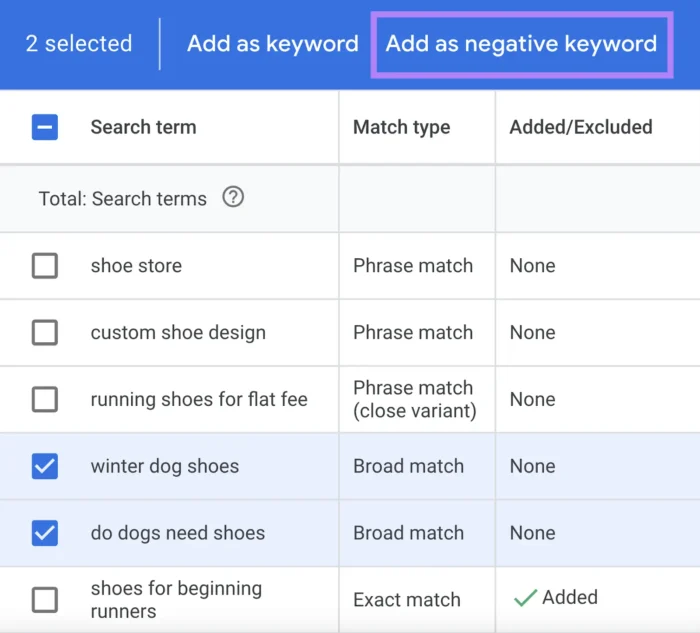
Negative keywords prevent your ads from being displayed in the case of irrelevant or low-intent searches. Putting them in place right from the first day helps to improve targeting and save you from getting clicks that will not convert. For instance, if your business is selling new shoes, include “used” or “second-hand” in negative keywords.
Extra tip: After doing search term audits, keep updating your negative keyword list.
3. Don’t Rely Only on High Volume
One may be inclined to use a keyword with the highest monthly search volume, but it is worth noting that such keywords are usually accompanied by high competition and low user intent.
Therefore, take a middle ground between these:
- Medium-volume keywords with strong user intent can be uncovered using a google keyword planner.
- Small-volume niche keywords that have a good conversion rate
- Broad match keywords (at the beginning) to see if there are other variations of intent
Eventually, you will be able to compile a keyword list that is not only profitable but also scalable.
4. Match Your Keywords to Your Landing Pages
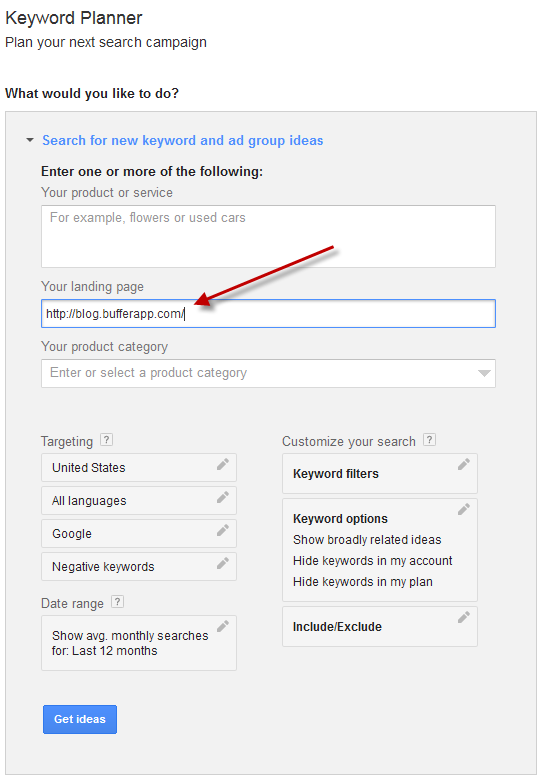
After you have discovered the most effective keywords, implement them on your landing page, like in your header, main text, and even metadata. This makes the ad more relevant and, hence, the Quality Score increases, which in turn brings down your CPC and raises conversions.
Conclusion
Keyword research is the essential ingredient in a successful Google Ads campaign, and being skilled at it will differentiate you from most other advertisers who are just guessing. By grasping the concept of search intent, checking out your competitors, and selecting the keywords that are the perfect fit for your target market, you can build campaigns that not only attract the right visitors but also generate actual conversions.
The more deliberate you are with your keyword choice, the better your ad performance and return on investment will be. Keyword research becomes less daunting and much more satisfying when you have the right tools, a proper plan, and consistent optimization in place. Why not start implementing these strategies now and see your Google Ads performance improve steadily and surely?

Vijay Sood is a seasoned digital marketer with a passion for driving online growth and innovation. With a robust background in developing and executing comprehensive digital strategies, Vijay excels in leveraging SEO, content marketing, and social media to boost brand visibility and engagement. His expertise lies in transforming data-driven insights into actionable marketing campaigns, helping businesses achieve their digital objectives.