
How SwiftPropel built a measurable rental demand engine for a new downtown multifamily property in Western Canada
A newly launched 285-unit multifamily rental property in a Western Canadian downtown market needed to generate rental demand from a standing start.
The property began at zero occupancy. The goal was to generate renter interest across multiple unit types, including studio, 1-bedroom, 2-bedroom, 3-bedroom, and penthouse apartments.
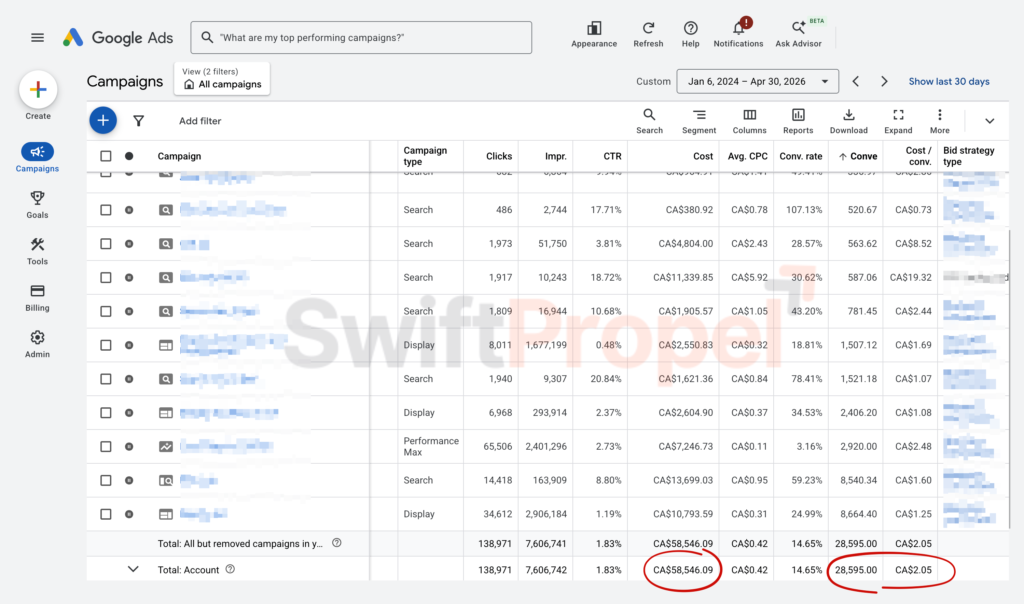
SwiftPropel worked as a white-label Google Ads partner and built the Google Ads campaigns from scratch. The campaign mix included Search, Display, Performance Max / Maps, competitor campaigns, relocation targeting, unit-specific campaigns, and retargeting.
During the campaign period, the property publicly reached a 95% leased milestone.
Because SwiftPropel did not have access to the client’s leasing CRM or external booking platform, this case study does not claim that Google Ads directly caused every lease. Instead, it reports verified campaign activity, website lead capture, tracked leasing-intent actions, and the public lease-up milestone separately. That distinction matters. A click to book a tour is not the same as a completed tour. A phone-number click is not the same as a completed leasing call. A website form submission is a stronger captured lead signal. A signed lease is the final business outcome. This case study is structured around that hierarchy.
Client Type
An anonymized 285-unit multifamily rental development in a downtown Western Canadian market.
Campaign Objective
The primary objective was to generate rental demand and leasing-intent actions for multiple apartment categories:
- Studio apartments
- 1-bedroom apartments
- 2-bedroom apartments
- 3-bedroom apartments
- Penthouse units
The campaign needed to reach both local renters and people considering relocation into the city.
The Starting Point
The property started from zero.
There was no existing Google Ads account structure to optimize. SwiftPropel built the campaign architecture from scratch and created a paid media system designed to support the full lease-up cycle.

The main challenges were:
- Generating demand for a newly launched rental property
- Capturing high-intent apartment search traffic
- Segmenting campaigns by renter intent and unit type
- Reaching both local and relocation audiences
- Competing against established apartment properties
- Supporting a long lease-up cycle
- Retargeting renters during the comparison process
- Tracking front-end leasing-intent actions clearly
The biggest measurement challenge was attribution.
The client used an external booking flow for tour scheduling, but SwiftPropel did not have access to that booking platform or the downstream leasing CRM. That meant campaign optimization could track booking handoff clicks, phone clicks, application clicks, and website form activity, but not every booked tour, completed tour, approved application, or signed lease.
Strategy
SwiftPropel built the account around renter intent instead of relying on one broad campaign.
1. High-Intent Search Campaigns
Search campaigns were built to capture renters actively looking for apartments in the market.
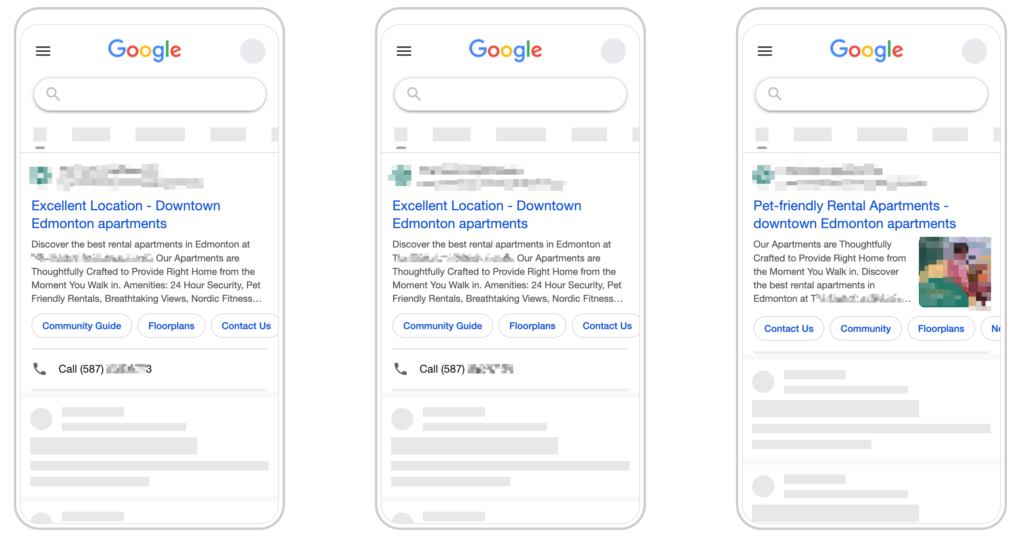
Targeting included searches related to:
- Downtown apartments
- Apartments for rent
- 1-bedroom apartments
- 2-bedroom apartments
- Rental apartments
- Unit-specific apartment searches
This allowed the campaign to reach users already expressing active rental intent.
2. Unit-Specific Campaign Segmentation
The account included campaigns and ad groups tied to specific unit types.
This included studio, 1-bedroom, 2-bedroom, 3-bedroom, and penthouse demand.
This mattered because not all renters behave the same way. A studio renter, a 2-bedroom renter, and a penthouse prospect may have different budgets, timelines, motivations, and search behavior.
Segmenting campaigns by unit type gave SwiftPropel better control over messaging, budget allocation, and performance analysis.
3. Competitor Campaigns
Competitor campaigns were used intentionally.
The goal was to reach renters comparing nearby apartment options and evaluating alternative properties in the same market.
This allowed the property to appear during a high-intent comparison window, when renters were already considering where to live.
4. Display and Retargeting
Display and retargeting campaigns helped keep the property visible after users had already visited the website or interacted with apartment-related content.
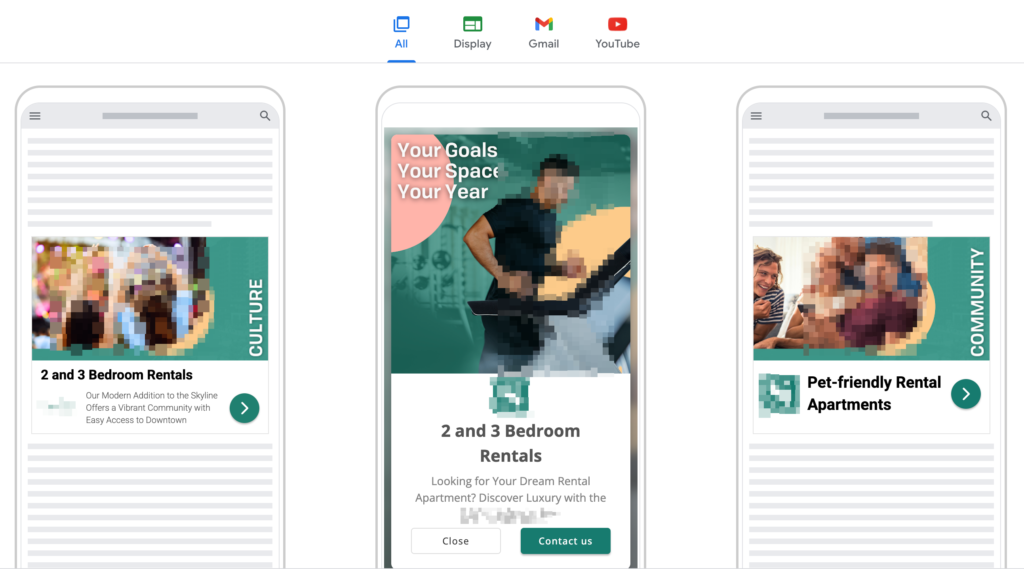
This was important because apartment leasing decisions are rarely made from one click.
Renters typically compare floorplans, pricing, amenities, location, availability, commute, neighborhood fit, and lifestyle factors before taking action.
Retargeting helped bring prospects back during that decision cycle.
5. Performance Max and Maps Visibility
Performance Max and local/map-oriented campaigns were used to support visibility across Google’s broader ecosystem.
This helped the property appear across more discovery points, especially for users searching locally or engaging with map-based apartment searches.
6. Relocation Targeting
The campaign also targeted people moving to the city or considering relocation.
This expanded the demand pool beyond only local renters and helped reach prospects who may have been planning a move for work, school, lifestyle, or family reasons.
Tracking Setup
Tracking was implemented through Google Tag Manager.
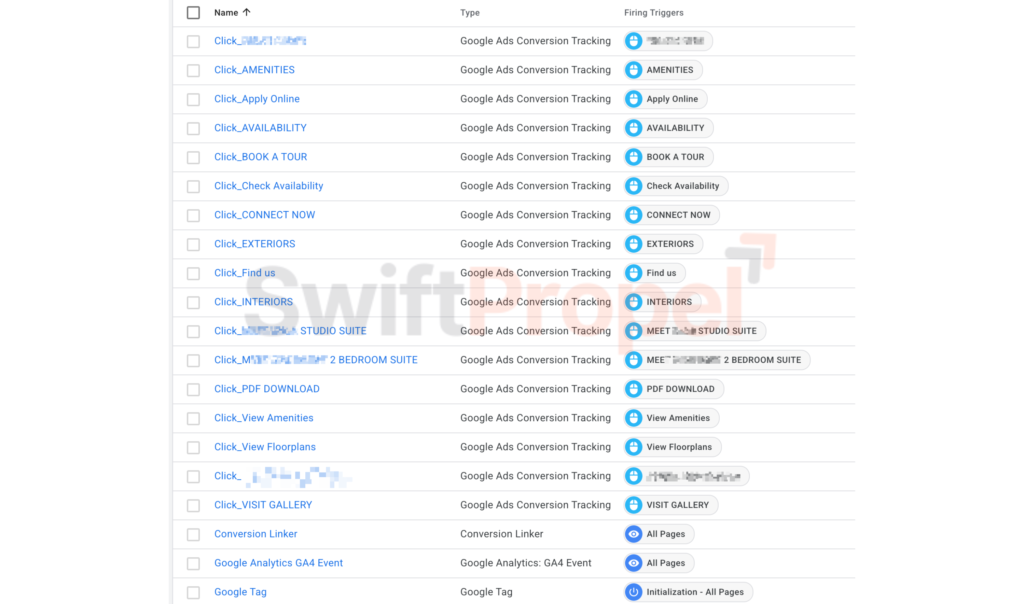
The campaign tracked multiple front-end leasing actions, including:
- Book a Tour click-throughs
- Phone-number clicks
- Apply Online clicks
- Website form submissions
- Availability clicks
- Floorplan interactions
- Amenity interactions
- Gallery interactions
- PDF downloads
- Direction clicks
- Contact interactions
Primary and secondary actions were separated so the campaign would not treat every website interaction as equal.
This was important because a gallery click or floorplan view may indicate research, but a phone click, form submission, booking handoff, or application click indicates stronger leasing intent.
Measurement Caveat
SwiftPropel did not have access to the client’s leasing CRM or external booking platform.
As a result:
- Book a Tour clicks are reported as booking handoff clicks, not completed booked tours.
- Phone-number clicks are reported as click-to-call intent, not completed calls.
- Apply Online clicks are reported as application-intent clicks, not completed applications.
- Website form entries are reported as website form submissions, not signed leases.
- The 95% leased milestone is reported as a public business milestone, not a direct one-to-one Google Ads attribution claim.
This distinction makes the case study more accurate and more credible.
Results
Over the campaign period, SwiftPropel’s Google Ads management generated:
| Metric | Result |
|---|---|
| Campaign period | June 2024 – April 2026 |
| Ad spend | $56.44K |
| Impressions | 7.52M |
| Clicks | 138.5K |
| Click-through rate | 1.84% |
| Average CPC | $0.41 |
| Tracked phone-number click conversions | 2.3K |
| Book a Tour click-throughs to external scheduling flow | 11.5K |
| Apply Online clicks | 542 |
| Google Ads tracked lead form conversion actions | 484 |
| Website form entries captured through the site | 1,712 |
| All tracked Google Ads conversion actions | 60.5K |
| Public lease-up milestone | 95% leased |
The campaign also supported a broader website demand engine.
Paid Search became the largest website acquisition channel during the measured period, driving more than half of all site sessions.
The homepage and floorplan pages carried most of the site demand, which matched the expected renter journey: users first evaluated the property, then moved into floorplans, amenities, gallery content, contact options, and availability-related actions.
What Changed
The account was built around real renter behavior
Instead of treating all apartment searches the same, SwiftPropel segmented campaigns by renter intent, unit type, competitor demand, relocation behavior, and retargeting stage.
This created better control over where budget was spent and which types of renters were being reached.
The campaign focused on measurable leasing intent
The campaign did not only optimize for cheap traffic.
It tracked specific leasing-intent actions such as phone clicks, booking handoff clicks, application clicks, and form submissions.
That made the campaign more commercially useful than a traffic-only campaign.
Retargeting supported the renter decision cycle
Renters usually compare multiple properties before making contact.
Retargeting helped keep the property visible after the first visit, which is especially important during a lease-up campaign where awareness, comparison, and conversion happen over multiple touchpoints.
Competitor campaigns captured comparison-stage renters
Competitor targeting helped reach users who were already evaluating other apartment options.
This allowed the property to enter the consideration set during a high-intent decision window.
Lessons Learned
1. Lease-up campaigns need a full-funnel paid search structure
A new multifamily property should not rely on one generic campaign.
A stronger structure includes high-intent search, unit-specific search, competitor campaigns, retargeting, local visibility, and relocation targeting.
2. Front-end conversion tracking is useful, but CRM visibility is better
Google Ads can track intent.
But to optimize toward true leasing outcomes, the strongest setup would connect ad campaigns to CRM outcomes such as booked tours, completed tours, applications, approvals, and signed leases.
Without CRM visibility, campaign reporting should avoid overstating clicks as leads or leases.
3. Not all conversions are equal
A Book a Tour click, a phone-number click, a form submission, a floorplan view, and a gallery click should not all be treated as the same outcome.
The strongest reporting separates:
Traffic → Engagement → Leasing intent → Captured lead → Tour → Application → Lease
This campaign had strong front-end intent data, website form activity, and a public lease-up milestone, but did not have full CRM-level attribution.
4. Paid Search can become the primary demand channel during a lease-up
In this campaign, Paid Search became the largest website acquisition channel.
That supports the role of Google Ads as a core demand-generation channel for multifamily properties when the campaign is structured around actual renter intent.
Conclusion
SwiftPropel built and managed a Google Ads demand engine from scratch for a 285-unit multifamily rental property in a Western Canadian downtown market.
The campaign generated high-volume visibility, significant renter traffic, thousands of tracked leasing-intent actions, 1,712 website form entries, and helped support the property’s journey from launch to a public 95% leased milestone.
The strategy worked because it did not rely on broad traffic alone.
It segmented demand by renter intent, unit type, competitor interest, local search behavior, relocation audiences, and retargeting stage.
For multifamily lease-up campaigns, that is the difference between buying clicks and building a measurable leasing pipeline.
Need a Google Ads strategy for a multifamily lease-up?
Partner with SwiftPropel to build a paid search system focused on qualified leasing demand, not vanity traffic.

Vijay Sood is a seasoned digital marketer with a passion for driving online growth and innovation. With a robust background in developing and executing comprehensive digital strategies, Vijay excels in leveraging SEO, content marketing, and social media to boost brand visibility and engagement. His expertise lies in transforming data-driven insights into actionable marketing campaigns, helping businesses achieve their digital objectives.