Today’s digital consumer demands targeted experiences that are customized to their interests, needs, and behaviors. When 71% of consumers expect experiences to be personalized and websites that tap into that expectation drive 40% more revenue, the current structural shift makes execution integral, where targeted content personalization will empower brands to dynamically personalize content.
This is precisely the point where AI at a relatively large scale helps. Powered by artificial intelligence and ramped up by a real-time content delivery system, the generic content can now be intensively customized into personalized experiences and delivered to a mass audience.
In terms of customizing content for companies trading in geographies as distinct as Southeast Asia and Greater China, where consumer choices vary significantly by region, language and cultural perspective, AI-enabled personalization stands to become a game-changer more than an advantage. In this article, we will explore the impact of AI-enabled content personalization on content delivery and the results companies can gain when personalization efforts are scaled up.
What AI Capabilities Drive Enterprise Personalization?
In order to grasp how AI personalization falls under sophisticated computation reconfiguring engagement, let’s understand what happens under the hood. The following are the building blocks enabling successful AI personalizers and why it is a must-win project.
1. Unified Identity Resolution
The foundation of enterprise personalization is identity resolution. Ability to connect the dots from CRM, Web, Mobile, Support, etc. Delivers a single, unified view of each individual.
A consolidated profile removes the pain of disjointed data and unifies the customer experience. This means true omnichannel reach and consistent personalization across every customer touchpoint. For marketing teams, it means being able to understand customers much better without losing context, e.g., having the same customer experience seamlessly across the web, email, and customer service channels and not just having 3 isolated identities.
2. Behavioral Clustering for Micro-Segmentation
As opposed to big demographic buckets, the AI system uses real usage data, past buying data, interaction signals, and so on, to break out into dynamic behavior-based segments. As the AI looks at these signals, it reveals clever AI personalization examples that humans would never think of.
These micro segments mirror actual customer behavior, intent, and preferences. For instance, one can be identified and targeted utilizing custom incentives or a specific AI-based array of content of a group of users who continuously view premium features with no conversion.
3. Predictive Scoring and Propensity Estimation
Predictive scoring assigns scores based on particular AI model methodologies to predict defined behaviors-purchase likelihood, churn probability, upsell potential, lifetime engagement, etc. Since these scores can predict these behaviors proactively, they enable customized responses—e.g., offer retention incentives to segment with high churn probability, or identify high propensity targets for early sales engagement.
4. Recommendation Engines That Match Customer Needs
Recommendation engines leverage machine learning to provide customers with the right product, content, or next step tailored to their individual actions and preferences. Prior to more advanced personalization systems, recommendations were generated through simple rules.
Today, AI-driven personalization systems learn from intricate interface interactions, as well as previous user behaviors, to generate recommendations that appear highly customized and relevant. Top-tier AI-based personalization solutions direct the customer to the most appropriate next offer or message in order to maximize those customer conversion rates and thus serve as a powerfully effective AI solution for increased profit.
5. Contextual Messaging and Personal Content Generation
Advanced generative AI can customize the text and delivery of messages across touchpoints-whether it’s the subject line for an email, an in-app notification, an SMS alert, or a chat reply-by leveraging the context and previous touchpoints in a customer’s journey. In effect, AI uses the omnipresent data flowing in, cleanses it, and creates powerful copy. These models contextualize behavioral and live signals to call out or produce a relevant narrative.
Personalized messaging systems, which apply actions, contexts, and mood as dynamic templates, motivate customers to see the content as relevant to their current needs, thus raising engagement and conversion through a sense of direct relevance. This basic principle of personalization shows that as soon as content can be delivered instantly, second by second, friction disappears.
Strategic Implementation Framework
Achieving large-scale AI content personalization is an iterative journey. A few enterprises roll out on time or early without completing the necessary planning and stumble across data quality issues, integration issues, or an ineffective personalization approach that doesn’t translate into business impact.
Step 1: Establish Data Infrastructure
AI personalization is based on auditing customer data on an ongoing basis, so your implementation is only as good as the data you collect. Start by auditing how you currently collect data across touch points with your customers.
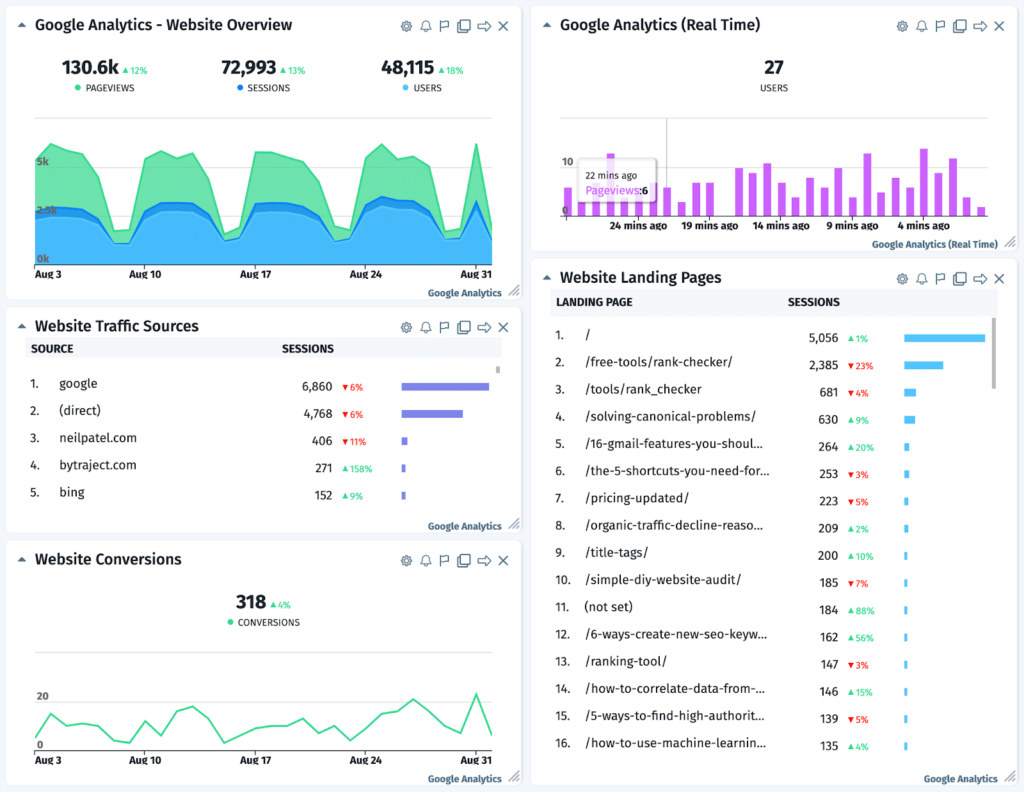
Set up tracking systems that can collect the insights you need for the kind of engaging real-time personalization you want to do, without violating any privacy rules. Tools to consider are website analytics, CRM connection, e-mail response, and social media engagement reports.
Search data should be incorporated into personalization systems for organizations working with SEO agencies. The insights into what your customers searched for prior to visiting your site will be valuable information for dynamic site content decisions.
Step 2: Define Personalization Objectives
Trying to achieve with and of itself is generally a poor use of resources. Be specific about what you are trying to achieve: higher conversion rates, greater average order size, increased engagement with content, lower bounce rate, higher customer lifetime value.

Write these goals down and make your systems optimize for these goals specifically. When you use AI systems correctly, they should work hand in hand with your marketing tactics and strategies.
Step 3: Develop Content Variation Strategy
Use variations. An AI system needs content to vary. Do a content inventory-determine which assets are customizable and what kinds of variation make sense. Will you customize headlines, images, calls-to-action, whole sections, or whole experiences?

Develop a set of guidelines for various versions so that all variations work for branding and targeted positioning. Use approaches to website structure that allow content to be translated into independent, exchangeable modules.
Step 4: Select Technology Stack
Opt for tools that suit your technical skill level and business needs. For instance, an enterprise firm might opt for a full-featured marketing automation platform bundled with personalization solutions. A smaller firm might set up a combination of best-of-breed solutions for individual applications.
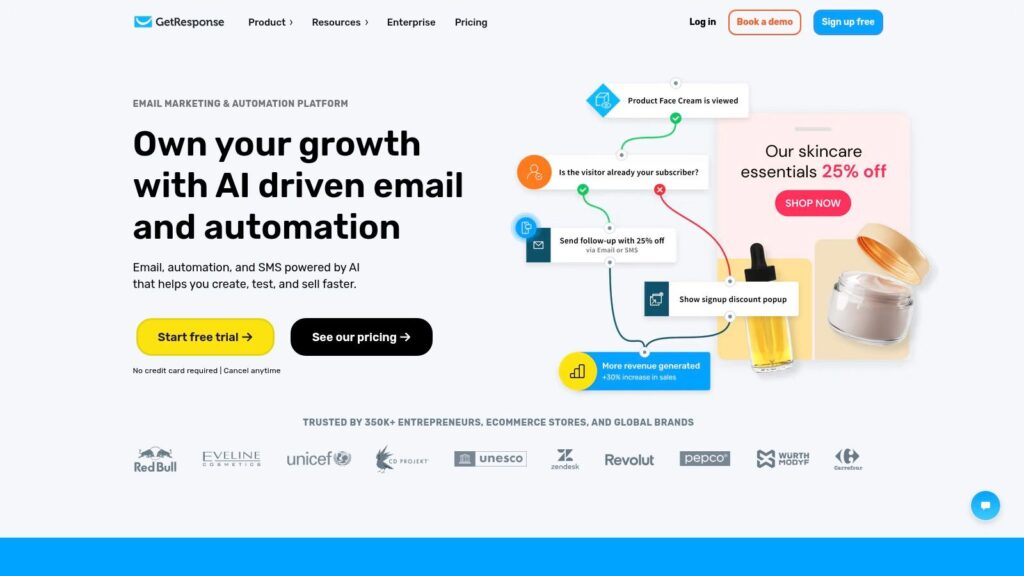
Key factors to take into account are the compatibility of the AI platform with your current system, scalability, whether it is even able to cope with the amount of traffic you will have, and choosing an AI platform that fulfills your specific use cases. Several businesses find it advantageous to work with a specialist digital marketing agency, such as SwiftPropel, to accelerate the deployment and optimization of AI-powered marketing tools.
Step 5: Implement Progressive Rollout
Don’t try to personalize everything all at once. Begin by implementing simpler personalized experiences that will provide high value to the organization. Homepage personalization, email subject line optimization, or personalized display of recommended product content could be a great cause of quick wins.
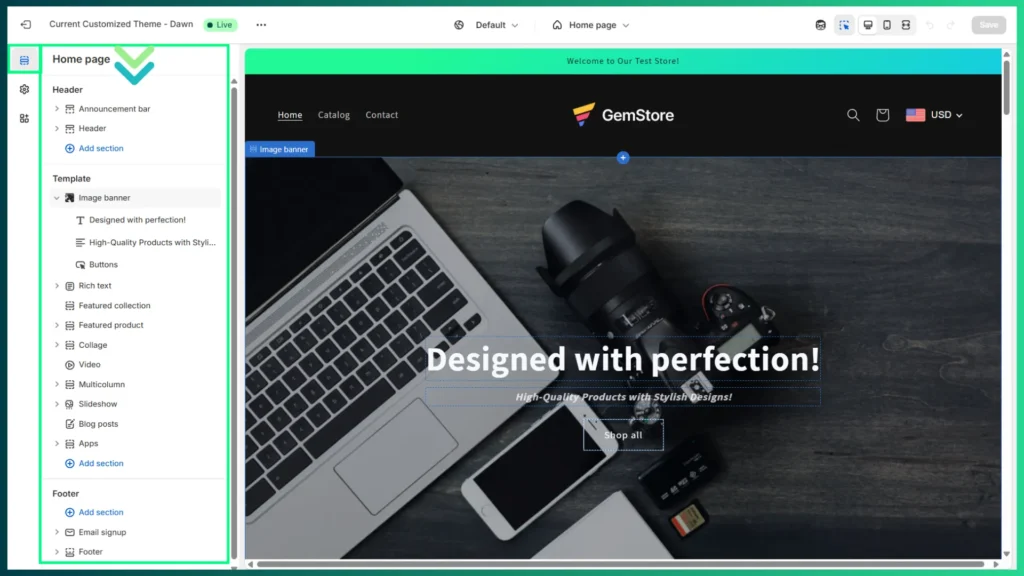
Once the efficiency is demonstrated, then implement more advanced and innovative experiences such as dynamically created landing pages or predictive journeys of content to optimize content velocity everywhere.
Overcoming Common Challenges
Harnessing the advantages that AI systems enable and establishing fully automated personalization at scale comes with its own set of challenges in AI personalization that organizations need to proactively overcome. Being aware of these difficulties avoids penny-wise, pound-foolish mistakes.
- Begin with too many inputs: Marketers who attempt to personalize across the board (homepage, PDPs, emails, ads, pricing, etc.) will quickly find themselves with deconstructed data streams. Begin with one touchpoint that can have a dramatic effect, refine the personalization solution, identify ROI, then proceed.
- Single-channel personalization: In 2026, email is personalized, but the website and ads are generic, leading to a fragmented experience. Personalization optimization must happen Cross-channel, leading companies using the AI persona concept to connect all channels.
- Assuming demography instead of behavior: Today’s personalization relies primarily on behavioral signals. When AI processes customer data, the time spent browsing and scroll depth by a given customer increase the intelligence of selling significantly more than age or location.
- No holdout testing: With no control group experiencing the generic experience, you simply have no basis to measure true personalization lift – and no way to justify your scaling investments in your content strategies.
- Fixing personalization as a one-shot exercise: An AI model gets better over time with more data in 2026. Your automation has to be deployed and continuously optimized in order to realize the compounding benefits.
- No unified data layer: This is perhaps the biggest technical mistake you can make. Forget about personalization if you lack a CDP integrating all your customer data across channels. Your website does not know what your email knows, ads run on a completely different data set, there go your personalization dreams!
Conclusion
Finally, the future of AI personalization is for brands to transition away from content management siloed content management layouts for good. By employing AI-powered content personalization to adapt content by user activity, with content by action and with content instantaneously upon context, companies will revolutionize each touchpoint in the consumer decision journey to be exponentially more contextual, relevant, and engaging-and thus, more profitable.
Those who use this methodology to personalize all marketing flows will see unprecedented success, utilizing AI to learn and adapt a personalized consumer journey while organically evolving its core content creation and online experience foundations.

Vijay Sood is a seasoned digital marketer with a passion for driving online growth and innovation. With a robust background in developing and executing comprehensive digital strategies, Vijay excels in leveraging SEO, content marketing, and social media to boost brand visibility and engagement. His expertise lies in transforming data-driven insights into actionable marketing campaigns, helping businesses achieve their digital objectives.