Over the past few years, the predicted worldwide e-commerce sales through the internet have been estimated at nearly $6.86 trillion. With more than 2.77 billion people conducting their shopping online, it is evident that having an online store is the best-selling option for sales in e-commerce in the present times. More and more customers are deciding on the ease of buying online, and thus, an efficient website is now the secret to grabbing more customers.
However, this is not all to it; the selling and running of an e-commerce business have their share of challenges as well. Well, these are the issues most entrepreneurs frequently face in e-commerce situations: high competition, cart abandonment, and security concerns. And it is definitely a hard job to keep up with the ever-changing customer preferences and new technology. Don’t panic, here we will talk about the 10 must-have features of highly successful e-commerce websites today. For people planning to launch an e-commerce business, becoming familiar with these will be of utmost importance. So, let’s begin to explore how to start an ecommerce business with the right features!
Why Do eCommerce Sites Need Good Features?
Good e-commerce site design is user-friendly for both users and machines. In simpler terms, a properly organized website is customer-friendly, and at the same time, it is very easy for search engines to index it. Moreover, good site structures not only make browsing feel more intuitive but also anticipate users’ needs and thus enable them to find what they need with little effort, which is crucial for a good e-commerce website.
The opposite of this, which is poor website architecture, is both difficult to use due to its confusing nature and thus frustrating to both search engines and visitors. Help users easily locate the information most straightforwardly and naturally. Moreover, this information is easily searchable and indexable by search engines, which enhances its accessibility to users through search results.
What are the 10 Must-Have Features of E-commerce Websites?
Here are the ten must-have features that you need to implement on your ecommerce site to make it stand out from the crowd. To have the best ecommerce experience, these are not plumbed under the hinge of compromises.
1. User Experience and Interface
User experience is the central point of all successful ecommerce websites. Utilization of white space, customer interaction, and clarity in call-to-action in a customer-centric design can substantially elevate the conversion rates by up to 400% and retention of customers. The creation of an emotional bond with the audience through an interesting and visually considered site design is one way in which you may motivate visitors to linger on your site and eventually get ahold of your product or service.

Additionally, the presence of an intuitive and seamless structure that maintains consistency and user-friendliness across all devices will significantly enhance the user experience. This essentially means that in such a case, a user can be offered assistance directly through a chat bubble, ensuring that help is accessible to them whenever needed. To provide the topmost access, the configuration should be responsive for all kinds of mobile devices. A good web design can make all the difference.
By placing a high value on the user experience and user interface design, your e-commerce site has the potential to charm visitors and create an indelible memory that will fetch repeat visits.
2. Work on the Loading Times of Your Site
The speed of a website is a very important factor in an e-commerce business in today’s times, where everything is fast and on the go. Research indicates that visitors are not willing to wait long for a slow website that takes more than 2 seconds to load; they abandon such sites, and the rate of conversion into sales decreases with every extra second of waiting.
However, a sluggish website not only irritates visitors but also affects the ranking of a website on search engine results. Google prioritizes sites that load quickly and deliver a fast user experience. overall
So, how can you make sure that your e-commerce website is super speedy?
- Image Optimization: The biggest reason for slow loading times is large and unoptimized images. Choose image optimization tools that can lessen the file size to a great extent without losing the quality.
- Use as few plugins: Although plugins add extra features to a website, they may also slow it down. Only use the necessary plugins for your ecommerce website feature and make sure that they are kept up to date to ensure optimal performance.
- Content Delivery Network (CDN): A CDN could be the answer if you want to distribute content from your website on different servers located in various regions of the world. Therefore, people who live in other places will be able to download the website much quicker, as it will already be saved in the closest server to them, enhancing the overall ecommerce website feature.
- Browser Caching: By turning on browser caching, the elements of the good ecommerce website can be saved on the devices of the users. Hence, instead of downloading the duplicate content over and over again, the time spent on subsequent visits will be improved.
When you make website loading time a priority, you deliver a positive user experience, increase conversion rates, and improve search engine rankings—all of which are vital ingredients for your e-commerce ventures to succeed.
3. Provide Easy Navigation
If you are really determined to take your e-commerce business to the next level, then making your e-commerce website navigable is the first thing that you need to take care of successfully. The visitors of your site should be able to navigate across your pages easily and quickly without getting lost or confused in any way.
If navigation is complicated, visitors might say goodbye to your website forever. One of the most efficient methods to allow effortless navigation is having a well-detailed navigation menu. It will be even greater if you put up a mega menu, which can give direct access to all the categories and product pages that are already on your site.

On top of that, incorporating a comprehensive menu in your website footer is another step that you can take to upgrade the navigation and the entire user experience.
4. Simplify the Process of Finding Products
Customer patience is a rarity! If customers are unable to find the products they desire within a short time, they will immediately exit your website. How to fix it? Implementing a strong search function!
- Intelligent Search: Just like Google and Amazon, your search bar should offer intelligent suggestions as users type.
- Easy Access: You should not hide your search bar! The search bar should be visible on every page of your e-commerce website. The magnifying glass icon is a universal symbol for the search and helps users to identify it easily.
- Simplicity is Key: Creating a complicated search bar is not necessary for your ecommerce website functionality; instead, focus on must-have ecommerce website features that make it easy for users to find what they need. Keep it simple and user-friendly.
By adhering to these hints, you will develop a shopping mode without the customers’ frustration, making them stay with you for long!
5. Sorting and Filtering
Sorting and filtering are the most necessary features for achieving any kind of success of an ecommerce website. The inclusion of these tools on your online store will help customers easily find specific products that suit their budget and taste. Like the site search, sort, and filter should be very noticeable and time-efficient. By time-efficient, we mean that they should allow fast sorting and filtration of products.
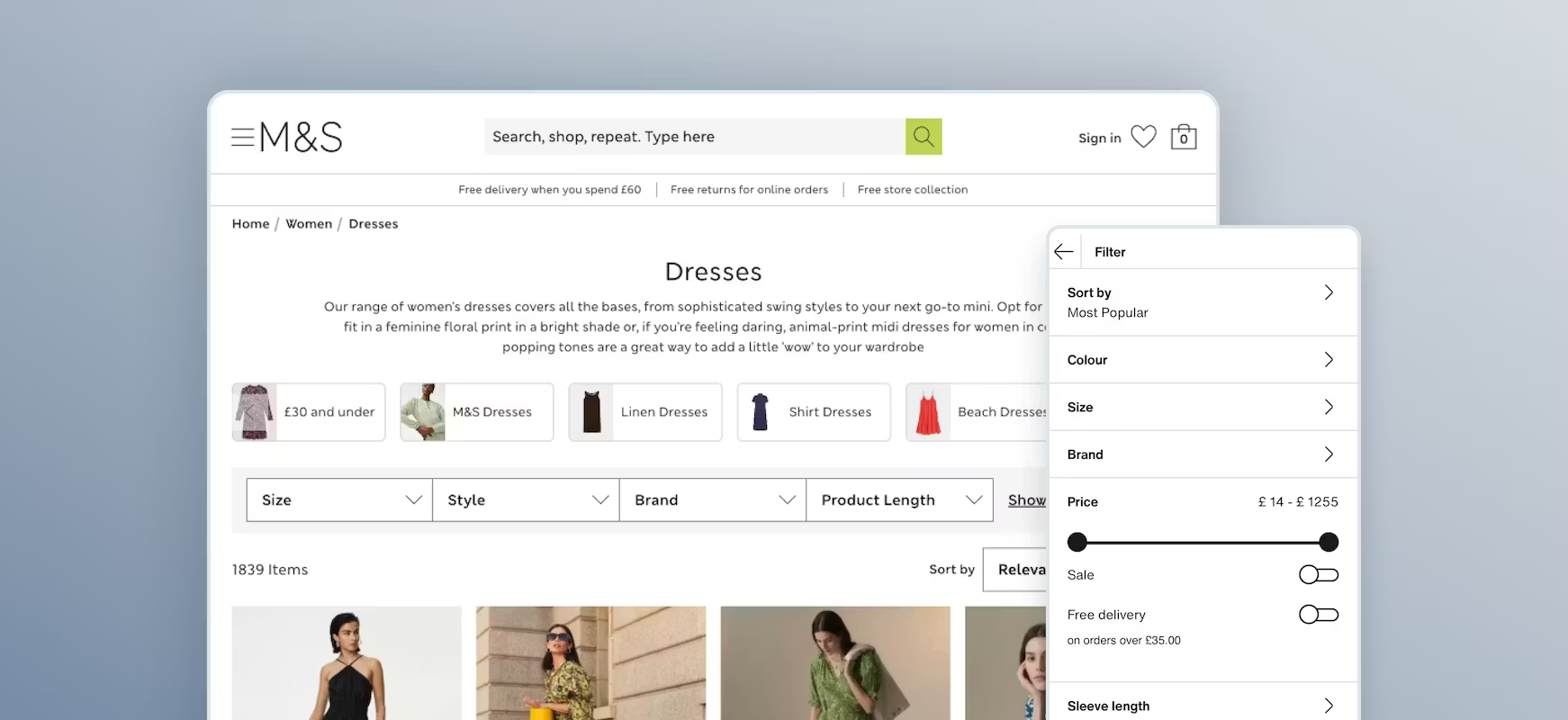
At the first stage, your sorting and filtering means should provide the customers with the opportunity to search for products in terms of:
- Price
- Color
- Size
- New/old
- Reviews and ratings
You can add as many filtering and sorting options as you like to enhance the ecommerce website feature and make it easy for users to find what they need.
6. Secure Payment Gateways
For online security, Indian consumers put it at the top of their list of priorities. To be able to win consumers’ confidence, having a few trustworthy payment methods integrated into the platform is highly needed. UPI, online banking, and safe handling of credit/debit card transactions are just some examples of features the ecommerce platform should incorporate.

However, while cash on delivery is still popular, the use of secure online payment methods is a hallmark of professionalism. Also, it suggests that customers are more likely to do online transactions with you. Multiple payment methods are mandatory for an ecommerce business success program.
7. Guest Checkout
Have you seen that most online shops do not require an account to make a purchase? This is because most of them now provide guest checkout. Guest checkout on your eCommerce site will make the buying process smoother and faster, as it removes the need for account creation before a purchase can be made.
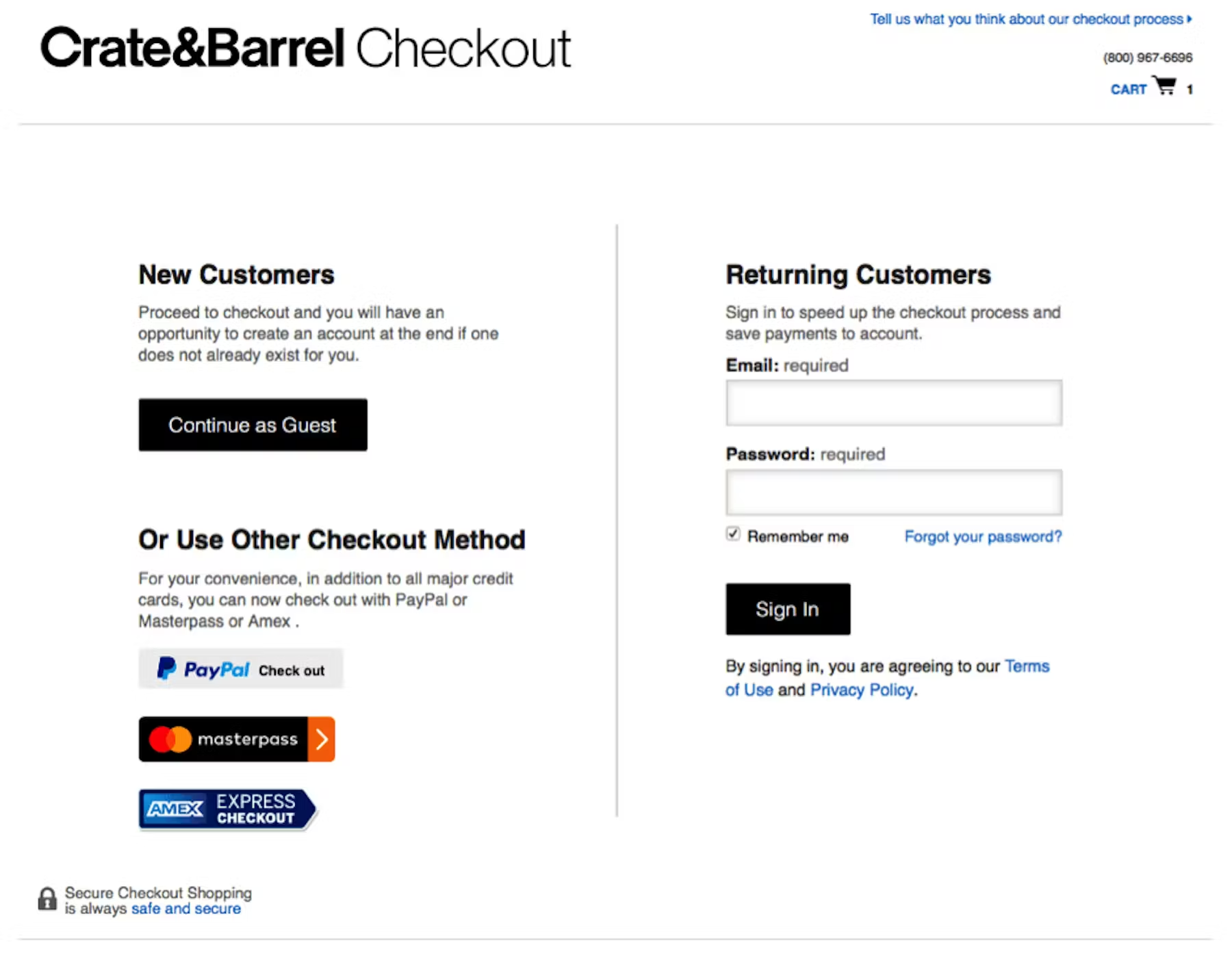
The feature also makes the shopping process even more comfortable for impulse buyers and drastically lowers the rate of cart abandonment. Customers who are in a hurry to complete their transactions are often obliged to create a new account, which might aggravate them to the extent that they leave their baskets uncompleted. Such a faster checkout process is the best possible feature that can be found on any eCommerce website.
8. Clear Return Policies
The policies on the return of goods are among the most essential features of an e-commerce website. Sales don’t always go smoothly, as customers may wish to return products for various reasons such as receiving the wrong size, encountering defects, or simply changing their minds.

The clients need information about returning in the following directions:
- Is it possible to bring the product back without paying?
- What’s the shortest waiting period for returns in your online shop?
- Can they replace a product with one of their choice?
By including the answers in your return policy, you are not only building the customer’s trust in your ecommerce business, but you are also making the return procedure easy for them. This is the trust-building arsenal of the ecommerce websites.
9. A Comprehensive FAQ Page
Though information on product return policies is an essential part, it must not be hidden away. A FAQ page provides a perfect habitat for such details. One of the essential features that the e-commerce world cannot exist without is probably an FAQ page. It not only outlines a return policy but also replies to customer questions that are asked the most, i.e.,
- Do you provide any discounts for the purchase of large quantities?
- What are your shipping times and rates?

In the absence of an FAQ page, customers might depart due to the unavailability of answers, or they might inundate your inbox. Communication is among the must-have features for an ecommerce website. Ensure your FAQ page is comprehensive and easy to navigate, thereby enhancing the user experience.
10. SSO Integration
The chances of users completing registration are increased by 50% when they are offered SSO options. The reasoning behind this is that SSO simplifies sign-in as users can use their existing accounts from services such as Google or Facebook to log in to your e-commerce site. One of the main reasons for their choosing this method is that they will not have to remember so many passwords.

Without it, the complicated signing-in process will make users shy away from creating profiles or finishing shopping, leading to lost sales. This is one of the reasons for an excellent e-commerce website.
Common Challenges in Building an E-commerce Website
Building an e-commerce website can be very exciting, but it is also likely to encounter some problems along the way. The problems are immense, ranging from intense competition to technical issues and customer loyalty. The entire e-commerce project is a demanding assignment that requires careful planning and scheduling.
Below are four common challenges that you will face when you decide to build an e-commerce website:
1. High Competition
The existence of many businesses on the internet is the reason for the difficulty of getting a business noticed, highlighting the importance of effective ecommerce website features. Due to a large number of competitors, it will be harder for traffic to new websites to gain.
Solution: Implement must-have ecommerce website features to enhance visibility and user engagement. If you want to distinguish yourself, first let the world know what is special about your products. It can be their quality, price, or simply the excellent customer service you provide. You can also advertise your brand to a particular group of people on social media and amplify your website’s SEO to target the right audience.
2. Technical Issues
Technical problems, such as website crashes, slowdowns, or security breaches, can irritate customers and ultimately lead to revenue loss. Usually, the root of these problems is poor hosting practice or a lack of necessary skills.
Solution: Choose a reliable, supportive, and well-performing web hosting service. Update the software and plugins of your website regularly for better security and speed. In case you are not skilled in website design, hire a professional or use the help of a simple website builder that offers support. This is a significant stage in the ecommerce website development process.
3. Customer Retention Strategies
While it is very nice to get new customers, the importance of retaining them cannot be overemphasized. A multitude of online stores have discovered that they are struggling to find effective means of encouraging repeat purchases from their customers.
Solution: Initiate loyalty schemes that reward clients who make a new purchase with you, as these are effective must-have features for ecommerce. Employ customized emails to dispatch exclusive deals that relate to the previous purchases. Delivery tracking can also instill confidence and loyalty in customers.
4. Managing Inventory
Inventory management is one of the problems that online stores face. On the other hand, too much stock can drain your business, while too little can make you lose customers and consequently sales.
Solution: Employ software for the management of stock to gauge current stock levels and to make predictions of future requirements. You must establish good relations with suppliers so that your ecommerce store can replenish stock easily when it runs out. Continuously collecting and analyzing sales data is a required practice to adjust inventory according to trends and seasons.
Future of E-commerce Websites: Common Trends
There are a lot of good things that are going to come with future e-commerce websites. Besides technology becoming increasingly proficient, shopping online will become much more personalized and convenient. Here are four key trends shaping the future of e-commerce:
1. AI Integration

A big chunk of ecommerce is going to be powered by AI features that improve the shopping cart experience. By analyzing shopper data, AI can manufacture custom shopping experiences for consumers by offering items of their liking or referring to what they have bought in the past. Thus, the whole shopping process becomes easier and more enjoyable for everyone. AI is also helpful in generating product descriptions.
2. Voice Commerce

Shopping through voice has become more and more preferable as people are making use of voice assistants and smart speakers. Customer convenience is increasing as customers can give orders or ask their questions just with a simple talk, thus making shopping quicker and easier. The rise of this trend means that online stores need to optimize their websites for voice search engines.
3. Personalized Shopping Experiences

Shoppers want experiences that match their tastes, which can be achieved by incorporating must-have features for ecommerce. The method for this is to gather data about customers and use it to send personalized communications, offer relevant suggestions, and deliver exclusive shopping experiences. Through personalized shopping, businesses have an opportunity to turn customers into returning ones.
4. Augmented Reality

Augmented Reality has revolutionized e-commerce by allowing customers to visualize products as part of their space before making a purchase. For instance, using AR, individuals can “try on” outfits or see how furnishings fit and match the style of their homes. Thus, customers become more confident with their choices, which is inclined to be greater in terms of the amount of sales and less in terms of returns. This is just another one of the great things that make up a perfect e-commerce web solution.
Conclusion
The creation of an effective e-commerce platform is just beyond the basic showcasing of products. It means that customers are continuously engaged because they experience a hassle-free, secure, and enjoyable shopping session that features fast loading times, secure payment options, easy navigation, and personalized shopping.
In the end, a wonderful e-commerce shopify platform is not merely a selling site; it can be better referred to as a customer loyalty and trust-winning space that satisfies the needs of every customer. If you start working on these features and trends and putting them in your store, then your shop will not only survive the busy digital marketplace but also thrive and become a first-rate destination for shoppers.

Vijay Sood is a seasoned digital marketer with a passion for driving online growth and innovation. With a robust background in developing and executing comprehensive digital strategies, Vijay excels in leveraging SEO, content marketing, and social media to boost brand visibility and engagement. His expertise lies in transforming data-driven insights into actionable marketing campaigns, helping businesses achieve their digital objectives.