Consider that you have a tool that can drive new customers to your online shop. Just when they are inclined to spend some money. And that is the beauty of pay-per-click (PPC) advertising. In the case of an ecommerce business, PPC is not just about clicks but actually drawing the right audience and making the visits result in sales. The secret? Extended ad budget through resourceful e-commerce PPC planning that leads to increased return on ad spend. These keywords not only attract traffic but also generate high-intent buyers who have a better chance of adding items to their cart.
A significant percentage of search requests, around 91.8%, are long-tail keywords, which are very specific and tend to be less competitive. Not only will these long-tail keywords reduce competition, but they will also increase ad relevance and conversion rates with an average conversion rate of 36%. A practical ecommerce PPC strategy regarding long-tail keywords can really help to optimize the performance of your campaign and improve your ROAS. In this article, we will explore the top 10 practical ecommerce PPC strategies for enhanced ROI. So, let’s begin!
What is Pay-Per-Click (PPC) Advertising in eCommerce?
In the dynamic world of eCommerce PPC advertising, each click can potentially take your online store to unprecedented heights. E-commerce PPC services are not just about getting clicks; they are about creating a strategic roadmap that is specific to the goals of your online store, whether you are looking to increase leads or break your sales record.
In the world of PPC in eCommerce, everything is about precision and finesse to achieve a high ROAS. In contrast to standard PPC practice, eCommerce PPC establishes a direction that accommodates the unique characteristics of online trading. At the same time, eCommerce PPC marketing allows you to overcome the challenges of the sector gracefully. That is where PPC on eCommerce comes in its best light: assisting you in creating a convincing-looking online shop that can attract and convert the audience.
Top 10 PPC Strategies to Get Better ROI
In the competitive world of digital marketing, one of the more effective methods of driving targeted traffic and maximizing returns is through pay-per-click (PPC) advertising, especially with the help of marketing agencies. To ensure a high ROI, however, you must have a plan and constantly optimize it; simply posting ads is not enough. When you have an effective PPC campaign that is optimized to suit your business objectives, you will be able to extend your budget further to reach quality customers. The top 10 PPC strategies to boost your campaign ROI and achieve sustainable growth are outlined below.
1. Select the Right Keywords
Choosing the proper keywords will make a PPC campaign successful. Review the customer demand to start with. It means that PPC will not work if nobody is searching for your product/service.
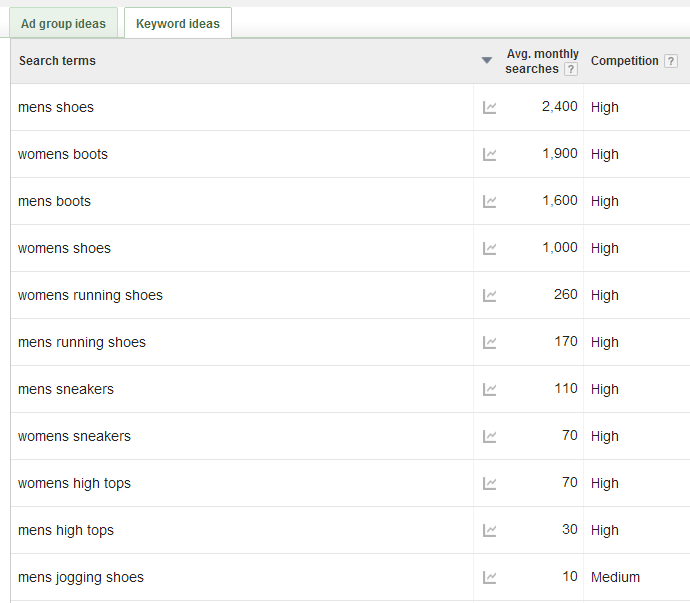
Use Google Keyword Planner to find appropriate keywords. This tool assists you in knowing about:
- Search Volume: The number of people searching a keyword.
- Competition: The number of advertisers that are bidding on that keyword.
- Cost: Consider the impact of search queries on your overall budget.
The long-tail keyword you should focus on is the selling of cheap ladders in your neighborhood, as part of your keyword research. This is less competitive and more specific, hence cost-effective for your paid search efforts.
2. Spy on Your Competition
Learning about your competitors’ plans can help you gain an advantage. To discover the keywords and ads your competitors are using, utilize tools like KeywordSpy.

Analysis of competitors can be presented by the following steps:
- Find Competitors: Analyze their use of google shopping and identify their keywords. Enter your keywords in the search and identify the lead advertisers.
- Analyze Ad Copy: Examine their headlines, offerings, and calls to action.
- Check Landing Pages: See where their adverts direct and in what format their landing pages are set to optimize ad performance.
Studying what works with your competitors helps you to improve your strategy.
3. Optimize Your Copy
You need to make your ad copy engaging and relevant to improve your click-through rate. This is how to make it outstanding: Utilize negative keywords to refine your audience.
- Unique Selling Proposition (USP): Note the difference-maker. This may be a one-off deal or an exclusive amenity.
- Clear Call-to-Action (CTA): Inform the users on what action they should take next, including phrases such as “Call Now,” “Buy Today,” etc.
- Quality Copy: Your ad copy should be concise and error-free to enhance the click-through rate.
In this case, you could say 50 percent off dog food on your ad, and you can route users to a landing page mentioning this discount.
4. Creating Irresistible Copy
Good ad copy is the starting point of successful PPC campaign management. It must be convincing, succinct, and action-directed so that it can attract the attention of the user quickly. Because PPC advertisements are limited in the number of characters, all words need to be meaningful. Composing content that follows the PPC rules guarantees your advertisements are engaging and optimized to their full potential.
These are some of the good PPC ad copy tips:
- Visually Attractive Headline: Drive traffic to your ads with a compelling headline. The Headline should instantly grab attention and present the main advantage.
- Value-Driven Description: It should be a short explanation of the unique value of the product in the description. Lightweight, durable, and comfortable. Save 20% now!”
- Clear Call to Action (CTA): The CTA must help the users proceed to the next step. Examples: Order Now, Claim your Discount, or Try it Free.
Putting these PPC ad copy tips into practice can significantly boost the success of your campaign. To improve engagement, it would also be worth including emotional triggers, urgency, and using power words. Like the example above, we have added “Limited Time Offer” or “Hurry—Only a Few Left,” because this will create an urgency for action.
5. Designing Attractive Visuals
In the universe of PPC campaigns in Google Display Ads, Facebook Ads, and Instagram Ads, graphics are used not to dress up but to narrate the product benefits to potential customers. A captivating image or eye-catching graphic will halt the scroll faster than even the cleverest of titles, so visuals are just as important as the words when it comes to gaining your attention and earning a click.
The human brain perceives images 60,000 times faster than text content, which is the reason why an attractive graphic display is indispensable to gain the attention of users in a short span of time. A good quality image increases perception of the brand, is attention-grabbing, and enhances engagement in search ads.
The best practices of developing effective ad creatives are:
- Ensuring that high-resolution product images are used to demonstrate the essential features is crucial for effective paid search advertising.
- The design is pure and uncluttered to allow the product to be important.
- Includes brand colors, logos, and fonts in order to offer consistent branding across all marketing strategies.
- Consider including bold typewritten overlays like “50 Percent Off Today” or “Free Shipping on All Orders.”
Visual design tools such as Canva and Adobe Spark allow one to design professional-looking images without design expertise. Video ads are even more effective, particularly on social media PPC, as they can show product usage or customer testimonials.
6. Run A/B Tests to Get Better Results
A/B testing (split testing) plays a critical role in the optimization of ad copy and creatives to see which copy has the best impact on a target audience. That is an ecommerce PPC strategy whose center of interest is in creating a few new versions of an ad, then testing and comparing them to identify the winning ad suite in terms of performance and response.

Practical A/B testing steps are:
- To test one factor at a time (the headline, CTA, image, or description) and measure its impact on search results.
Running different ad variations concurrently to get the performance data. - Tracking essential KPIs such as CTR, conversion rate, and cost-per-conversion.
- Scaling the most successful ad and pausing or optimizing a low-performing or underperforming ad is a key aspect of effective PPC management.
As an example, one advertisement may contain the words “Shop the New Line—Free Shipping,” when another ad will contain the text “Special Offer—15% Off Your First Order.” Once testing is complete, a preferred ad should be selected on the basis of a higher CTR and conversion rate.
7. Continuous Monitoring/Optimization
Fine-tuning and constant measurements are essential to the success of your eCommerce PPC campaign. The changes in the digital space are a persistent trend with Google Ads in e-commerce, which means continuous optimization is necessary for improved return on ad spend.
The process of constantly optimizing your campaign by using real-time data and insights means that your PPC will always be tuned towards your business goals and deliver the best results in the world of dynamic online retail.
8. Setting an Expense Budget per Month
A properly planned budget will guarantee the maintenance of consistent ad visibility and avoid overspending. Strategy should be used to budget funds according to the history of performance, competition of efforts, and objectives of the campaign for better ad performance.

Significant budget points in your PPC management strategy:
- Examine Previous Performance: Insights based on previous campaign performance can be used to establish a cost-per-click (CPC) and average conversion costs.
- Use Budget Caps Daily: Avoid spending more money than you can by placing budget caps on campaigns daily.
- Set Budget According to High-Low Seasonality: When there is a high volume of sales during a particular season or holiday, increase the budget to take advantage of this time.
9. Campaign Targeting

A well-crafted campaign targeting will enable your ads to reach the right individuals at the right time. The following is how to tailor targeting:
- Device Targeting: Tailor your ads based on search queries from different devices. Ads do not work the same way on desktops and mobile devices. Compare data to identify the type of device that actually produces a better result. When traffic on mobile is not generating a conversion, perhaps it is worth pausing mobile ads or readjusting the strategy on mobile devices.
- Geographic Targeting: This will take advantage of geo-targeting to target those places that are profitable. Avoid the locations that are not performing and tailor region-specific ads to enhance the performance. To cite an example, a target group that works in urban areas may yield high conversions during working hours compared to rural areas.
- Time Targeting: See how your campaigns execute at hours and days of the week. Optimize your (bid) price to have a profitable time. Meal delivery is an example of a time-specific service in which you would see no reason to place ads when you are not open to potential customers.
Throughout the process of continually pruning, optimizing bids, and refining your targeting, you can dramatically increase ROI and the effectiveness of your PPC campaign.
10. Remarketing Campaigns
Remarketing (or retargeting) is a strategy in which ads are served to individuals who have visited your online store but have not made a purchase. It is an effective method to remind past visitors who have already shown interest in your products, thereby increasing their awareness and encouraging them to visit again.
The Reason as to Why it Works:
- Targets warm leads who are familiar with your brand/products, making it essential for successful PPC management.
- Increases the conversion rate by reminding shoppers about items they have viewed or even left in the cart.
- Allows customized messaging based on a user’s past behaviors on your site.
Generally, the cost-per-click is cheaper and the ROI is also high, as opposed to cold prospecting-type ads.
How To Implement:
- Do remark through using Google Ads, Facebook Ads, or any other platforms.
- Divide your mass into segmentations like
- Existing customers who have viewed the products but did not add them to the cart.
- Shoppers who did not complete their purchases at the checkout, even though they had added items to their cart.
- Use a customer list as a starting point to upsell or cross-sell products or services.
- Customize each segment ad creatives and offers (e.g., show a special discount to cart abandoners).
- Team it with dynamic remarketing to display personalized advertisements with specific products or categories that a user browsed.
Remarketing also serves to seal the sale cycle by returning the visitors at the opportune time with the appropriate ad, increasing chances of conversion and thereby enhancing the overall performance of the PPC campaign.
Conclusion
PPC advertising can be an extremely successful marketing tactic to help online retailers increase sales and optimize their returns. Properly planned ecommerce PPC approach can turn things upside down in getting quality traffic and conversion. The success formula is based on using long-tail keywords in a PPC campaign, writing catchy advertisements, performance-based bidding and ongoing A/B testing.
To remain competitive, a business must maintain systematic vigilance in its PPC campaign and regularly assess its marketing strategies. By employing intelligent ecommerce PPC tactics and continuously monitoring changes in the landscape, ecommerce brands can achieve sustainable growth and lay the foundation for infinite success. You should also utilize the services of an e-commerce PPC agency to make informed decisions and enhance your results.

Vijay Sood is a seasoned digital marketer with a passion for driving online growth and innovation. With a robust background in developing and executing comprehensive digital strategies, Vijay excels in leveraging SEO, content marketing, and social media to boost brand visibility and engagement. His expertise lies in transforming data-driven insights into actionable marketing campaigns, helping businesses achieve their digital objectives.