In today’s competitive market environment, email marketing remains equally or more relevant than before in communicating with and educating customers. Registered people are familiar with your communications, products, and services, which increases the chances of them becoming paying customers. While building relations through content and offers, email marketing allows you to communicate directly with the customers, thus helping keep your brand at the top of their minds. Engagement in email marketing is something simple to measure, but what steps need to be taken for one to stand out above the rest? Personalization is the answer.
Personalized email marketing goes beyond the traditional practice of blasting customers’ email boxes with offers in an attempt to lure them back. It can make a striking difference in relationship-customer interactions. Email campaigns that are tailored to the customer are more effective and contribute more value to the business.
What Is Ecommerce Email Marketing?
Ecommerce email marketing refers to emails specifically for ecommerce businesses to communicate with potential and existing customers through personalized emails to increase sales at a profit. Many brands use ecommerce email marketing software to power this strategy.
Email marketing involves sending and managing campaigns that resonate with customers during crucial touchpoints in their customer journey with your brand. It can also be used to forecast future purchases or any other behavior with your company, enabling every customer to deepen their relationship with your ecommerce business and enhance their lifetime value.
From welcome emails to promotional emails and other marketing messages, e-commerce email marketing aims to reinforce brand recall through email marketing strategies. Using e-commerce email best practices, brands can reach out to customers and actively involve them in targeted email campaigns.
What are the Various Types of Email Marketing for E-commerce Emails?
Like most other online shopping segments, Email Marketing for E-commerce has different types of emails. The goal of these E-commerce email campaigns is to improve both customer attraction and retention. Thus driving growth in CTR:
- Promotional Emails: Focused primarily on sales-driving, promotional emails showcase offers, deals, or new products. Encouraging purchases by showcasing deals during limited windows of time. Encouraged during specific times to create a sense of urgency.
- Transactional Emails: These are more utilitarian in nature and include order confirmation emails and shipment notifications, which are sent after the user takes action. They provide requisite information and help customers trust a business in simple, concise messages.
- Behavioral Emails: These emails respond to specific customer actions, such as welcome emails or messages sent to customers who leave items in their carts without checking out.
- Engagement and Re-Engagement Emails: These emails invite users to interact with the brand by performing simple actions like responding to surveys or recommending products, which further helps sustain interest in interacting with the brand.
Advantages of Using Email Marketing for E-commerce
An email marketing strategy for an e-commerce store has proven beneficial for the latter where there is a clear email marketing strategy incorporated into the overall digital marketing plan.
Brand Interaction
Brands can send emails to their customers who they know exist directly to their inbox hubs, ensuring that the information is not filtered away through social media algorithms or any other form of distraction.
Personalization
Tailored communications driven by advanced customer segmentation enable e-commerce brands to take advantage of customer behavior, preferences, and purchase history through effective marketing channels. As a result of these efforts, businesses improve customer satisfaction, engagement, and email CTRs.
Automation Capabilities
As a result of user actions, businesses can send welcome emails or abandoned cart reminders through automation provided by email marketing platforms. Relevant communications are received by users at critical moments in the email marketing campaign, which assists in the buying process.
Measurable Results
Detailed analytics provided by email marketing in e-commerce aid businesses in tracking a myriad of metrics, such as open rates, click rates, and conversion rates. Data like this allows different e-commerce email campaigns to be endlessly fine-tuned for optimal performance.
10 E-commerce Email Marketing Strategies
Below are strategies that e-commerce businesses can employ to retain customers and boost their delight and attraction. Following these strategies will greatly enhance email CTRs for e-commerce email campaigns.
1. Pay Attention to Welcome Email Campaigns
In e-commerce email marketing, first impressions are key; the same applies to welcome emails. Establishing trust with customers sets the tone for your relationship, and this is what the best welcome emails for e-commerce accomplish. The open rate of welcome emails often exceeds 80%.
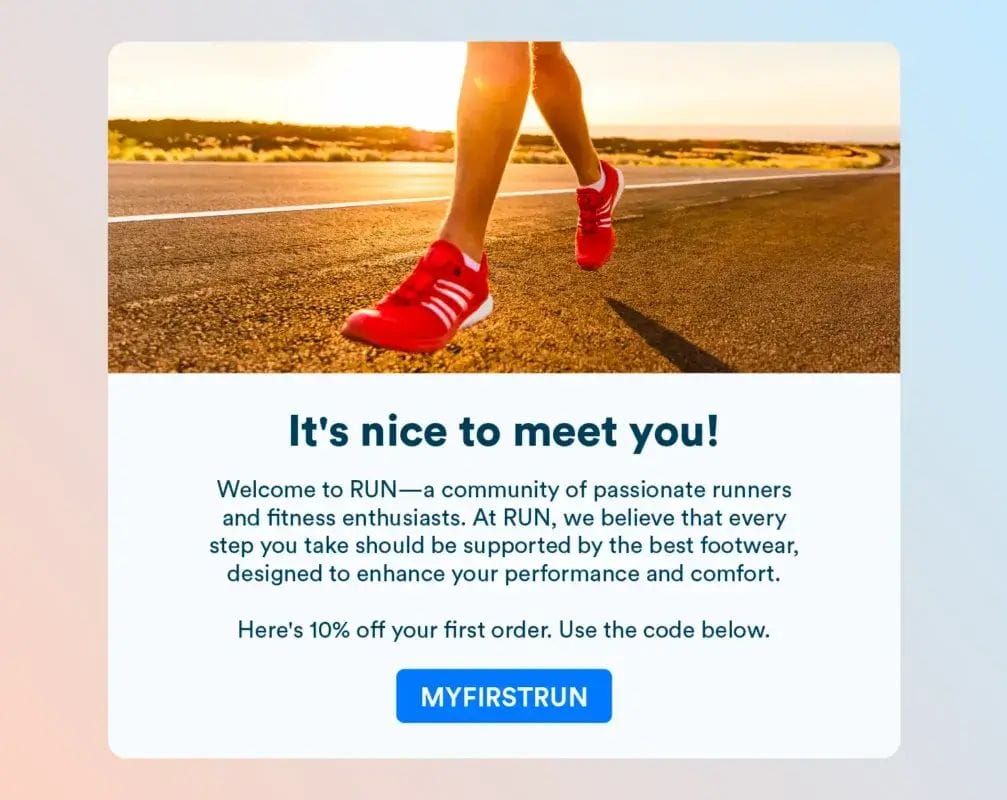
A well-crafted welcome message should tell your brand’s story about its unique origins and set precise parameters on what subscribers should expect regarding upcoming communications while navigating them carefully to your brand’s products. The framework for welcome emails for e-commerce businesses may look like this:
Describe your business and its core principles.
- Add a definitive action prompt (CTA), such as signing up for a discount or viewing the brand’s catalogue.
- Deliver instant value by offering special discounts like 10% off on their first purchase. For example: “Welcome to [Brand]’s email marketing campaign! Here’s 10% off your first order. Start shopping now!”
- Awesome Gifts for the New Customers Upon Sign-Up!
2. After Sign-up, Send New Customers Something Awesome
These welcome emails to new subscribers or customers are often sent directly after signup. More than 80% of individuals open a welcome email and this email results in four times the opens and ten times the clicks as compared to any other standard email. The opportunity that an automated welcome series offers cannot be overlooked.” Fortunately, with ecommerce marketing automation, you can send automated email campaigns triggered by specific events, like a subscription to your list. These emails can automatically be sent as soon as someone subscribes and can invite the subscriber to engage with your brand.
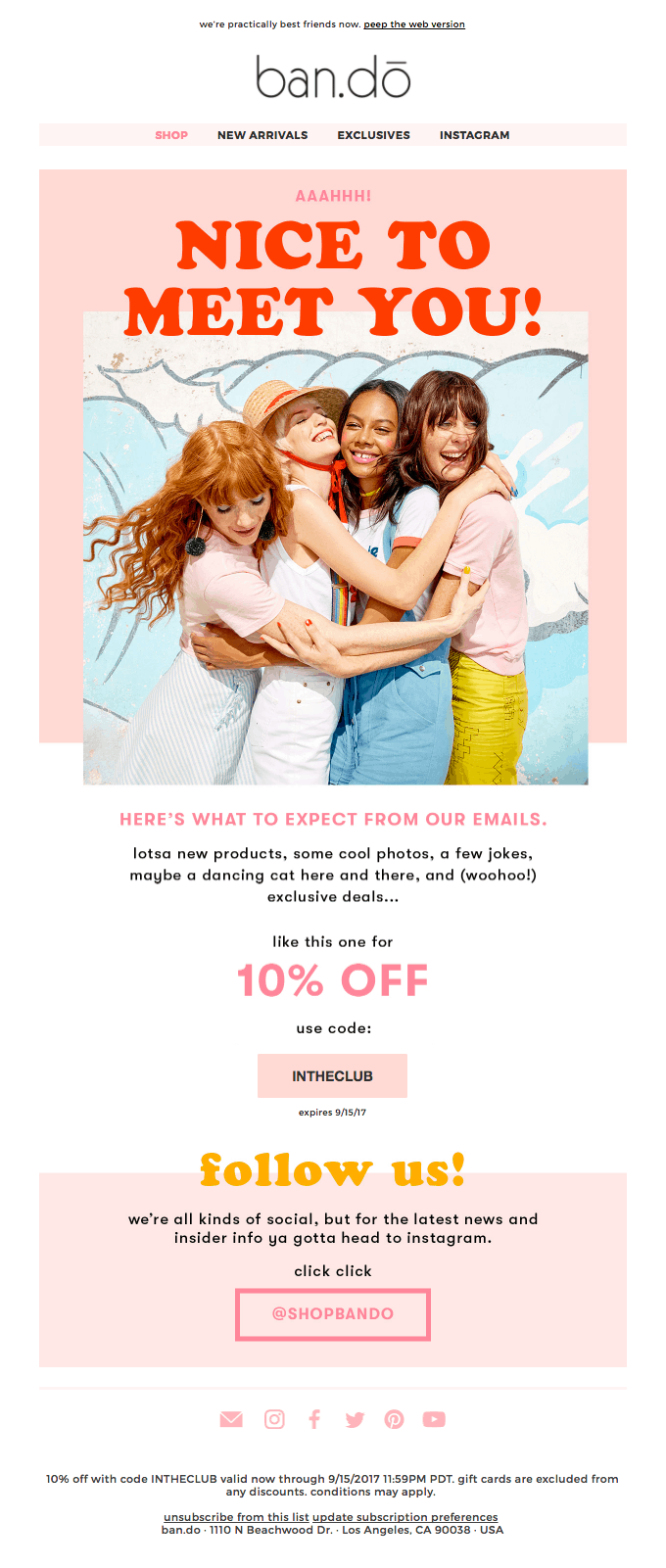
You can provide a welcome offer to make your offer even more inviting. Everybody loves discount codes, and most people will be greatly tempted to spend more with a welcome offer in their email address. Coupon codes increase online spending significantly. Even though welcome offers can be sent at any time, it is best to send one in the third welcome email to encourage the customer to take action.
3. Email List Targeting for Customer Personalization
Proper targeting is the primary tenet of any email marketing strategy. You can offer more appropriate and pertinent communication by applying particular parameters to your email list.

Some of the standard criteria used for segmentation are:
- Demographic criteria (age, location, gender)
- Purchases made (how often, their value, and the item categories)
- Customer website activity (products browsed and wish lists)
- Interaction with emails (opens and clicks)
For example, a fashion retailer might use previous purchases of specific items to generate better-targeted recommendations for subsequent purchases, thereby improving conversion. Alternatively, customers who often buy fitness apparel may receive emails showcasing the latest additions to their activewear collections.
4. Follow Up Emails for Abandoned Carts
Shopping cart abandonment represents a huge problem for online retailers, who have an average rate of around 70 percent. On the other hand, well-designed Follow-up emails featuring abandoned carts have an average open rate of 45%, which helps to reclaim some losses.

The best e-commerce email marketing combines these effective recovery emails from abandoned carts containing:
- Clear pictures of neglected items.
- Customer testimonials and reviews can be effectively shared in an email marketing campaign.
- Urgency, including phrases like “Warning! Items in your cart are about to run out!”
- Direct and straightforward action phrases, “Shop Now.”
- Enticing offers like free shipping or a small discount.
Think about sending 2-3 emails within 24 to 72 hours for maximum effect.
5. Special Offers and Discounts
FOMO (Fear of Missing Out) is one of the strongest motivators in eCommerce. It makes customers feel exclusive privilege and drives them to take action immediately. These exclusive offers prompt purchases that otherwise would not have gained urgency.

Make subscribers feel special and include limited-time offers. Here are tips that will help improve email copywriting for eCommerce marketing strategies:
- Set clear limits such as ”20% Off Our Best Sellers—24 Hours Only!”
- VIP access or members-only access to sales should be included in the email series.
- Access to new products ahead of others and discounts available only for email subscribers.
- Bold and enticing CTAs.
- A countdown timer for urgency.
6. Emails for Upselling and Cross-Selling
Effective upselling and cross-selling strategies are powerful ways to increase the average order value. While upselling focuses on getting customers to purchase a better version of the product, cross-selling recommends additional, supporting products. These emails can highlight the advantages of purchasing bundle deals, frequently bought items, and accessories or add-on items.
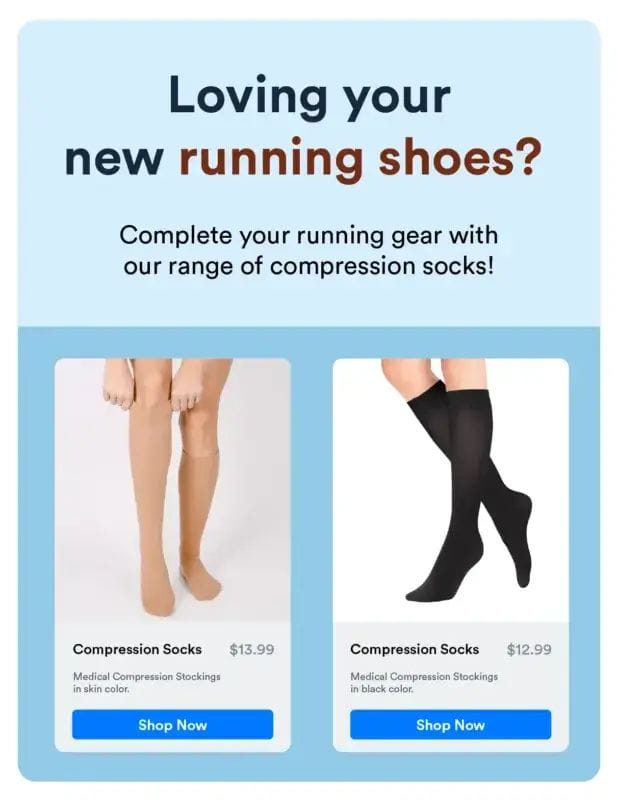
Take the case of smartphone users. They may receive promotional emails that feature charging accessories, protective cases, and screens. Customers who bought a yoga mat can be targeted with ads for yoga blocks or yoga apparel.
7. Loyalty Program Emails
Loyalty rewards help foster increased customer lifetime value by rewarding repeat purchases. Well-designed emails for a loyalty customer-focused program should communicate point balances versus rewards, milestone celebrations like anniversaries with the brand, exclusive branded member privileges such as product pre-launches and special discounts, emphasis on the next tier level progress, and bonus point earning opportunities.

Keeping customers updated enables active engagement, sustained motivation, and consistent reward earning.
8. Follow-Ups After Purchase
The customer journey does not end at the point of purchase; it continues through follow-up email marketing best practices. Emails sent after purchases are essential for trust-building and rewarding customer loyalty. It also serves as a good moment to request the customer’s opinion on how they were served during the buying process.
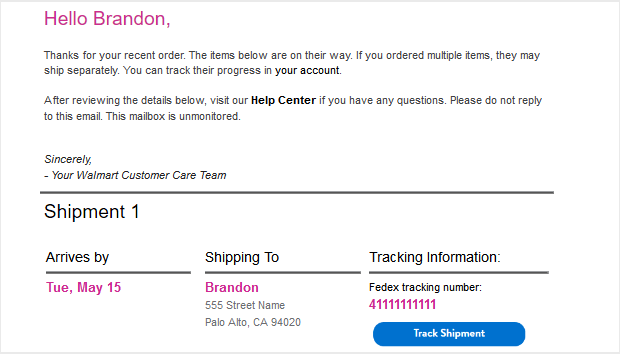
From an e-commerce perspective, post-purchase follow-ups may also be viewed as an email marketing cross-selling strategy to recommend purchasing other related items.
- Order confirmations with clear tracking information.
- Delivery updates and notifications.
- Tips and tutorials on product usage can be included in your email template.
- Requesting feedback.
- Inviting the customer to a referral program.
- Mentioning other relevant items for purchase.
Everything listed above can be captured in post-purchase e-commerce emails. Timing cannot be overstated—while the goal is to enhance the post-purchase experience, the emails must not be sent too close together.
9. Campaigns Related to Holidays or Seasons
Retail sales in the U.S. amount to 20% during holidays, with shopping accounting for 20-30% of annual retail sales. Seasonal holidays and special events are accompanied by increased consumer spending, thus creating the need for holiday campaigns. In e-commerce emails, festive imagery, colors, and language should take center stage. Marketing targeted around key shopping events should not ignore thematic holiday designs.

Recipes should regularly and adaptively incorporate the following foundational elements:
- Mobile responsive email templates are essential for reaching customers on any device.
- To drive traffic, it is essential to contain the emails within concise and yet informative templates.
- The promotional calendar for the holiday season should offer a schedule for during and after the holiday to keep track of goals, devising the best-crafted promotional schedule to respond promptly.
Key shopping days such as Black Friday and Cyber Monday require specific email marketing strategies with multiple touchpoints.
10. Tests, Tests, Tests
What email subject captures the attention of your audience the most? Is it funny or serious and straightforward? Are they more likely to engage with your email in the morning or afternoon? If the answers to such questions are still unknown, then you need to conduct A/B testing for your email marketing campaigns (and if you do know the answers, you should still keep A/B testing them!)). Excellent email marketing has an unsung hero: A/B testing. With A/B testing, marketers can try different subject lines, CTAs, graphics, and more to determine what resonates with their customers.

Also, A/B testing is the perfect rug for GIFs, emojis, and puns to play under in your email marketing campaign. Email marketing is a serious business. However, when used sparingly, the subtler elements of humor in an email marketing campaign can make the messages more relatable. First-party data is the heartbeat of A/B testing. Adding a first name to a subject line is a simple way to personalize emails and demonstrates the use of first-party data. First-party data can also be used to make educated decisions about testing the design of buttons and scheme colors.
While you focus on automated email cascades that depend on a customer’s actions, email sequences that respond to touchpoints require first-party data.
How to Measure Ecommerce Email Marketing Metrics
It is important to track performance metrics to enhance engagement levels for your e-commerce email marketing initiatives. Concentrating on a few critical metrics of interest will provide information for assessing the effectiveness of your strategies and aid in informed decision-making to optimize future campaigns.
- Email List Headcount: Email list size, tracked alongside growth rate, is a useful metric for determining brand perception. Monitoring these figures helps anticipate changes in audience interest, which contributes to precision in expansion efforts. Growing a brand’s email list requires emphasis on relevance in addition to numbers to ensure that the subscribers are truly engaged.
- Open and Click Rates: The levels to which your emails are opened and clicked offer insight into consumer engagement. A strong open rate shows that subject lines are appealing, and a high click-through rate suggests that content is relevant to consumers.
- Combating Deliverability Issues and the Wellness of Your List: If success is to be achieved, all emails must land in the correct inboxes. Keeping track of deliverability issues maintaining healthy email lists while keeping spam and bounce rates low and managing unsubscriptions to uphold an active and engaged subscriber base is essential.
- Outcomes of A/B Tests: An A/B test enables one to try out new ideas with different parts of the emails. These could be visuals, subject lines, and even calls to action. Results analysis provides facts that help one understand what captures the audience’s attention the most and enables one to adjust to improve the campaign’s impact.
- Profit: As a Validation of achievement, profits earned from email marketing are the utmost validator of success. It effectively links the performance of your campaigns with actual business results, thereby unmasking the efforts of your campaigns toward business outcomes.
Tracking these essential metrics provides profound insight into the performance of your email marketing initiatives, reinforcing your ability to make informed decisions and adjust your strategies for sustainable growth and impactful results.
Conclusion
The ROI and personalization offered by email marketing remain two of the most essential e-commerce strategies. Businesses stand to gain significant sales and customer engagement with these 10 strategies while adhering to industry best practices around timing, content, and analytics.
An email marketing e-commerce strategy requires an iterative approach focused on testing, continual optimization, and responsiveness to dynamically evolving customer desires and behaviors. Test with one or two methods and scale them based on the most effective strategies for their audience and business model.

Vijay Sood is a seasoned digital marketer with a passion for driving online growth and innovation. With a robust background in developing and executing comprehensive digital strategies, Vijay excels in leveraging SEO, content marketing, and social media to boost brand visibility and engagement. His expertise lies in transforming data-driven insights into actionable marketing campaigns, helping businesses achieve their digital objectives.