Each stage of a shopper’s journey can be engaged with different types of content tailored specifically for ecommerce sites. Building trust, answering questions, and giving an all-encompassing online shopping experience are achieved through detailed product descriptions, blog articles, engaging videos, and user-generated reviews. This not only enriches the shopping journey but also instills trust, fosters customer loyalty, and drives sales through effective digital marketing.
For e-commerce websites, content is the engine of customer engagement and conversion, forming the core of a successful e-commerce content marketing strategy. Describing your products is the last thing that you should approach, as there is a much better method—weaving a tale that resonates with the customer’s pain points with the solution being your product. From imagery to product captions, your e-commerce site serves as a convergence hub of traffic, buyer education, sales, and graphic information.
How Different Types of Content Help Drive Ecommerce Sales
Filling spaces with pointless information is a bad practice, but strategically guiding customers throughout the buying journey requires different content marketing types, each serving unique functions. The main focus is engagement during the attention-grabbing phase, with the ultimate goal being satisfaction post-purchase.
Ease Decision Making
Customers, thanks to product descriptions focus on benefits and trust that all their queries will be resolved and therefore are more willing to click “add to cart.”
Build Authority and Organic Traffic
Helpful blog posts that focus on relevant topics draw potential customers who wish to buy products as well as improve the site’s SEO, which then goes on to convert readers into buyers.
Increase Engagement and Trust
Unboxing, tutorials, and demo videos show products being used in reality, which is important as they build trust and therefore ensure that visitors spend more time on the respective website, which will boost sales.
Create Social Proof
Customer reviews, especially positive ones, help eliminate the perceived risk and greatly influence purchase decisions, along with encouraging other customers to buy these products while lowering the risk when two similar products are being compared.
Reduce Friction at Checkout
Well-structured FAQ pages that address the common concerns of the users will streamline transactions and ease processed cart abandonment.
Builds Community
Encouraging the submission of customer photos and stories in turn increases the credibility of the brand as well as the emotional connection to the customers, which aids in converting them into advocates and purchasers.
10 Types of Content for Ecommerce Websites
1. Descriptions of Products
Product descriptions are a summary that contains the essential features of a product. It contains details of a product with the aim of convincing customers to buy it. The description should explain the unique features of the product. Above all, the description must answer the questions and opinions customers may have about the product.
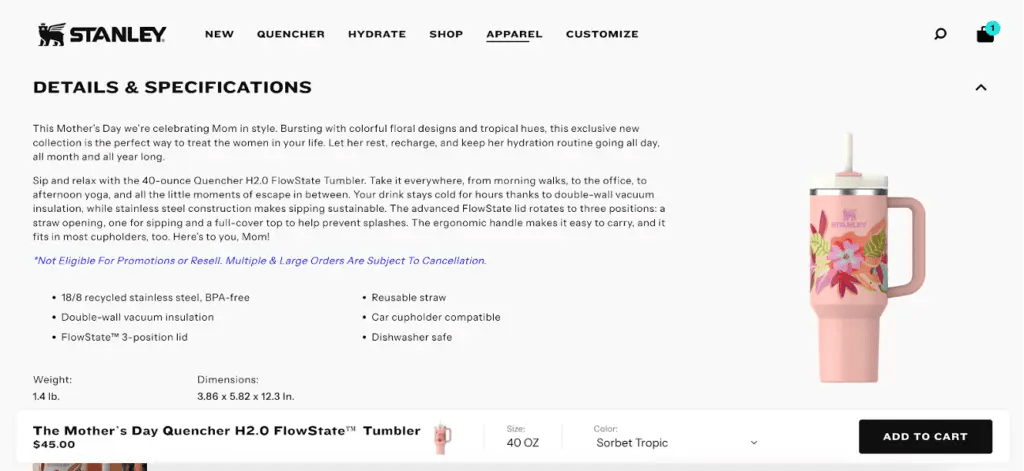
SEO techniques should be implemented in the description to improve ranking. Keywords must be placed in a natural way to guarantee a smoother reading. Describing a camera, for instance, requires more than stating its megapixels and sensors. The best description would explain how these features help guarantee better photos in day-to-day situations.
2. Blog Posts
A blog post serves as a versatile tool for increasing traffic, linking ecommerce sited, building brand authority, and strengthening a connection with customers. In addition to product how-to guides and industry news, blogs can also tell stories and provide insights relating to the products. Incorporating long-tail keywords through blog posts is an excellent way to increase SEO and is not possible through product pages.

Readers gain value through blog posts and in turn sellers can promote products. For example, an ecommerce site selling kitchenware might feature blog content with recommended recipes to engage customers.
3. Comparison Articles
Compared to other types of content, articles focusing on product comparison are only beneficial to e-commerce stores that sell multiple similar products. These do add value to online shoppers by providing valuable content and so boost the site’s credibility. These types of articles have become essential for online businesses. They clearly show the differences between products’ most common characteristics, including price and benefits.

SEO optimization can be achieved by focusing on keywords relevant to the products being analyzed. Consider the example of a smartphone comparison article, featuring a detailed comparison on an ecommerce tech site. The article enables users to make informed decisions on the products and services that correspond with their requirements and budget.
4. Purchase Guides
Purchase guides are one of the most important pieces of content for ecommerce buyers because they assist users in overcoming the navigational challenges posed by the overwhelming number of products available in ecommerce sites. These guides serve to provide useful instructional content to empower consumers to select the appropriate product for their unique situations, hence, helping them arrive at easier choices.
A buyer guide is effective when it also enhances the credibility and reputation of the business by demonstrating expertise, creating content that emphasizes patronage by the buyer. It should contain a very high volume of keywords to attract unsolicited visits and answers a myriad of scenarios and tastes to boost chances of citation. Imagine an outdoor buyer guide, filled with visual content and valuable insights for potential customers. Such a guide could assist customers in making choices based on season, the type of activity, and their level of expertise, thus cementing the ecommerce business as the best choice for such purchases.
5. Reviews
Reviews provided by users are essential for ecommerce platforms owing to their unmatched value enabling visitors evaluate products devoid of any embellishments or the ‘sales lens’. These reviews utilize the social proof bias, as buyers appreciate seeing preceding honest reviews from their peers. Hands on reviews ease the posting as well as the scouring process for prospects; they ought to have a rating mechanism with a relevance/helpfulness filter.

Reviews can add to a product’s page for SEO boosting by featuring rich key-phrase content. Customers can post reviews on book selling platforms thus enabling their peers to make well-informed decisions hence aiding them in informed choosing.
6. FAQs
The common inquiries are answered in the FAQs section which instantly helps answer a key customer problem. That problem is purchasing in the absence of assurance blunders – easing the buying process. This highlights the customer service side which can save ample time thus enhancing the overall performance of the customer service team. Well-crafted FAQs covering the product detail, shipping, returns, and other operation details greatly leverage user experience and serve as valuable content for the ecommerce brand.
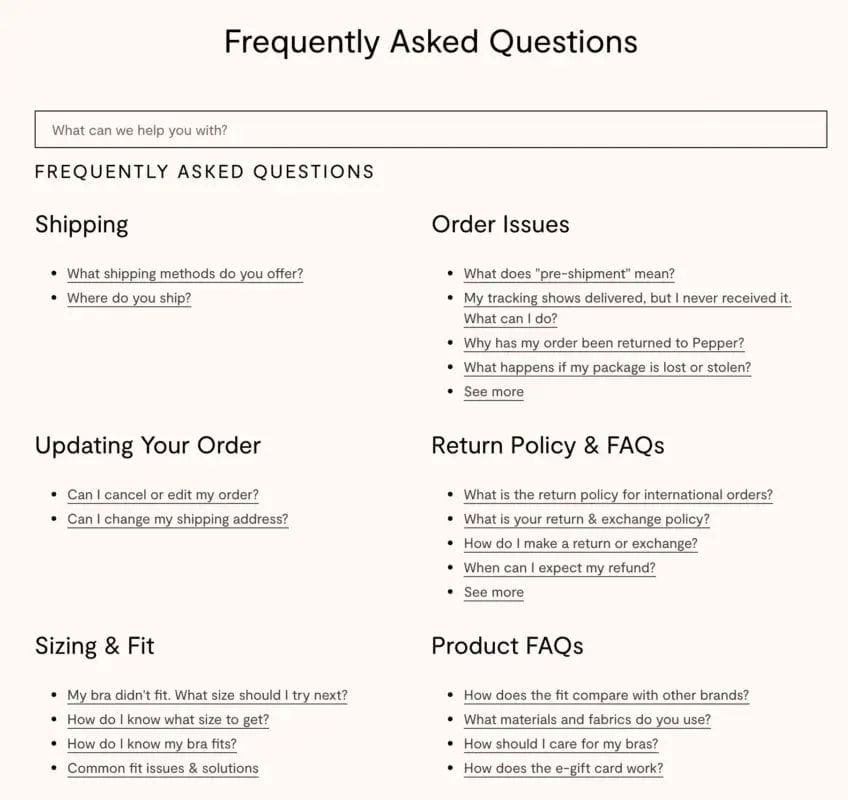
Furthermore, they can be created using top search term SEO with likely questions customers would type, making your ecommerce site more visible and enhancing your ecommerce content marketing strategy. For instance, an ecommerce fashion store may include FAQs regarding a size chart, the care instructions of the materials used, and policies regarding returns. These forms of answers not only increase customer satisfaction but also enhance SEO through valuable content.
7. Video Demonstrations
Video demonstrations serve as an educational and lively way to present products on ecommerce sites. Demandsafe states that 73% of individuals would prefer learning through a short video compared to reading an article. They eliminate the abstraction that is associated with online shopping, as they provide customers with a realistic representation of the product they tend to purchase.

These demonstrations can illustrate product usage and features, draw comparisons with other products, and so much more, all in a way that surpasses the limitations of words and still images. Furthermore, videos are easy to share and can greatly boost the average time spent on the product pages, which is known to benefit a site’s Google ranking in the realm of digital marketing.
8. Interactive Content
Video content like 360-degree product views and virtual tours are transforming the e-commerce industry by allowing customers to view products from the convenience of their homes. The customer’s ability to manipulate and engage with products virtually can enhance purchase-related activity and interaction to increase overall engagement. Virtual tours and setup of products not only allow confidence-based purchases but also boosts validation of trust-efficacy.

Take, for example, a home decor ecommerce website that offers simulated virtual room tours where customers can view different furniture pieces placed in various styled settings around the house. In addition to providing information, interactive content increases the amount of time users spend on site, which is great for SEO.
9. Infographics
As a poster example demonstrates, an infographic is a visually appealing and concise presentation of complex information that an individual may find helpful. Infographics are especially useful for ecommerce businesses to convey product benefits, industry statistics, and how-to guides swiftly as it tells and explains seamless raw data in the form of images and words neatly arranged.
Infographics fuel SEO as they get shared on the web which then creates backlinks, resulting in your site gaining traffic. For instance, a store could create an infographic explaining the health benefits of exercises relating to their fitness products which serves as valuable shareable content.
10. Interviews and Opinions of Experts
Adding interviews and opinions dealing experts on your ecommerce site brings a new dimension of authority, trust, and credibility to your ecommerce content. Builds trust with your audience. Insights can be provided by experts concerning the usage of the product, its relevant emerging trends, and tips related to products offered by your online store.

Interviews can make your site’s content relevant for certain topics or keywords. In an ecommerce site dedicated to skincare, featuring dermatologists discussing the science behind their skincare products educates the audience while expanding the site’s authority in the industry.
How to Create a Content Strategy for Your Ecommerce Business
An ecommerce content strategy combines diverse skill sets, including writing and project management, as well as understanding your brand’s objectives and audience needs. To help you develop an effective content strategy for your ecommerce website, we’ve simplified the process into six actionable steps.
- Define Your Content Goals: Create content that aligns with your ecommerce brand’s vision and objectives. Your business goals dictate what content you publish. In driving sales, increasing brand awareness, educating customers, or all three combined, it is critical that your goals dictate the content strategy you shape.
- Understand Your Audience: Carry out market research to know who your audience is, what they want, and the form of content that will appeal to them. Developing buyer personas can assist you in addressing various segments of your audience.
- Audit Your Current Content: Analytics help in understanding any gaps, so review the existing content and design the appropriate strategies which need to be adopted to solve the gaps your content has in catering to the audience and achieving the business goals.
- Plan Your Content Types: Based on the goals and research carried out on the audience, select the further types of content to be developed, such as product descriptions, blog posts, buying guides, videos, infographics, and the list goes on.
- Assess And Modify: Utilize analytics tools to track the performance of your content. Assess metrics such as page views, time spent on the page, bounce rate, and conversions for an understanding of user behavior in the context of your ecommerce content marketing strategy. Make revisions to your content using these insights to enhance engagement and improve outcomes.
Conclusion
A successful ecommerce website starts with quality content as its foundation. It helps customers navigate the buying process while educating, entertaining, and engaging them. With the right skills, your content creation has the potential to turn your ecommerce site into a vibrant sales hub. Continuous content publishing improves trust over time and during the lifetime of the customer while simultaneously increasing brand visibility on search engines.
Enhanced brand exposure leads to increased site traffic, which is trusted in the long run. Significant trust can be built through valuable SEO content, enhancing the overall digital marketing efforts. Every part of the journey has content to assist, whether it be product descriptions, blogs, or buyer’s guides, all of which are crucial for an ecommerce brand. Trust ensures that your brand not only stands out but is also credible and helps in attaining repeat purchases. Content in today’s digital space is no longer a king but an entire kingdom of user-generated content and digital marketing strategies.

Vijay Sood is a seasoned digital marketer with a passion for driving online growth and innovation. With a robust background in developing and executing comprehensive digital strategies, Vijay excels in leveraging SEO, content marketing, and social media to boost brand visibility and engagement. His expertise lies in transforming data-driven insights into actionable marketing campaigns, helping businesses achieve their digital objectives.