Most businesses select Facebook for their social media marketing initiatives, which is sensible. It is the ideal location for developing a target audience and producing revenue. Once your Facebook ad campaign is up and running, you should begin tracking Facebook ad analytics.
Facebook ad analytics answers the queries about ad campaigns. Tracking them is important for social media platform strategy. It also helps to develop a target audience, attract more customers, drive traffic to the website, calculate ROI, and learn about how visitors engage with the advertisement. It also increases Facebook page ROI.
5 Important Metrics for Facebook Ecommerce Campaigns
1. Post Engagement
What is post-engagement? This refers to the overall number of actions consumers perform in response to your advertisements. For example, when users like your ad, leave comments on it, share it, save it, click on it, etc. These operations fall under post-engagement. This is only possible if the advertisements are visually appealing, eye-catching, deliver a valuable message, and so on.
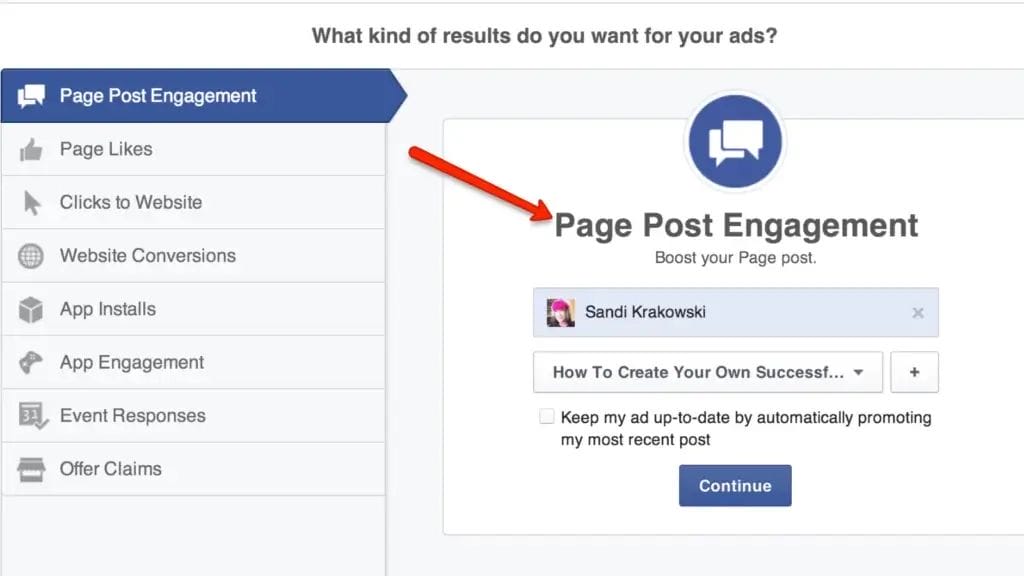
- This metric itself tells you whether the ads you are running are really liked by people or not.
- If the post engagement is low, then CTR (click-through rate) will become low.
- If CTR is low, it means fewer clicks on the ads.
- Fewer clicks on ads mean minimum chances of conversion rate.
2. Checkouts
If a customer likes your product and believes it is a problem-solving solution, they will most likely add it to their cart and begin the checkout process by entering their shipping and billing addresses.
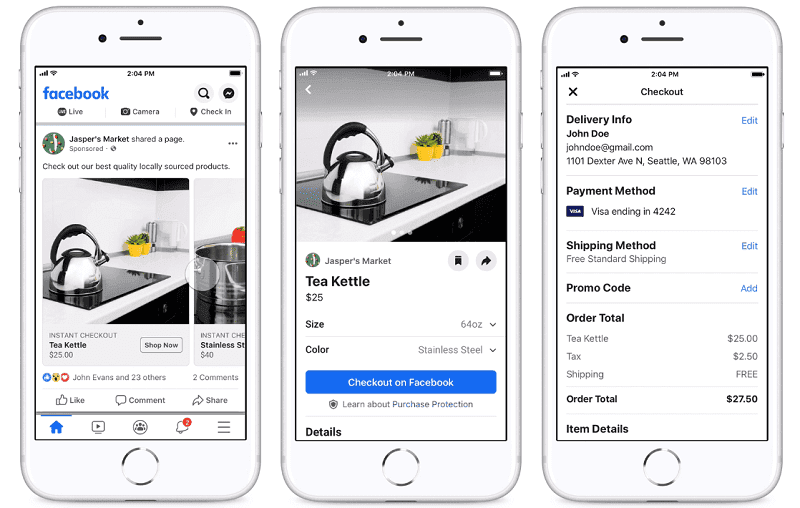
Also, if you offer them an incredible discount on low-cost goods, they will not hesitate to purchase them. Getting the number of checkouts isn’t enough until they’re below the target cost.
3. Purchase
This refers to the number of purchase events detected by the pixel on your website and linked to your advertisements. This indicator shows the number of purchases that resulted from the advertisements. For example, looking at the number of purchases made today can give you a sense of which ads are functioning well and which are not.
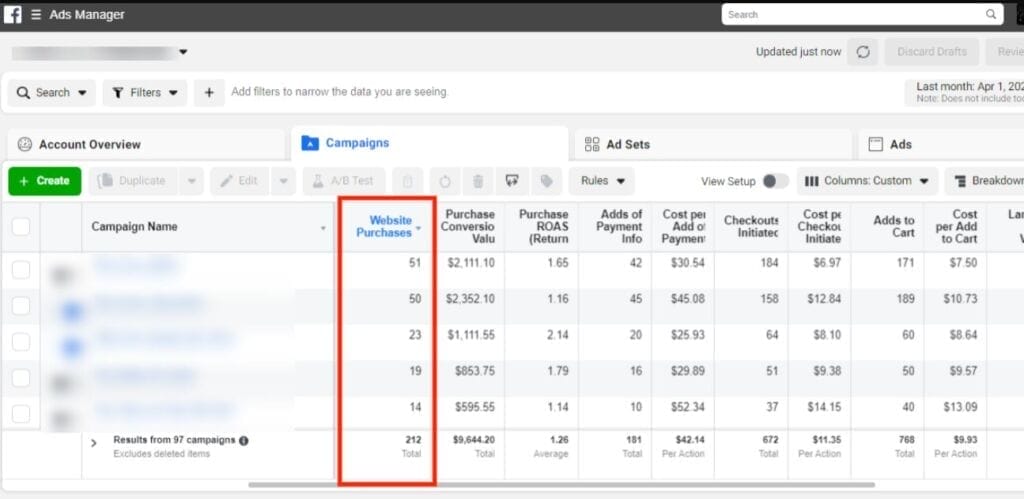
However, keep in mind that you should not take any action based solely on one day of data. Look at the previous purchase statistics (about 7–10 days), examine them, and then decide whether to suspend or continue the ad. This type of circumstance can also occur, such as having too many checkouts but few or no purchases.
4. Cost per Acquisition (CPA)
Cost per acquisition (CPA) is sometimes known as cost per buy. It defines the average cost of each purchase. Here is how you can measure the CPA:
CPA = Ad Spend/Total Conversions
If you receive a large number of orders, you cannot enjoy your achievement until the cost per order is under your control. Obviously, a high CPA indicates a loss, whereas a low CPA indicates a profit. So, first and foremost, assess the CPA at the campaign level to determine which campaigns are performing effectively.
Then, go into the ad to see which audiences are performing well and which are not. You may decide to boost the budget of a high-performing audience while pausing the ad(s) that are not performing well in order to avoid money waste.
5. ROAS (Return on Advertising Spend)
Return on Advertising Spend (ROAS) is a marketing indicator used to assess the performance of a digital advertising campaign. Getting the quantity of purchases is not useful until you receive the ROAS that you expect.
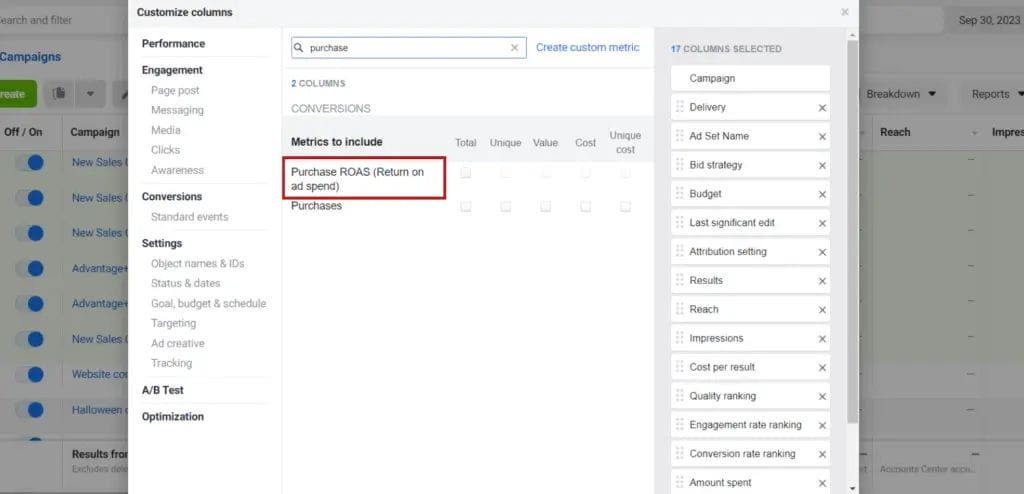
Assume we want to spend $100 each day and make $500 in sales. This suggests you predict a ROAS of five. Here is how you can measure the ROAS:
ROAS (Return on Ad Spend) = Conversion Value / Ad Expenditure
Initially, you will be conducting a lot of testing to locate the winning audience, which may result in a poor ROAS. Once you have identified the winning audience, you may scale to attain the desired ROAS. The higher the ROAS, the more profit you will earn. Finally, monitoring ROAS is crucial to enhancing business profitability.
6 Common FB Ads Mistakes to Avoid:
1. Not having a clear objective:
When advertising on Facebook, it is vital to express your objectives explicitly. Discuss with team members and stakeholders the goals you want to achieve with the advertisements and how they will help you grow your business.
2. Not targeting the right audience:
Audience targeting is critical to the success of your Facebook ad campaigns. When you don’t properly target your audience, you miss out on a lot of chances, and your ads don’t get the expected results. Ensure that you research your audience and successfully target them using the Meta platform.
3. Using low-quality images or videos:

Humans are visual creatures, and having stylish and eye-catching creatives will help you achieve better results. Make sure to use professional-looking and high-quality images and videos for your Facebook ads.
4. Having emotionless ad copies:
Your ad copy is equally crucial when it comes to Facebook ads. Make sure your copy is full of emotion, clear, and convincing. To get customers to click on your links, highlight the benefits of your products and services.
5. Not tracking the results:

Setting up a campaign and failing to monitor the statistics is the worst thing you can do when advertising Facebook advertisements. Review your advertising results regularly and make any necessary adjustments.
6. Giving up too soon:
Finally, keep in mind that marketing does not always produce rapid results. If your advertising isn’t working, it’s better to adjust your strategy and try something new than to quit completely.
Conclusion
Analyzing the data is a skill in itself. Obviously, the preceding matrices are insufficient to analyze campaign performance. We must also keep track of other essential matrices.
In terms of other key metrics to track, some examples are impressions, CTR (click-through rate), CPC (cost per click), CPM (cost per mile/cost per 1000 impressions), and so on.
However, the five matrices listed above are the most important ones to monitor on a regular basis in order to measure e-commerce sales generated by Facebook ads.

Vijay Sood is a seasoned digital marketer with a passion for driving online growth and innovation. With a robust background in developing and executing comprehensive digital strategies, Vijay excels in leveraging SEO, content marketing, and social media to boost brand visibility and engagement. His expertise lies in transforming data-driven insights into actionable marketing campaigns, helping businesses achieve their digital objectives.