
Digital marketing relies heavily on paid advertisements as a key method to acquire traffic in pursuit of business objectives. Research has found that the typical CTR of search ads is 3.17 across all industries, which is relatively high compared to the average Facebook ads CTR. Therefore, in this case, what is needed is not just placing ads but also getting people to visit your ad by clicking on it.
Here, CTR, or click-through rate, comes into play as an essential measure.
A good CTR will indicate that people are clicking on your advertisements, and as a result, more people will become aware of your company and visit your landing page. In this article, we will explore practical measures to help you achieve a higher CTR for your Google Ads and Facebook Ads ad campaigns, enabling them to drive more productive results.
What is CTR and Why Does It Matter?
CTR is a fundamental indicator in Internet advertising, measuring the number of times your ad is clicked among the total number of times your ad is displayed, helping to assess the effectiveness of email marketing campaigns. For example, if your ad has been displayed 100 times and received five clicks, your CTR will be 5 percent, which is a good click-through rate. A very strong click-through rate is highly significant for a few reasons:
- Better Quality Score: In the case of Google Ads, CTR has a direct impact on Quality Score. The higher the Quality Score, the lower the costs of PPC and ad placements.
- Greater Exposure: By increasing the CTR an ad receives, platforms tend to display it more frequently, thereby providing your ad campaign with increased visibility and improving the percentage of people who click on your ad.
- Improved Conversion Rates: Your CTR does not directly influence the conversion, but the more relevant your ad is and the more clicks it receives, the greater the chances of making a conversion after the user lands on your landing page. Generally, a reasonable click-through rate is associated with a higher conversion rate.
- Lower Costs: A higher CTR can result in lower economic spending, as you are pulling more on-point clicks from your budget.
Tips for Better Engagement and Higher CTR
1. Craft Compelling Headlines and Ad Copy

It is the first thing users see, and it is required to be very catchy at first glance to attract the users. It must be brief, mentioning a significant advantage or solution to the problem that your target audience struggles with, and preferably contain a high call to action or a valid keyword. The ad copy that comes with the benefit must define it, create an urgency, and set your unique selling proposition. As you do so, remember that you don’t have a lot of space, and every word matters in inviting a courageous individual to visit you with a click.
- Employ Power Words: Words that conjure emotion or burning need (“Exclusive,” “Limited,” “Discover”).
- Numbers in the headline: One of the ways that works much better compared to generic statements is by incorporating numbers in the headline. 5 Ways to Boost Your Sales.
- Question: This technique puts the user in the direct spot to receive your ad copy. Rather than telling the potential customer what your product does, sell them the benefit of using the product, especially during a limited-time promotion.
2. Make Your Call to Action (CTA) Convincing
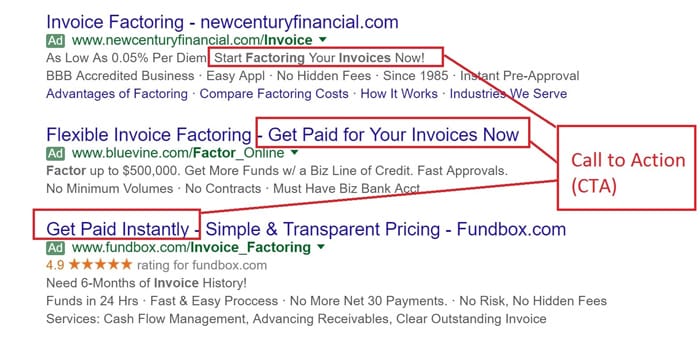
An outstanding call to action is a must when you want to increase your CTR and encourage more people to click on your ad. It educates people on what to do after they have viewed your advertisement, and this is what your CTA does. It must be loud, substantive, and pertinent to offer. Examining various CTA phrases can help you discover the one that best connects with your specific group and earns you more clicks.
- Be Specific: Use tips to improve your click-through rate by focusing on targeted messaging. Rather than just Clicking ‘Here,’ go with ‘Download Your Free Guide’ to increase the number of clicks.’
- Create Urgency: Incorporate limited-time offers to encourage immediate action from potential customers, like Shop Now! Limited Stock! Or “Enroll now!”
- Match Intent: The match intent should also be taken into consideration. If it is an informational advertisement, then ‘Learn More’ will be more effective than ‘Buy Now.’
3. Precisely Define Your Audiences
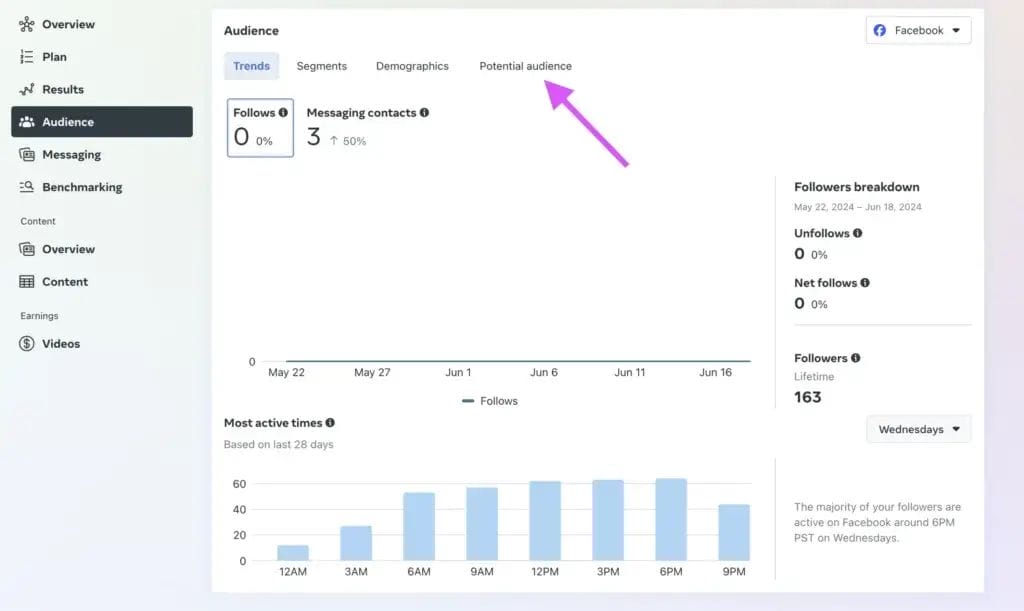
It is also essential to target your ads at the right audience, a key factor in achieving a high click-through rate. Social networks, such as Facebook, leverage strong audience selections by demographics, interests, and behavior, as well as custom audiences. In the case of Google Ads, keyword research and the proper use of negative keywords should be taken seriously to ensure that your advertisements appear in relevant search results only. Irrelevant impressions will result in low CTR.
- Demographics: Use of age, gender, location, and income to target a specific group effectively.
- Target Interest and Behaviors: Match what matters to your prospective customers.
- Apply Custom Audiences: Retarget website visitors with relevant customer lists to increase engagement.
- Apply Negative Keywords: Exclude unnecessary impressions on missed searches to focus on a specific group and increase CTR.
4. Utilise Ad Extensions (Google Ads)
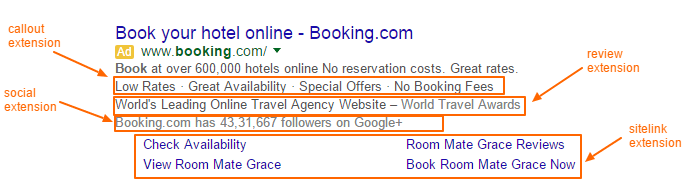
Extensions of Google Ads are a valuable element to increase your CTR. They provide additional content and useful links at the bottom of your main search ad, thus making your main search ad larger and more prominent on the search results page. Besides giving users more clicks, this point will also provide them with more context to follow and more motivation to click on, resulting in a significantly higher CTR and a superior Quality Score.
- Sitelink Extensions: Links to pages on your website (e.g., price, contact us).
- Callout Extensions: Put into focus outstanding selling points/advantages to increase CTR and highlight a free trial offer.
- Structured Snippets: Present particular characteristics of products or services.
5. Attention to Ad relevance and Quality Score
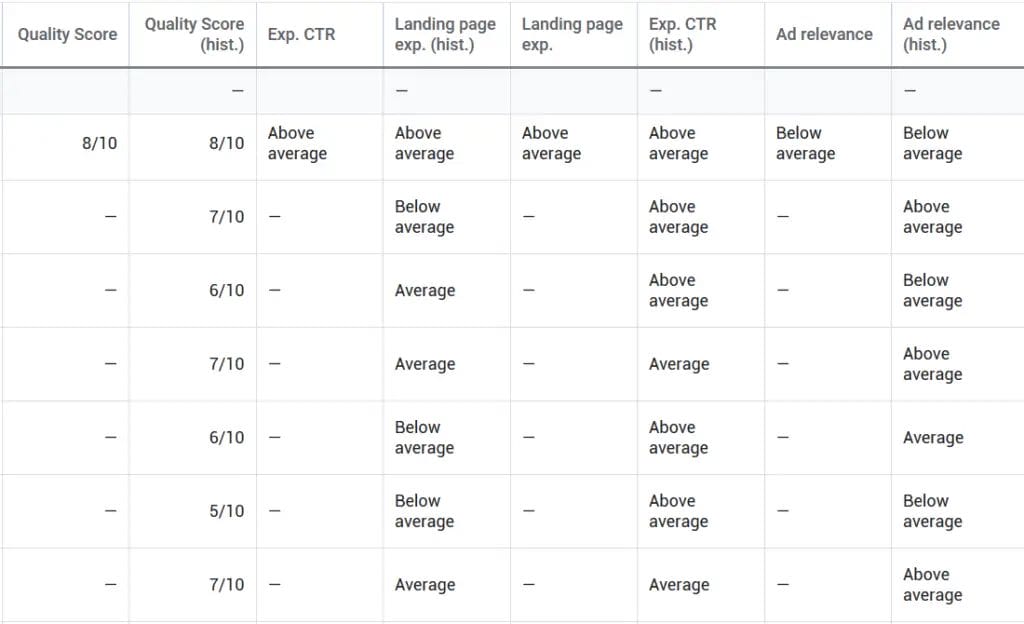
A good CTR, as well as an excellent Quality Score in Google Ads, is aided by ad relevance and effective email marketing strategies. Ensure that your ad copy and the destination page accurately match the keywords you are targeting and the user’s intended purpose. A high-quality score will reduce PPC costs and help improve the ad’s positioning, benefiting the ad campaign in a virtuous circle. Regularly tracking your metrics and implementing incremental fixes based on performance will also help you sustain a decent average click-through rate.
- Keyword-Ad Copy Alignment: Make sure that you have keywords in your headline and ad copy to increase CTR.
- Landing Page Experience: To achieve a successful landing page, the advertisement must deliver on its promise.
- Never stop Optimizing: Always look for ways to improve your click-through rate.Continuously review your CTRs and make adjustments based on performance to maximize the number of clicks.
- Monitor Quality Score: A high Quality Score can lead to a better position and an increased number of impressions.A decline in Quality Score indicates that it should be optimized.
6. A/B Test Everything
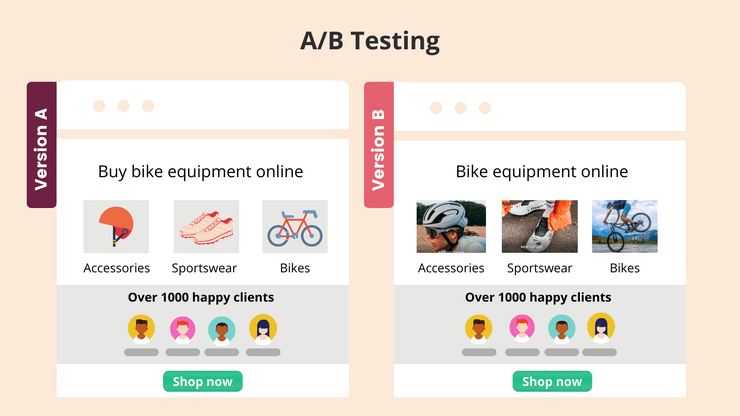
The most effective way to genuinely enhance CTR is through regular testing and implementing tips to improve. Test the variants of your headline, ad copy, CTAs, and Test different image/video creatives for Facebook Ads with an A/B test to improve CTR. A minor modification may result in a good click-through rate, significantly increasing CTR. It is not always the case that what has been done in the past will continue to work; the digital marketing environment is an evolving one.
- Test One Variable at a Time: To ensure proper measurement of the effect, isolate changes.
- Conduct Tests Long Enough: Collect data sufficient to give statistically significant results.
- Record Your Results: Learn to do a better test and to do a worse one.
- Iterate Data-Driven: Use data-driven insights to identify effective ways to improve your CTR. Make informed decisions about future optimization based on insights gained from tests.
7. Performance Measures Monitoring and Analysis

It is also essential to regularly analyze your CTR and other relevant metrics to conduct continuous optimization. Keep an eye on the trends in your click-throughs. A dramatic decline in CTR can also be a sign of a problem with your ad creative, targeting, or heightened competition. Get acquainted with the average click-through rate of your industry to put your performance into perspective and understand what can be improved. This far-sighted marketing strategy is essential in enhancing ROI and improving your click-through rate.
- Monitor CTR Over Time: Discern patterns in performance and outliers.
- Segment Your Data: See CTR by ad group, keyword, device, or audience.
- Compared to Benchmarks: Learn what the expected reasonable click-through rate in your niche is.
- Beyond CTR: It is vital, but conversion rates and ROI as a whole are to be taken into account.
Conclusion
Optimizing your paid advertisement CTR is a process, and it needs strategic ad text, targeting, and constant testing. CTR may be significantly boosted by owning the production of enticing ad copy, composed of nifty headings and obvious calls to action, in addition to discerningly refining audience targeting through the proper utilization of keywords and the exclusion of irrelevant ones, and continually analyzing effectiveness.
Better CTR not only indicates increased ad relevance but also leads to improved Quality Scores, lower pay-per-click advertising expenses, and eventually a higher conversion rate and improved ROI in your online marketing activities. Although an excellent click-through rate can be considered a test, it ultimately leads to better conversion and a more prosperous advertisement.

Vijay Sood is a seasoned digital marketer with a passion for driving online growth and innovation. With a robust background in developing and executing comprehensive digital strategies, Vijay excels in leveraging SEO, content marketing, and social media to boost brand visibility and engagement. His expertise lies in transforming data-driven insights into actionable marketing campaigns, helping businesses achieve their digital objectives.

