
Getting visitors to your website is not really a problem if you have a well-written advertisement copy. The question arises when you want to capitalize on these visitors to increase your conversion rates, and the answer will definitely be ‘No.’ To increase the likelihood that a user will click on your ad, create ad copy that is more engaging and laser-targeted to your audience. Although there are such a vast number of online channels available, where should you look to find potential leads?
Nowadays, if you want to identify the best platform of all to reach your customers, Facebook might be the answer. As DataReportal states, it is an enormous, already established market, with almost 3 billion active users every month. With Facebook’s advertising platform, you’re not just throwing your message into the void, you’re reaching people who are genuinely interested in what you have to offer. But here’s the catch: simply showing up isn’t enough. If you really want clicks, leads, and sales, you need to master the art of creating Facebook ads that actually convert.
That’s precisely what we’re diving into today. Let’s kick things off with interest-based targeting and then work our way down the list of strategies that can make or break your ad success.
What are Facebook Conversion Ads?
“Conversion” on Facebook is not only a sale. If you adjust your ads to encourage users to register for your mailing list and they actually complete the action, then this is a “conversion.”
Conversion ads on Facebook can do wonders when you want to increase sales or drive specific off-site actions, such as signing up for an email subscription, registering for a webinar, or downloading content.
Instead, here are the actions that conversion ads help to get, including generating quality Facebook leads.
- Purchases
- Adding payment information to a user account
- Signing up for a free trial
- Adding an item to the cart
Steps of Running a Successful Facebook Conversion Ad
Are you interested in using the conversion objective of Facebook Ads to optimize, track, and understand the specific user actions? Here’s how we approach it with a strong call to action in every campaign.
Step 1: Define the optimization goal
Choosing what result you want to optimize ads for is the most essential part of the setup process. There are numerous campaign objectives and event tracking options in Facebook advertising, and the easiest way to get distracted is to lose sight of the primary purpose.
Why do we need this campaign? What KPIs do we want to track, and what information will they provide us? Presumably, the stage here is about only one thing: to re-arrange your strategy to better utilize ad formats that resonate with your audience.
Step 2: Choose the conversions objective

You now have the green light to start creating your ad. The first thing you will be asked to do is select your objective. Click on Conversions. After that, give your campaign a name and move ahead.
Step 3: Choose the events you want to track
After logging special ad categories and selecting budget optimization settings, the next step is to allocate the budget for your conversion campaign. The basis of your campaign, focusing on conversions, will be outlined next as you select which conversions to track. There are options for a conversion source, such as a website, mobile app, Messenger, or WhatsApp, which can enhance your advertising on Facebook.
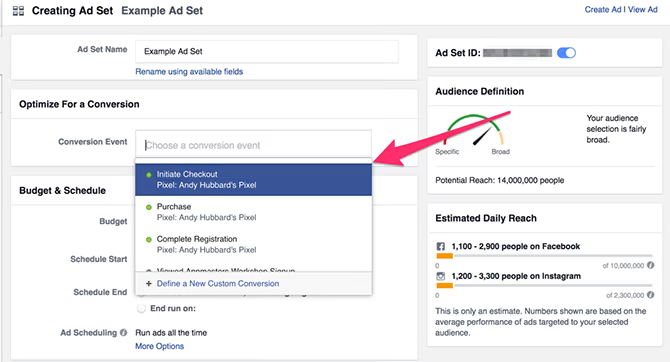
Furthermore, you can select only specific events to track, for example, when a user adds a product to the cart and continues to checkout, which is crucial for optimizing your ad spend. Ensure that your pixel is set up to track these events for effective Facebook marketing.
Step 4: Enable the Dynamic Creative feature

After that, opt for the Dynamic Creative feature that will provide you with the best combinations by blending and interchanging your visuals and templates. Additionally, you may also have a special offer that will attract more people to your ad and result in more conversions.
Step 5: Complete the ad creation process
If you want to continue the ad creation process after completing these steps, the process will proceed as usual in your Facebook marketing efforts. Set your budgets and bids and get creative with your work.
Don’t just direct people to your homepage; instead, ensure they land on the page where you want them to take action, much like a well-structured carousel ad. If you want to add products to the cart, guide users to the product pages, where they can be added to the cart for your lead generation ads. The same applies to starting a trial; in this case, the landing page would feature a software demo and a lead form adjacent to it.
Tips for Improving Facebook Ad Conversion Rates
It almost doesn’t need to be mentioned that every campaign manager would want to achieve higher conversion rates from their Facebook ad campaigns, especially when using Facebook lead ads. High conversion rates indicate that campaigns are performing well, as they yield the expected results. If you want to improve conversions from your Facebook ads, we highly recommend implementing (or at least testing) the following tactics mentioned below.
1. Ensure your Copy and CTA Match your Audience’s Temperature
Advertising is only as effective as the product offer. And the product is only as effective as its association with the target market. In case your target market is people who have not yet heard of your product (the so-called awareness stage) and you offer them “Buy now,” then don’t expect to receive many clicks.

All the messages you send and CTAs you use must be congruent with the audience’s temperature to maximize the effectiveness of your advertising on Facebook. However, this doesn’t mean you can’t target the ready-to-buy audience (or those who are almost ready) with audience targeting. Mid- and bottom-of-the-funnel buyers should also be considered in your marketing strategies for your campaign.
Setting up Facebook campaigns for multiple audiences and designing offers that appeal to those audiences’ interests should undoubtedly be a part of your focus while you’re striving to raise CTRs and optimize your ad spend.
2. Narrow your Potential Customers
Interested in learning how to ensure your offer is worthwhile for your audience? There is only one method to verify it. You need to run your ads for a certain amount of time and then check their click-through rate. However, even before launching a campaign, you can take several steps to increase the likelihood of success. We have observed several Facebook ad campaigns featuring a single offer that target Facebook users with a post reach exceeding one million for better ad performance, ultimately improving the return on ad spend. In most cases, it leads to low ad relevance and poor CTRs.
One of the drawbacks of targeting a too broad audience in Facebook advertising is that your ad budget may not be sufficient to reach the individuals with the most purchasing power. If you plan to start an experimentation campaign, it is better to target a larger audience (from one to three million). But this does not mean that you should create campaigns that target everyone. Interest groups that are the most relevant and may be interested in purchasing your products are still the primary targets of such campaigns. Therefore, do not target audiences in sizes ranging from 10 million to billions, as it is too broad for effective Facebook advertising.
3. Construct Value-Driven Copy

Users generally take specific actions only when you explicitly instruct them on what to do and present a reason that benefits them. But what do I get out of it? I don’t owe you anything. Make your statements specific and put the primary focus on the benefits rather than solely on the features. A few examples of this are:
- “Want to win a free pair of our limited edition flats? Click here to participate in our Facebook marketing campaign!” Just set up a wishlist and invite friends to use it for additional entries!”
- “Get exclusive access to all the latest industry data that we don’t publish anywhere else just by subscribing to our email newsletter.”
- “Reclaim the time lost in your workday with live chat that keeps your team updated even if they’re not working on the same content, enhancing your lead ads strategy. Book a live demo with our team and find out more.”
4. Make your Ad Copy Short and Sweet
When attempting to determine the perfect length for Facebook posts, it is known that concise Facebook posts gain more interaction and CTRs. The average length of a Facebook post is 157.7 characters, while user posts are made up of 121.5 characters, and mobile posts are 104.9 characters, which can influence the effectiveness of ad formats used in campaigns. Moreover, posts with a length between 120 and 139 characters were found to be 13.3% more engaging than those with 140-159 characters.

Why do shorter Facebook posts have a higher engagement rate? The reason is that the more choices a person is given in Facebook advertising, the more time they need to make a decision regarding the type of ad.
The guiding principle here is to avoid ad copy that is overly text-heavy and difficult to read. Give only the most basic information and let your landing pages be the rest of the story.
5. Ask Fascinating Questions
Headlines are supposed to pull readers in, at least, that’s the idea. That is why posing such questions is so eye-catching. The point here is to ask your readers something that relates to them, something that they might even have thought of, similar to the approach used in high-converting Facebook ad examples.
Another alternative is to come up with a thought-provoking idea that they have never noticed before. Ultimately, you must create a Facebook headline that is so intriguing that it leaves readers eager for more.
6. Keep your Headlines at the Right Length

As strange as it can be, the length of your Facebook ad headline is significant. As one of the Facebook ad tips, Facebook suggests that advertisers restrict their ad headlines to between 25 and 40 characters in length. With shorter headlines, you have the difficult task of squeezing your message down to only the most eye-catching details. What it means is that you are excited to uncover the headline message that will drive more clicks.
7. Offer something for free
Free stuff is that simple; if you like, it’s the only thing that gets people’s attention and makes them click. However, if you continue to give away free stuff, it won’t really help you increase your earnings in your lead generation ads. Be wise with your free giveaways and integrate them with your general marketing plan.

For example, you can create buzz for a complimentary e-book by asking users to provide their email addresses in exchange. Don’t let a prospect only interact with your brand when they have your free content in their hands. Collect their emails and gradually turn those cold leads into customers through an email marketing funnel.
8. Address all the Possible Concerns
This approach necessitates that you understand your customers as well as your best friend, including their concerns about your Facebook ad offer. Sometimes, even if you are marketing a five-star product, people will hesitate to click if it appears to be a considerable commitment.
In other cases, people sign up for a deal only to leave because they are afraid of the potential negative results. Hunting down these worries and slipping in reassurance before the user even gets time to entertain them is what makes it your responsibility.
9. Create a killer Facebook Ad Design
Your ad design is a combination of one part copy and one part design, which is crucial in creating compelling Facebook ad examples. Not very pleasant ads, with only the copy being bright and catchy, will let your ads fade away.
First of all, you can employ images that are colorful and taken with an excellent camera. Consider using product-enhancing, colorful backgrounds to draw attention to your products in your Facebook marketing efforts. Then ensure that the copy of the ad is also eye-catching, readable, and genuinely enticing to the reader as part of creating high-converting Facebook ads.

If making a video ad, then definitely shoot it in HD so it will be crystal clear, enhancing the effectiveness of your Facebook advertising. Customers link low-quality advertising to low-quality products, so don’t be the reason for the downfall of your brand.
It would be beneficial if the models were present in both your images and videos to demonstrate product usage. Let them look at the product instead of the screen for easier binding of the audience’s gaze with yours, as seen in successful ad examples. Using models in ads is smart because they bring character, emotion, and attractiveness to the ads, making them more appealing, as in the example of Facebook ads.
10. Have Extremely Clear CTAs
The main idea behind your call to action is that it should be clear, precise, and concise, without confusing the user. Right after reading your CTA, users should not doubt what step to follow next and what will happen after they click. To ensure this, it is most effective to position clear calls-to-action not only in your buttons but also within your ad creatives.

The most important contributing factor in the message of the call is relatively straightforward and leads to no confusion, one of the key reasons for conversion. When users are fully aware of what they are signing up for, they are more likely to perform the desired action, and the conversions you receive will also be of higher quality, especially when using Facebook lead ads. It also reduces the number of wasted clicks, thereby helping platforms optimize delivery towards users who are genuinely likely to engage and convert.
Conclusion
The detailed manual on executing high-converting Facebook ads has been invaluable, providing you with the know-how and tools to create, run, and manage your campaigns.
By implementing the best practices and going beyond the basics of the Facebook ad platform, you will be able to translate all this into real-life results. The real winner will be you when the day comes, so it’s better to start planning and executing your Facebook ad campaigns right now!

Vijay Sood is a seasoned digital marketer with a passion for driving online growth and innovation. With a robust background in developing and executing comprehensive digital strategies, Vijay excels in leveraging SEO, content marketing, and social media to boost brand visibility and engagement. His expertise lies in transforming data-driven insights into actionable marketing campaigns, helping businesses achieve their digital objectives.

