
Are you looking for e-commerce Facebook ad strategies tailored for your e-commerce store? Let’s dig right in to explore effective Facebook marketing techniques! Establishing an e-commerce brand is not easy, especially in a saturated market where every business needs to have a firm digital mark to stand out. Facebook remains one of the best platforms for facilitating brand engagement, outreach, and conversions. This article aims to equip you with the ultimate Facebook ad strategy for e-commerce, including business growth fundamentals and scaling strategies.
We will formulate plans to enable the e-Commerce brand to optimize sales and brand awareness. Social media, including Facebook and Instagram, have become essential marketing channels, working tirelessly to ensure that they provide the most targeted content to users. Due to the extensive number of users and overwhelming cash inflow, every e-commerce business must use this platform to promote its business.
Where Facebook Advertising for eCommerce Goes Wrong
Overthinking the issue. There is a lot of content highlighting Facebook ads, but it tends to overlook the 4 key truths behind the strategy.
1. Your Pixel Needs to Warm Up
This means your pixel needs a taste of what it needs to pursue in your ad account. It means you need traffic.
2. Facebook – Meta – Insta Charges by the Impression
We’re not opposed to static ads, but an Advantage Shopping Campaign will provide you with more value.
3. You Can’t Scale with Wrinkled Creatives or Products
Remember, the ad algorithm is AI, and it only cares about two things: the product and the creative.
4. You Don’t Need to Spend a Lot on Meta Ads from the First Moment of Running Ads
This translates to: don’t copy your competitors and steer clear of hyper-segmentation in your marketing strategy.
Pro Tip: For effective eCommerce marketing on Facebook, you need to employ different types of ads. This is what we will focus on first.
10 Effective Facebook Ads Strategies for E-Commerce Sales
1. Selecting a Profitable Niche with Good Demand
No product or service can cater to all people, which is nearly impossible. However, when you carve out a niche for your brand, you know exactly who you are advertising to. Therefore, in curating your Facebook ads strategy for ecommerce, your persuasive efforts will yield greater success.
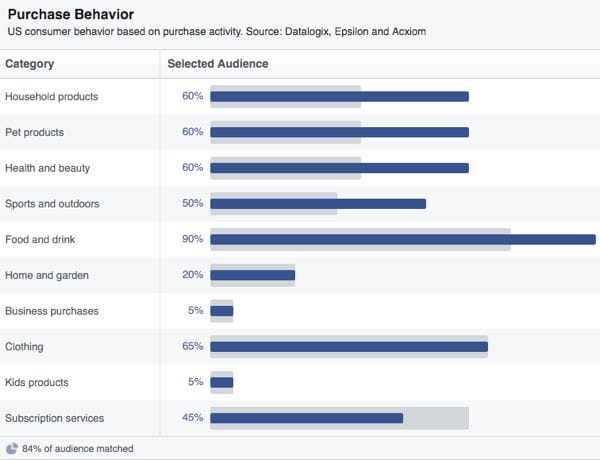
In this section, we cover four methods for niche audience differentiation in business.
- Geographic: This niche is selected based on the location of the intended audience. It is most often the exact location of the firm, though it is confined to a city, state, neighborhood, or even country.
- Demographics: A niche based on the audience’s age, gender, religion, income, and educational level. Such data influences a person’s purchasing power as it controls certain behaviors of an audience.
- Psychographic: Here, niches are defined by the audience’s lifestyle, values, and personality traits.
- Behavioral: The shopping habits of an audience constitute a behavior-segmented niche. It examines a customer’s buying history or the types of products they purchase to tailor future Google ads or Facebook ads for ecommerce. As a general rule, people in these categories are primarily concerned with how the product will benefit them.
Creating a niche enhances product customization. This will tell you who you need to reach out to, which means the ecommerce Facebook ads strategy you’ll need to develop that will push them to buy from you.
2. Integrating Facebook Pixel with the Ecommerce Website
Facebook pixel is a code placed on Facebook that serves to:
- Track Facebook ads
- Optimize running ads
- Create audiences for the subsequent campaigns
- Retarget site visitors

The Facebook pixel enables the tracking of customer activities on a website, such as purchasing or adding items to the cart, which is crucial for optimizing your Facebook ad campaign. These are referred to as ‘events’ on Facebook.
The following events also allow you to copy and paste event codes: Purchase, Lead, Complete registration, Add payment information, Add to cart, Add to wishlist, Initiate checkout, Search, View content, Contact, Customize product, Donate, Find location, Schedule, Start trial, Submit application, and Subscribe.
3. Use an Advantage+ Audience Instead of a Lookalike Audience
Why: The Advantage+ audience works similarly to what a lookalike audience does – except there’s ZERO control over who the ad algorithm will target.
How can you use Advantage+ audience to create high-converting eCommerce Facebook ads?
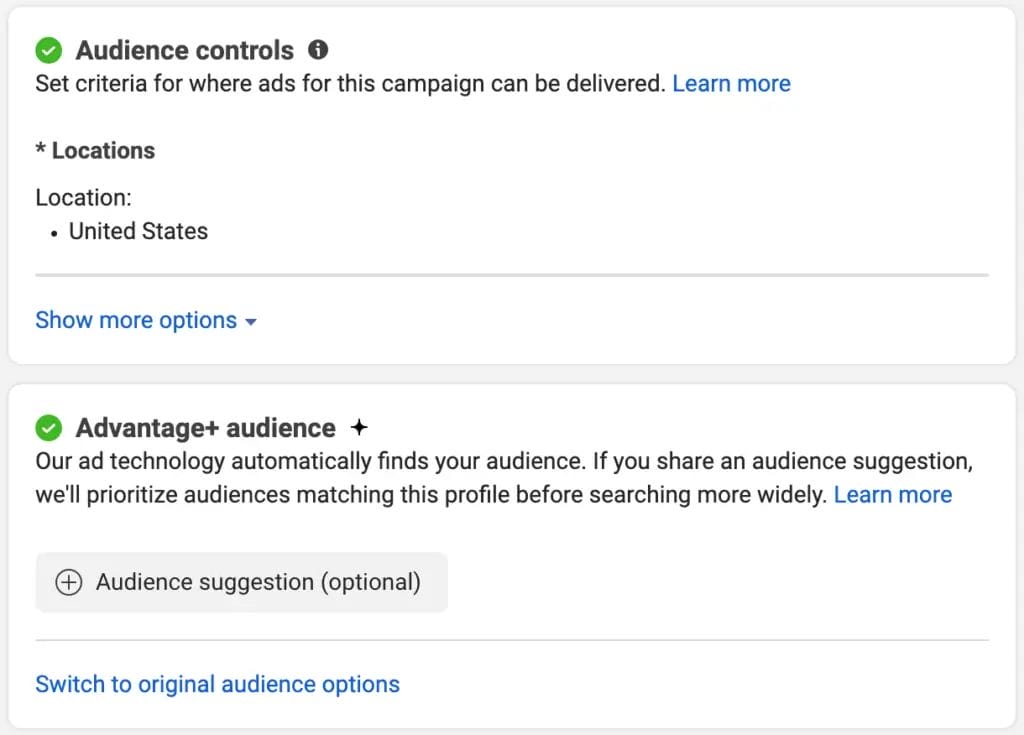
- Start with comprehensive targeting: Focus on age, location, and standard exclusions, such as add-to-carts, previous purchasers, and more.
- Specify retargeting custom audience: Now, once you have broad targeting working well, bring in a similar audience, comprising your customers.
Quick Tip: Use only one interest to test Advantage+ audiences for your video ad campaigns. However, this interest must be very tailored to your buyer’s persona.
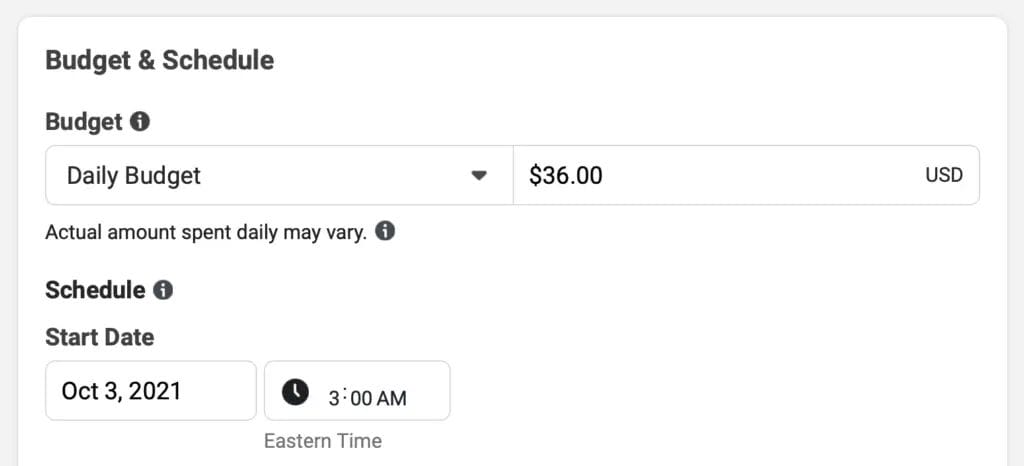
4. Compute your Budget from your MOV and Projected Conversions
Why: Moving estimates gives you a ballpark on the starting number, and in this case, MOV is a significant figure in this reverse calculation.
Success with a low-budget strategy around eCommerce Facebook ads. How to achieve it?
- Initiate with the lowest order value or the minimum order value. Running ads for your online store’s 10 products, and the lowest-priced product is $10, consider your MOV to be $10.
- Examine the number of estimated purchases available with MOV as the daily budget. If 10 purchases are made daily, consider it $100 in sales daily, which equals $3,000 monthly.
- Continue to increase your budget until profitable estimated order counts are displayed on Facebook Ads Manager. If your daily budget for Facebook ads is $10, your campaign might result in zero purchases. For these Facebook ads to become profitable, a minimum of 4:1 ROAS needs to be hit. In our example, with $100 spent daily on ads and a $10 MOV, we need 40 orders daily or $400 in sales daily to break even.
- Tally your estimated monthly sales against your monthly budget with ROAS in mind for your ecommerce business. Suppose the ratio is anything below 3:1, lowering the budget is recommended to increase the monthly volume.
- Don’t treat ROAS as the primary metric in your marketing strategy. Furthermore, evaluate your ROI and LTV metrics, which require considering your profit margins, COGS, and revenue from repeat customers to understand the actual amount you can spend on Facebook ads profitably.
Quick Tip: Your minimum advertising budget adjusts from Facebook to eCommerce ads based on your AOV. Therefore, a product priced at $5 will not warrant a daily budget of $400.
5. Let the Data Guide you as you Scale the Budget Incrementally
Why: A sudden leap from a $10 to $100 spending budget is a surefire way to sabotage a $10 campaign. The following are the dos and don’ts of scaling the Meta ad budget:
What are the dos and don’ts of scaling the budget with a Facebook ads strategy?
- Check ad sets every 3 days if you are on ABO: Review the spending of individual ad sets to identify the highest and lowest spenders. Increase the budget by 10% for the highest spenders and reduce 5% for the lowest spenders. Allow your creatives a minimum of 15 days in full before starting to kill them in your Facebook marketing campaigns.
- Check the CPM and CPA of your CBO (ASC) campaigns: For instance, when the targeting is broad and the CPM is high, while the CPA remains stable, this suggests that the targeting is too broad.
- Avoid setting a bid cap: Your priority should be allowing the campaign to exit the learning stage. If the goals are too stringent, increase them to a minimum of five bucks above the target, and then gradually lower (but cut your daily budget to start) while monitoring your Facebook ad campaign performance.
- Create automated rules: For instance, budget increases can be automated when the CPA target is achieved.
Quick Tip: To maintain profitability and avoid relying on increasingly expensive Facebook ads, focus on increasing order value. Instead of targeting a higher ROAS, sell more at higher average order values by bundling, offering subscriptions, and providing free shipping above a minimum spend.
6. Learn Thumb-Stop/Hook and Hold Rates
Why: Thumb-stop rate measures users who stop and view your ad (3-second video plays/impressions) as a percentage. Hold rate measures users who stop and engage (Clicks + engagement / no. of thumb stops).

How should you leverage both Thumb-stop/hook and hold rates for your Facebook eCommerce ads?
- High Thumb-stop, low hold rate: Try increasing the budget to achieve a higher reach, as the ad seems to be effective. Improve the Hold rate with different ad creatives.
- Low Thumb-stop, high hold rate: Try to further refine the targeting of your ads for ecommerce as well as the ad creatives to improve the Thumb-stop rate while the budget funds the high hold rate, or increase the budget slightly to expand reach.
- Low Thumb-stop, low hold rate: Changing the targeting, ad creatives, campaign strategy, or even the entire campaign structure should do the trick – plus, cut budgets.
7. Achieve a Catalog Sales Objective by Utilizing Carousel Ads Effectively
Why: Implementing a catalog sales objective on Facebook allows you to market your entire catalog of products to a specific audience. These are product catalogs in the form of dynamic product ads, which display multiple items within a single ad. This allows you to either show new people relevant products or retarget them with items they have looked at or interacted with. The level of personalization achievable with this method is unparalleled.
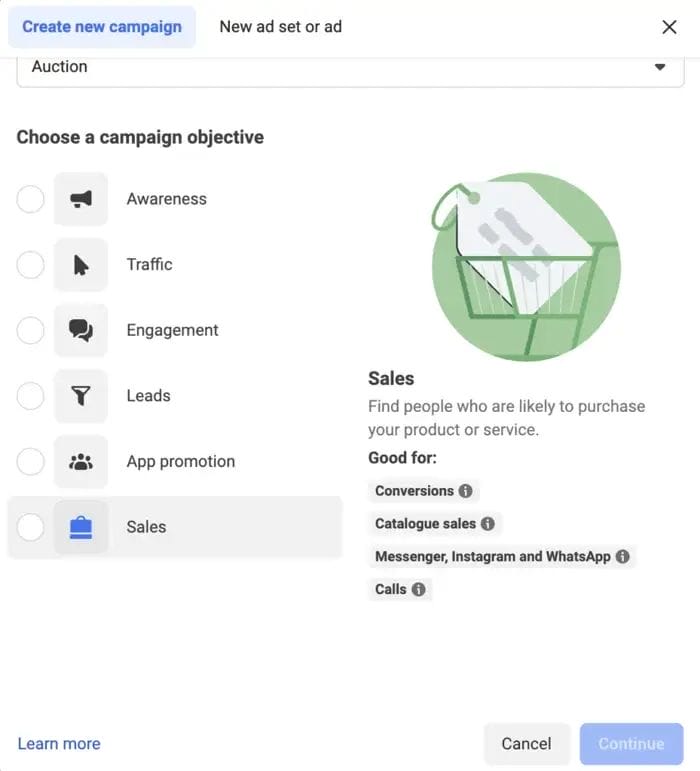
Best practices when using catalog sales objectives:
- Automated product catalog ad management: Set up a product feed integration with Facebook Business Manager. This keeps all your product pics, prices, and descriptions in ads the same, saving you a lot of hard work.
- Think where to focus: Use catalog sales ads to find new folks and bring back the old ones.
- Use fixed and moving ads: These are good for catalog sales, as people can flip through things or see one big image with lots of items.
- Make sure catalog photos look great: Even with auto settings, your product pictures must look inviting to draw people in and make them click. Using automation doesn’t mean you should ignore quality.
8. Take Advantage of Retargeting Campaigns
Why: Almost everyone has encountered this: you check out a product, and then for the next few days, ads for that product, or similar ones, show up on your Facebook. It’s a straightforward and powerful marketing method that enables you to reach people who, for one reason or another, have shown interest in your brand. Using the website, app, or social media interaction method of ad targeting ensures that you focus your advertising budget on applicants who are “warm” and ready to make a purchase through running Facebook ads.
Creating successful retargeting campaigns requires the following:
- Set up the Facebook Pixel: This is a crucial step. Place the pixel on your page so it can track how users interact with it, and then build custom audiences for specific actions (e.g., page views, adding to cart, making a purchase) to enhance your ad campaign.
- Segment your audiences for dynamic ads on Facebook. Retargeting everyone is not a good idea; focus on users who engage with your dynamic ads. Build specific audiences based on engagement (e.g., website visitors in the past week, users who added to cart but did not check out, previous purchasers).
- Design a custom-tailored message: Your brand is familiar to the user. Your copy text and creatives should not be generic. Send texts to let buyers know about things they almost bought, or show them other items that go well with what they picked before.
- Stay clear of converters: Make sure you don’t show ads to people who don’t add value to your business anymore. This includes those who have already done what you wanted, like buying a product.
9. Include Low-Value Coupon Codes in Retargeting Campaigns
Why: When setting up retargeting campaigns, especially for e-commerce stores, including coupon codes with small values can be beneficial. Customers who have already shown interest in a product may be considering making a purchase. At that stage, a minimal discount can be the clincher in winning over their inner conflict.

Implementing discount strategies in retargeting campaigns can be effective for running Facebook ads.
- Targeting abandoned carts: These are the prime users to target with discount coupons through ads on Facebook, with a good percentage of such users being ready to make a purchase. An offer of 5-10% can be a turn-around for users who are on the fence about making a purchase in your ecommerce business.
- Set expiration for the offer: Create urgency with the coupon by limiting the time window to redeem it (e.g., “10 percent off if completed in the next 24 hours!”).
- Make it personalized: If possible, customize the discount based on the value of the abandoned cart or a prior interaction. Always Include a Discount Code with a Clear “Shop Now” Call to Action in Your Video Ad on Facebook.
10. Avoid Scaling the Campaigns Beyond a Point
Why: Comparison ads deliver the most bang for your buck, so it is most logical to lead with them in your ad spend. This is the strategy of spending more where it is performing better. This often necessitates a strategic move, particularly with comparison ads, and must be done with an approach based on data from your running Facebook ads. Scaling a budget too rapidly will result in extreme adverse effects on performance by crossing the point where the incremental spend-to-incremental return ratio is optimized, particularly in a slow scaling flight.
Here are the ways to scale your campaigns successfully while avoiding mistakes:
- Do not touch the scaling dial: Some campaigns require a lengthier spend; resist the urge to make sweeping changes that require heavy scaling. Some adjustments will be precariously spend sensitive.
- Avoid ceilings: Ads can be scaled by KPI objectives through various types of ads. However, KPI goals must be set to avoid ad fatique due to audience burnout. When performance takes a nose dive because of overblown bid and frequency-based caps, and excessive bid/ frequency-based caps, it typically points to ad fatigue in your Facebook ad campaign.
- Experiment with Various Creatives and Audiences: Scaling on budget translates into scaling the reach, as everything relies on advertising. Having gained some success, experiment with lookalike audiences or new ad creatives that are more appropriate to your successful setup, scaling the reach.
Final Thoughts
Precision is crucial for online business owners attempting to maximize the value of Facebook advertisements. Intelligent spending. And strategic creation of ad images, enjoyable engagement, awesome user path sculpting, personalized journey mapping, and effective retargeting can create real results.
Additionally, online user retention via e-commerce can be optimized by streamlining click-to-buy, the findings indicate. It is also necessary to examine stop thumbs and conversion click funnels in order to set up wherein ad budget spend levers can be limited to achieve maximum impact. Capacity to adapt to platform evolution as well as user and market trends is responsible for the success of the ever-evolving online commerce environment.

Vijay Sood is a seasoned digital marketer with a passion for driving online growth and innovation. With a robust background in developing and executing comprehensive digital strategies, Vijay excels in leveraging SEO, content marketing, and social media to boost brand visibility and engagement. His expertise lies in transforming data-driven insights into actionable marketing campaigns, helping businesses achieve their digital objectives.

